ROS Was Created to Solve a Fundamental Robotics Problem
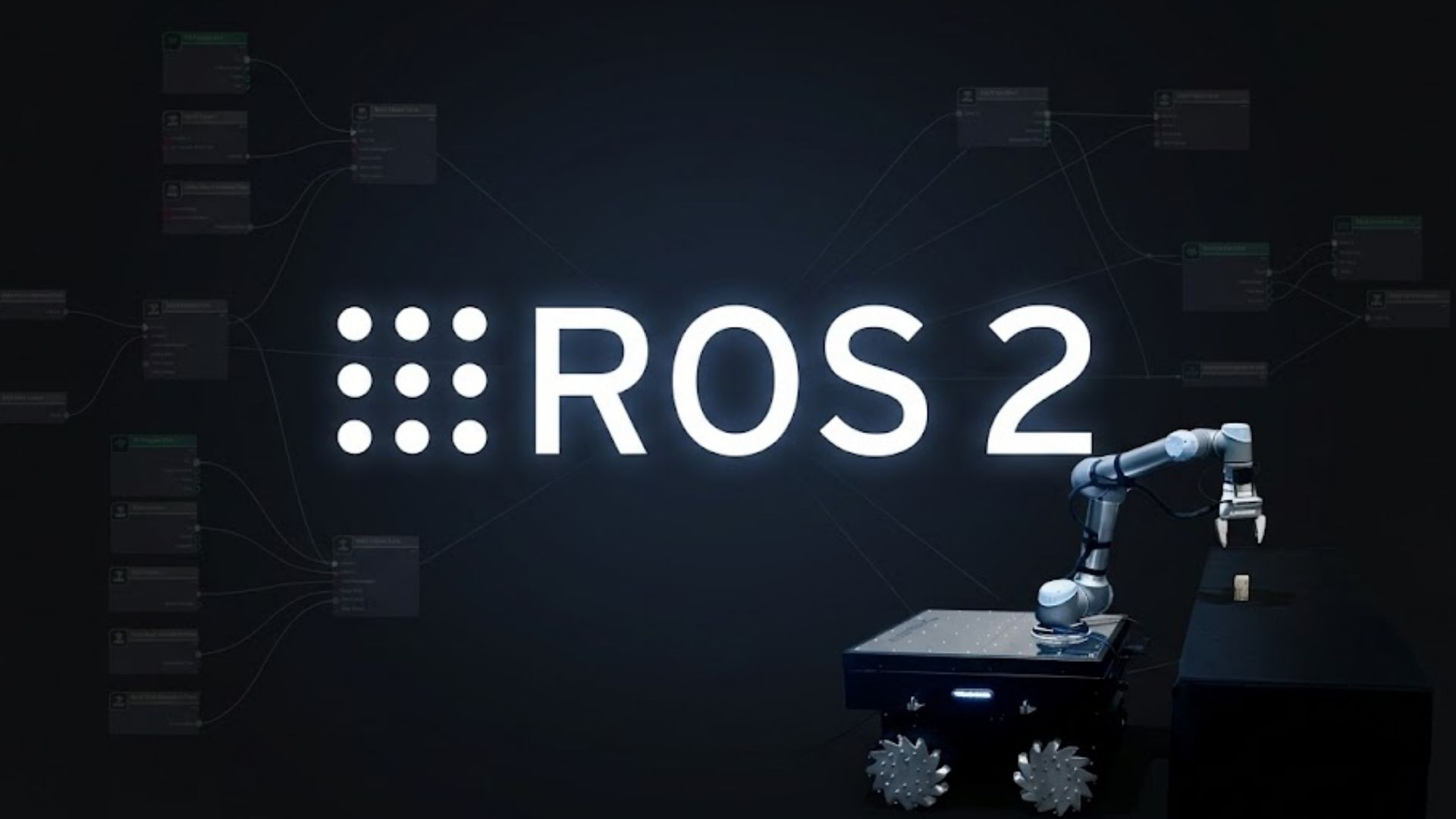
The name Robot Operating System is slightly misleading. ROS is not an operating system. It runs on top of Linux and functions more like a middleware framework—a collection of drivers, communication tools, and infrastructure that makes robotics software reusable across different platforms.
Understanding this single idea makes the rest of ROS much easier to understand.
Before ROS existed, robotics development was highly fragmented. Different robots used different sensors, motors, communication protocols, and software interfaces. As a result, developers often had to rewrite the same software every time they worked with a new robot. A navigation algorithm that worked perfectly on one platform usually couldn’t be transferred to another without significant modification.
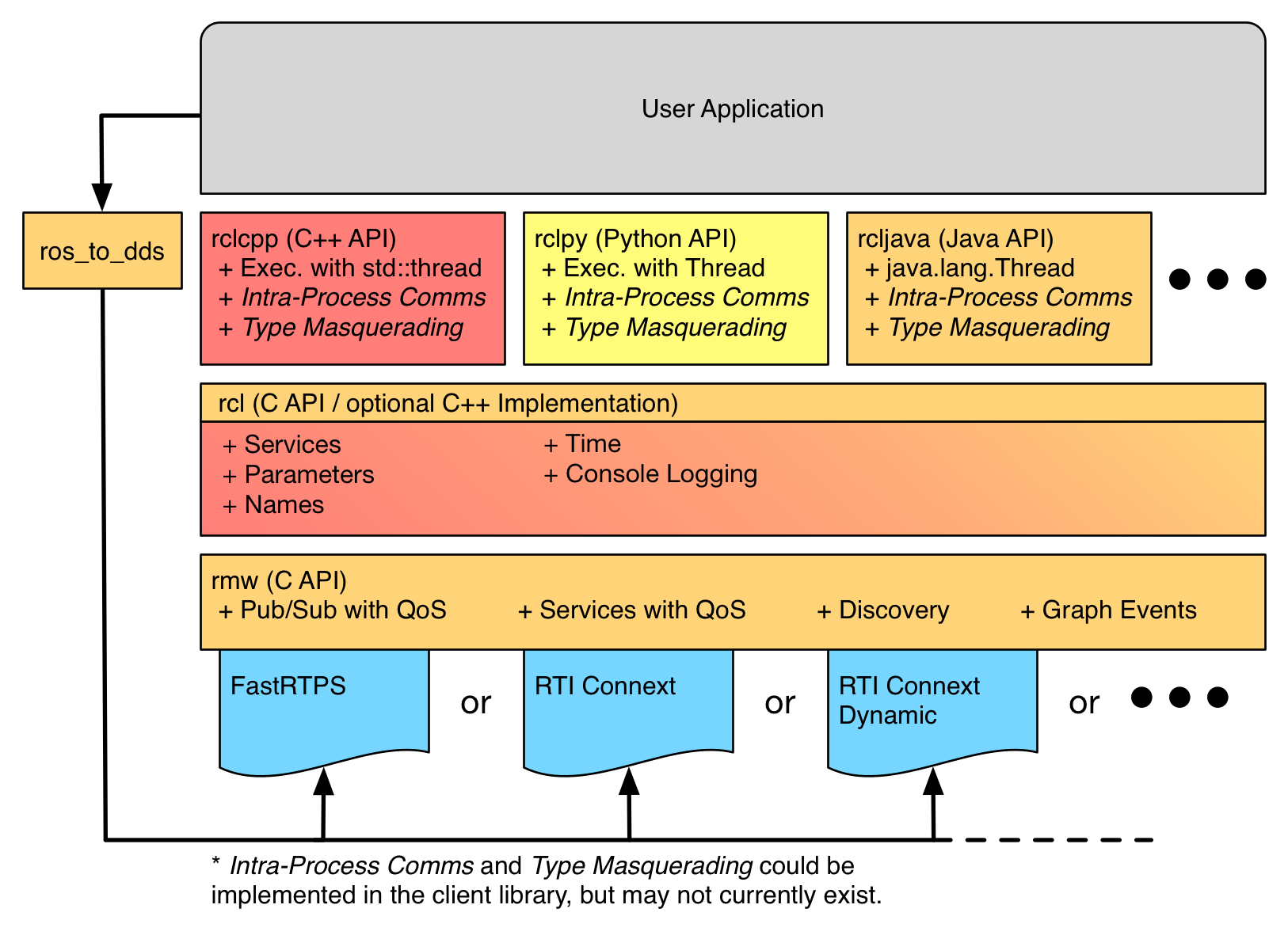
ROS was designed to eliminate this problem by introducing a hardware abstraction layer through ROS drivers.
A useful analogy is how printers work on Windows. Applications like Microsoft Word never communicate directly with the printer hardware. Instead, they communicate through a printer driver. As long as the correct driver exists, the same print command works regardless of which printer is connected.
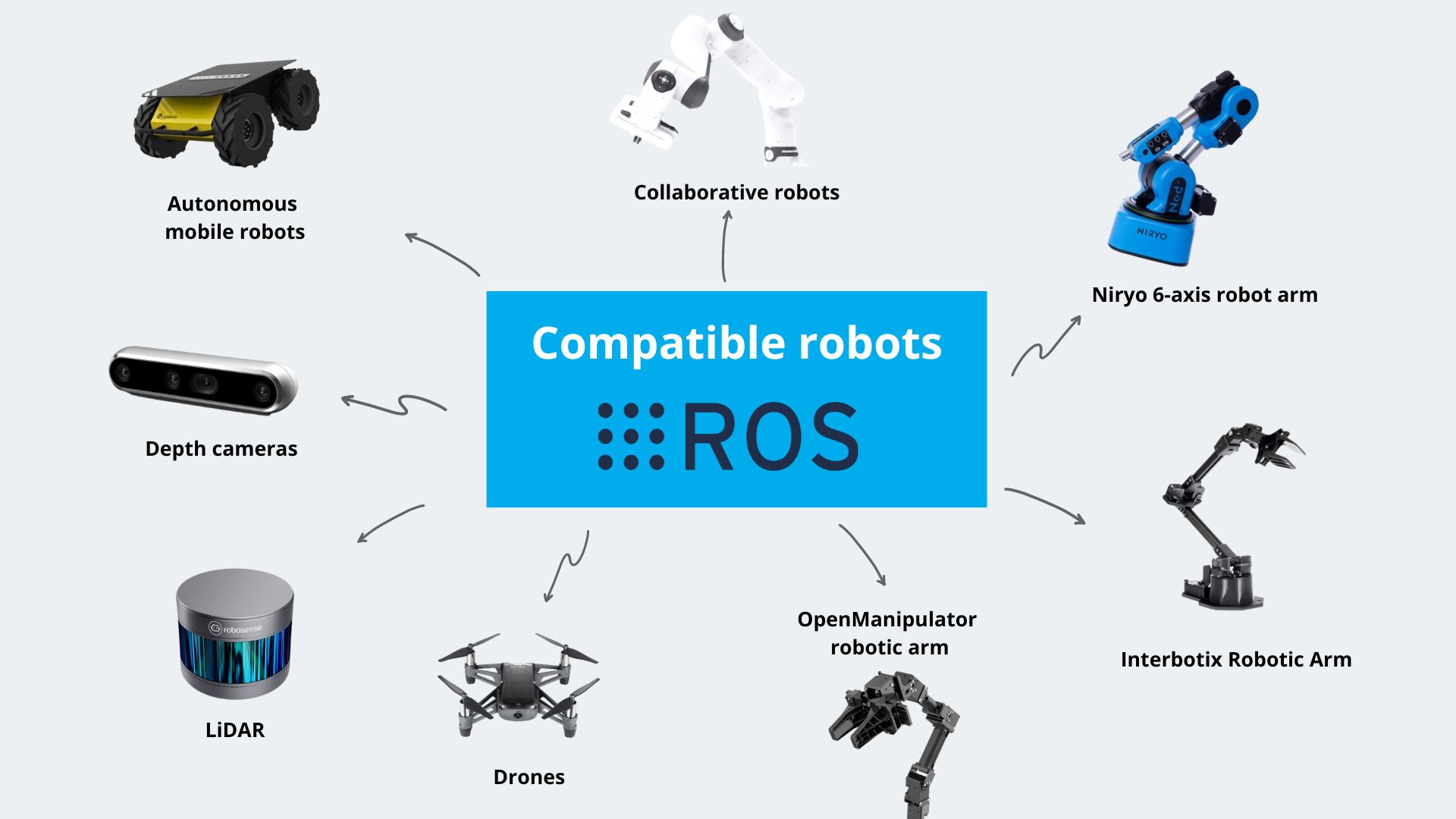
ROS applies exactly the same principle to robotics. Control software communicates with standardized ROS interfaces instead of directly interacting with hardware. As long as a robot provides ROS-compatible drivers, the same control program can run on completely different robotic platforms.
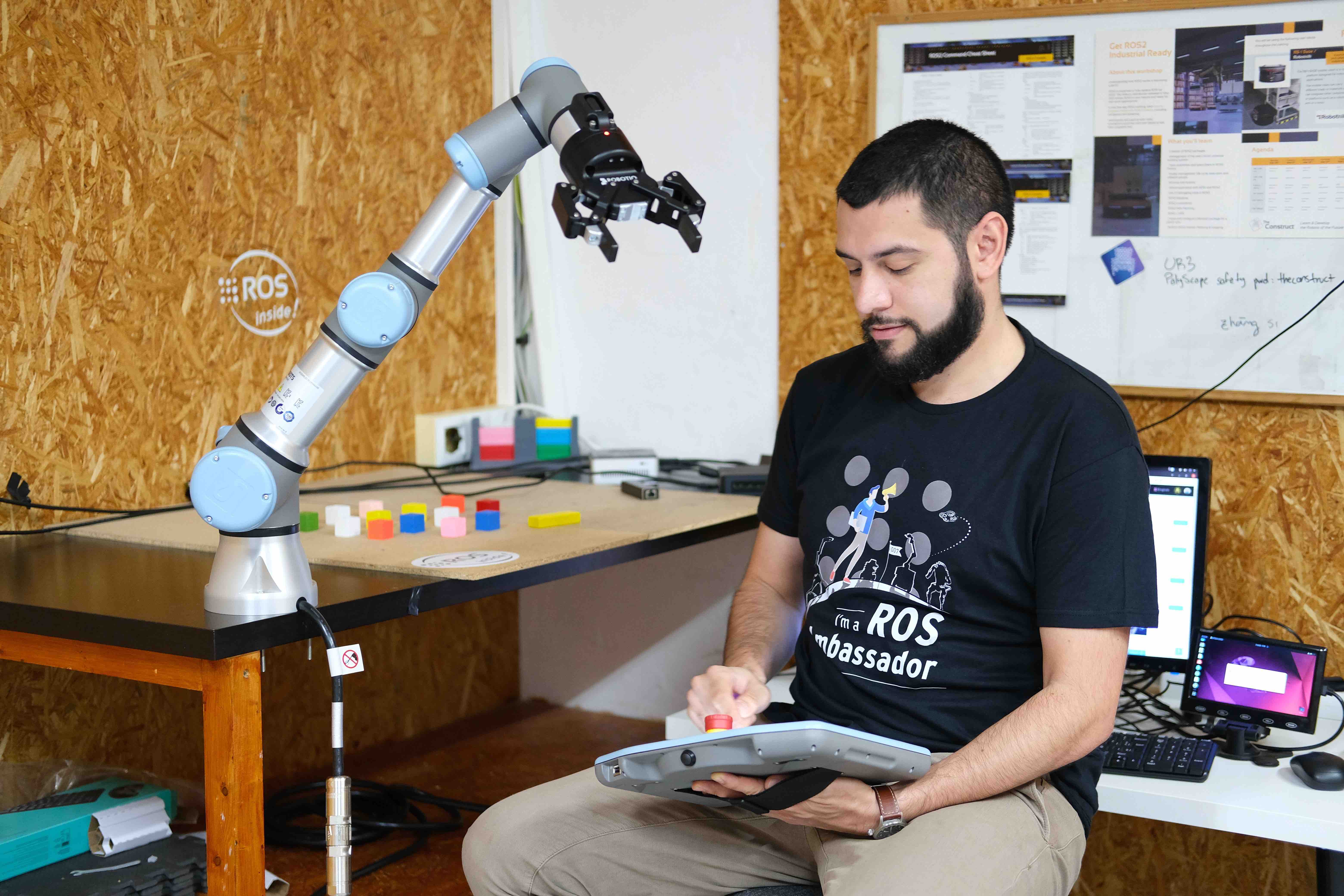
cr. ROS Documentation
Why ROS Became the Standard Robotics Framework
Hardware abstraction is only one advantage.
Another major benefit is that developers no longer need to reinvent common robotics solutions. Many of the most difficult problems in robotics already have mature, open-source ROS packages maintained by the community. Navigation, motion planning with MoveIt, and visualization through RViz are all readily available. Instead of rebuilding these systems from scratch, developers can focus on solving new problems.
ROS also avoids locking developers into a single programming language. Individual ROS nodes can be written in Python or C++, allowing rapid development where flexibility matters while still achieving high performance where computational efficiency is required.
Perhaps the most underrated feature is simulation.
ROS integrates seamlessly with simulation tools such as Gazebo, allowing complete robotic systems to be tested before deploying them on real hardware. Entire robots—even ones that are not physically available—can be simulated, making robotics development accessible without owning expensive equipment.
cr. Génération Robots
ROS Is Used Far Beyond Research Labs
ROS is often associated with universities, but its impact extends far beyond academic research.
As a professor at Carnegie Mellon University once described it, ROS has become the lingua franca of robotics, providing a common framework for connecting sensors, actuators, and processing systems. Without ROS, even relatively simple robotics projects require significantly more engineering effort.
Today, ROS is used across a wide range of industries.
Self-driving vehicle development relies on ROS to integrate LiDAR, cameras, GPS, and perception systems. Industrial robots use ROS for pick-and-place operations, welding, and automated manufacturing. Humanoid robots employ ROS for navigation, manipulation, and grasping.
Although these robots differ dramatically in appearance and application, they all rely on the same underlying communication architecture. Once concepts such as nodes, topics, and the publish–subscribe model are understood, that knowledge transfers naturally across many different robotic systems.
cr. Open Robotics
Why Learning ROS Matters
One of ROS’s greatest strengths is how accessible it makes robotics.
A complete simulated robot can be launched in Gazebo without owning any physical hardware. Developers can immediately begin publishing sensor data, subscribing to motor commands, visualizing system behavior, recording data, and building complete robotic applications entirely in simulation.
More importantly, learning ROS is not simply about learning another software framework.
Understanding nodes, topics, services, and the publish–subscribe architecture means understanding the communication model that much of modern robotics is built upon. That architectural knowledge remains valuable regardless of which robot is being used.
ROS is not an operating system, and it is certainly not magic. It is a carefully designed framework that allows independent components of a robot to communicate efficiently while being supported by powerful simulation tools and one of the largest open-source robotics communities in the world.
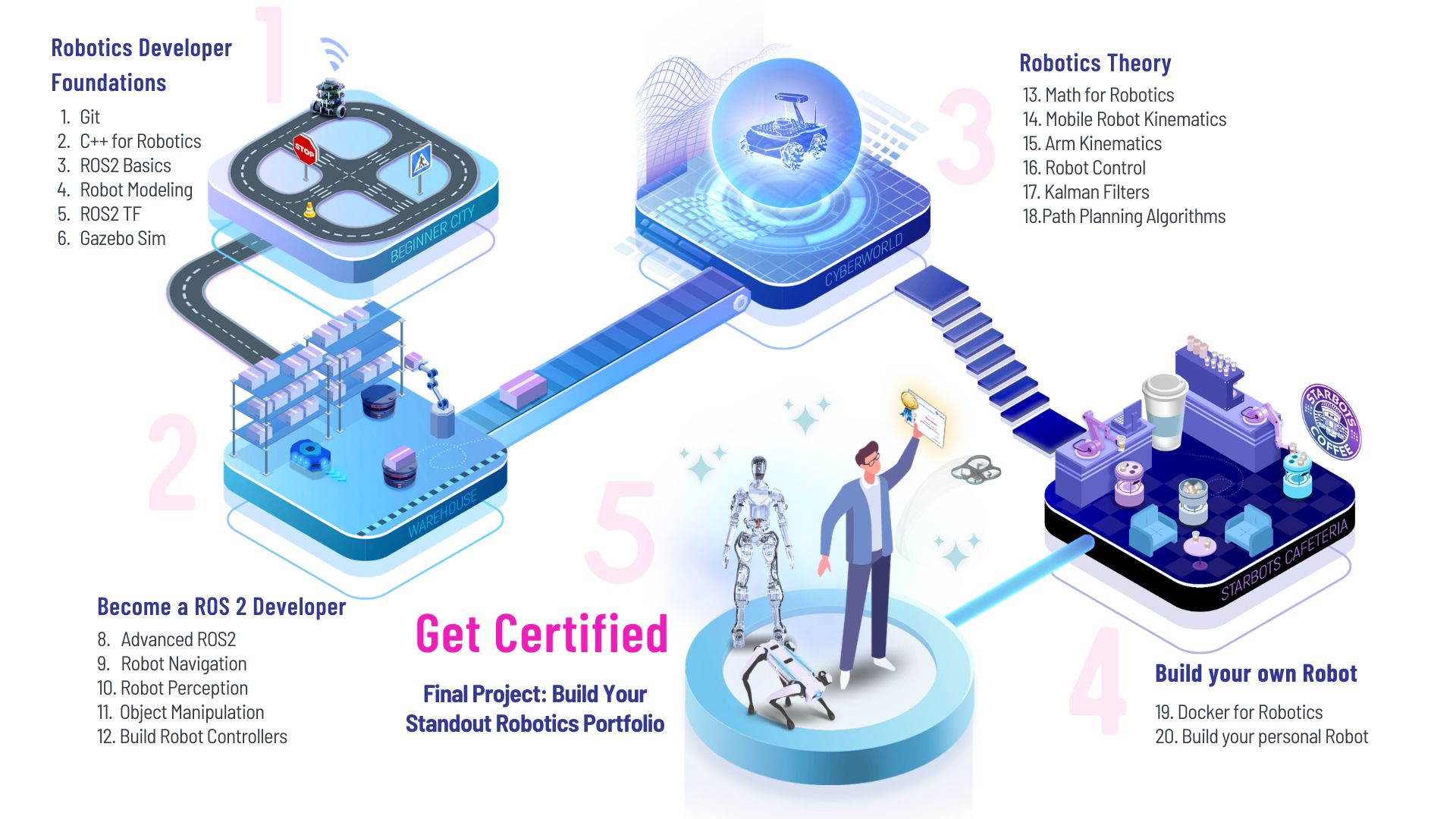
If you’d like to master ROS 2, robot simulation, and real-world robotics development from the ground up, The Construct’s Robotics Developer Masterclass is designed to take you from beginner to industry-ready through hands-on projects.
Python is everywhere in robotics, and that isn’t by accident.
One of the biggest reasons is how quickly ideas can become working code. A robot can be controlled with just a few lines of Python, without a lengthy build process or complex compiler errors. Write the code, run it, and immediately see the robot respond.
That rapid feedback loop is what makes Python so appealing. Instead of spending time fighting syntax or debugging low-level issues, developers can focus on answering a much more important question:
“Does this idea actually work?”
In robotics, validating ideas quickly is often far more valuable than optimizing performance from the very beginning.
2. Why Python Is Used Across the Robotics Stack
Python isn’t simply a beginner’s language—it plays an important role throughout modern robotics.
First, ROS provides a fully supported Python client library, allowing developers to build real ROS nodes that publish sensor data, subscribe to topics, communicate with other nodes, and control robots. Python is a first-class language within the ROS ecosystem.
Second, nearly every modern AI framework is built around Python. Libraries such as PyTorch and TensorFlow power computer vision, object detection, and decision-making systems. As soon as a robot needs to perceive or understand its environment, Python almost always becomes part of the solution.
Third, Python makes prototyping remarkably efficient. Developers can test an idea, validate that it works, and only then decide whether parts of the system need to be rewritten in C++ for higher performance. Instead of committing to production-level code on day one, Python allows experimentation to happen quickly and with very little cost.
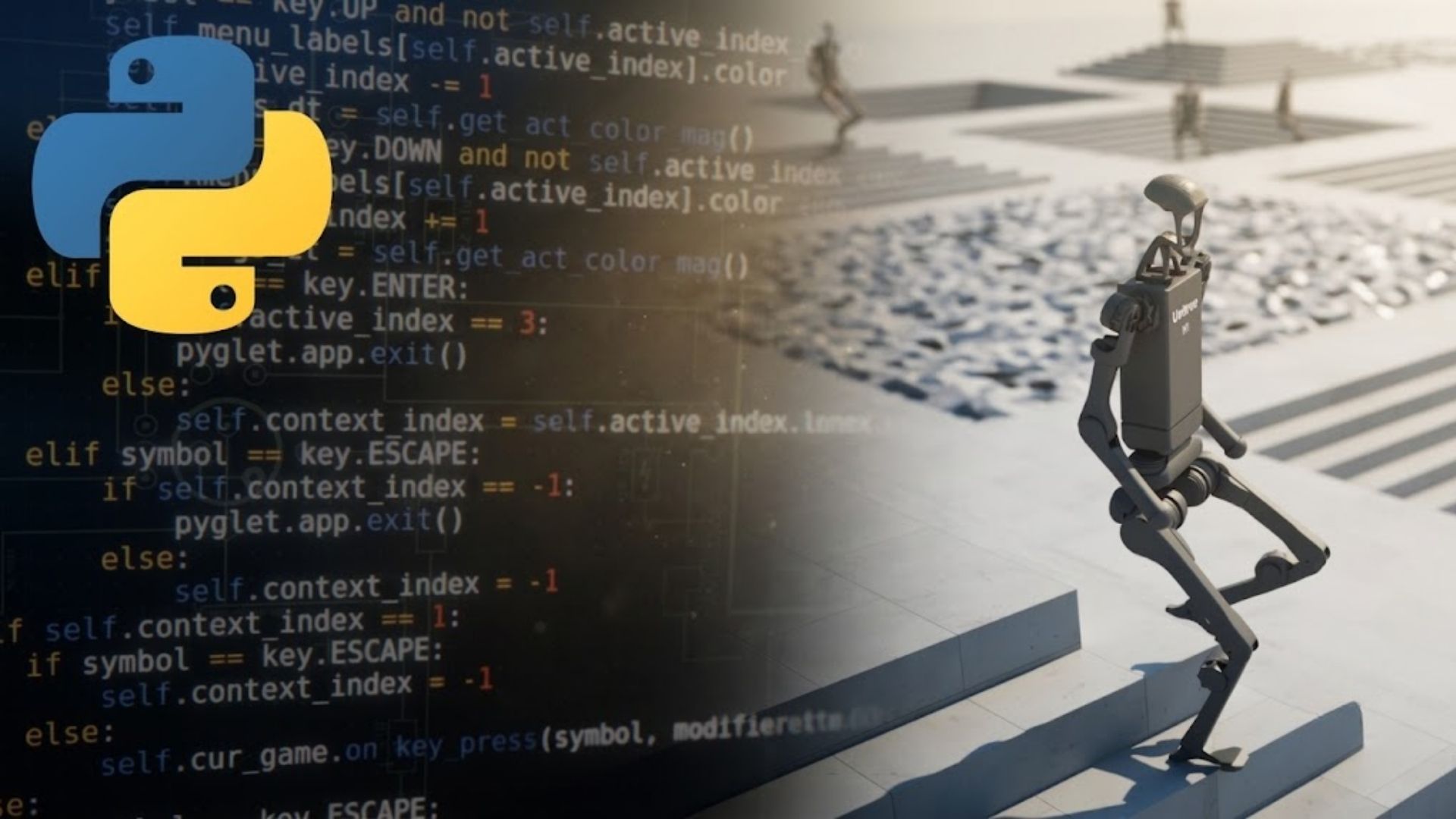
cr. Nvidia Developer
3. Python Doesn’t Replace C++ — It Works Alongside It
One common misconception is that Python is replacing C++ in robotics. In reality, the two languages solve different problems.
A typical robotics system uses Python for high-level planning, decision-making, AI integration, and system coordination. Meanwhile, C++ handles the low-level components that require deterministic timing, such as motor control, sensor drivers, and real-time execution.
ROS allows Python and C++ nodes to communicate seamlessly, making them complementary rather than competing technologies.
In practice, Python determines what the robot should do next, while C++ ensures those decisions are executed reliably and on time. Modern robotics relies on both languages working together.
4. Why This Matters for Anyone Learning Robotics
The biggest advantage of Python is accessibility.
Today, anyone can write a simple Python ROS node, connect it to a simulated robot, and watch that robot move—all on a laptop, without owning any hardware or having an electronics background.
More importantly, learning robotics concepts such as topics, messages, and control loops becomes much easier when the programming language stays out of the way.
Once those robotics fundamentals are understood, transitioning to C++ becomes a much smaller step. Instead of learning robotics and a complex systems language at the same time, learners can focus on robotics first and optimize later.
Ultimately, Python isn’t valuable because it’s an “easy” language. It’s valuable because it allows ideas to be tested as quickly as they appear. In robotics, that speed of iteration is often the difference between making progress and getting stuck. Combined with its central role in modern AI, Python has become one of the most important tools in every robotics developer’s toolkit.
If you’d like to master Python, ROS 2, robot simulation, and real-world robotics development from the ground up, The Construct’s Robotics Developer Masterclass is designed to take you from beginner to industry-ready through hands-on projects.
Building a robot is only the beginning. The real challenge is ensuring that robots can be updated, maintained, and scaled reliably over time.
As robotics teams ship new code every day, they face several critical questions:
How do you ensure new code doesn’t break existing functionality?
How do you update hundreds of robots without physically accessing them?
How do you detect issues before they impact customers?
In traditional software, DevOps focuses on accelerating application delivery. In robotics, the stakes are much higher.
Robots operate in the physical world—warehouses, hospitals, factories, and construction sites. A faulty software update doesn’t simply crash an application; it can cause collisions, downtime, operational failures, or even safety risks.
That’s why Robotics DevOps, often referred to as RobotOps, has become one of the most critical disciplines in modern robotics.
The Core Robotics DevOps Stack
A production-grade robotics DevOps pipeline is built on a set of specialized tools, each serving a specific purpose.
Git: Version Control
Everything starts with Git.
Git provides:
Source code management
Complete change history
Team collaboration and traceability
Every line of code is versioned, and every change is tracked.
Docker: Consistent Development and Deployment
Docker packages robot software and all required dependencies into portable containers.
In development, Docker helps teams:
Build software consistently
Run tests in reproducible environments
Eliminate “works on my machine” issues
In production, the same container can be deployed directly to robot hardware, ensuring consistency across environments.
CI/CD Platforms
Common tools include:
GitHub Actions
GitLab CI
Jenkins
Whenever a developer pushes code, the CI/CD pipeline automatically:
Builds the software
Runs code quality checks
Executes automated tests
Prepares deployments
This process happens continuously without manual intervention.
Simulation Platforms
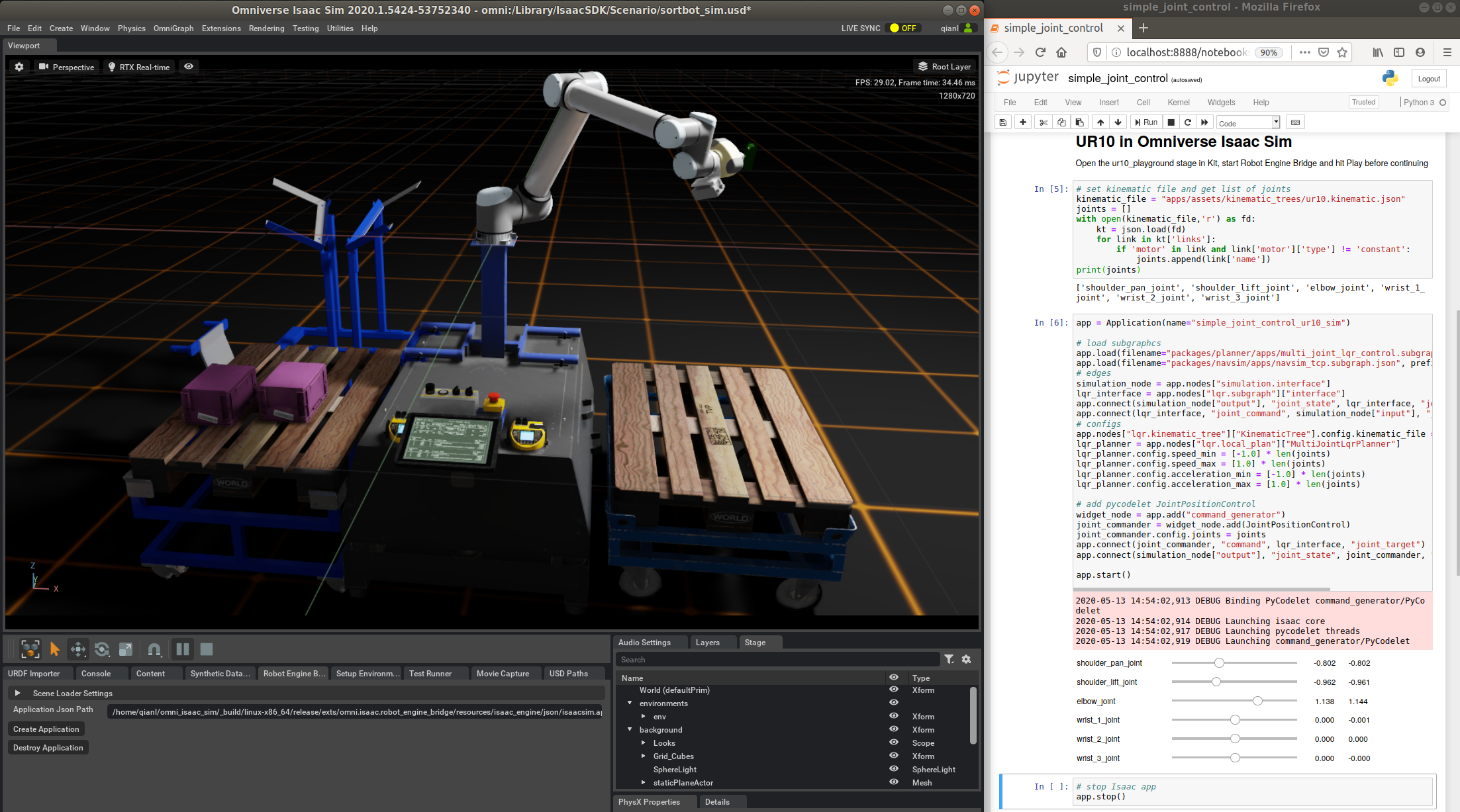
Before software reaches real hardware, it is validated in simulation environments such as:
Gazebo
NVIDIA Isaac Sim
These platforms accurately model:
Physics and gravity
Surface friction
Sensor noise
Dynamic environments
Simulation enables teams to verify robot behavior safely before deployment.
Monitoring and OTA Updates
Once robots are deployed, visibility becomes essential.
A typical production setup includes:
Prometheus for telemetry collection
Grafana for monitoring and visualization
OTA (Over-the-Air) systems for remote software deployment
OTA allows companies to update entire robot fleets without visiting a single robot physically.
What a Production Robotics DevOps Pipeline Looks Like
Step 1: Code Commit
A developer pushes new code to the Git repository.
This automatically triggers the CI pipeline, which:
Builds the software
Runs linting and static analysis
Executes unit tests
Any issue is identified immediately and sent back to the development team.
Step 2: Simulation Validation
If unit tests pass, the pipeline launches automated simulations in Gazebo or Isaac Sim within Docker containers.
Functional tests verify questions such as:
Can the robot still navigate correctly?
Does the robotic arm successfully pick up objects?
Are sensor readings within acceptable tolerances?
Only validated software moves forward.
Step 3: Real-World Testing
The software is then deployed to a controlled fleet of in-house robots.
This stage catches issues that simulation may miss, including:
Mechanical wear
Sensor interference
Environmental noise
Hardware-specific edge cases
Failures are discovered internally rather than at customer sites.
Step 4: Fleet Deployment via OTA
After passing all validation stages, the software is deployed to production robots through OTA updates.
At the same time, robots continuously generate telemetry data, including:
Performance metrics
Operational status
Error logs
Hardware health indicators
Prometheus and Grafana provide real-time visibility into fleet performance and system health.
Step 5: Safe Rollouts
To minimize deployment risk, robotics companies typically use:
Rolling Updates
Software is deployed gradually across the fleet, preventing large-scale downtime.
Canary Releases
New versions are first deployed to a small subset of robots before a full rollout.
This approach allows teams to detect problems early and reduce operational risk.
QA and DevOps: Two Sides of the Same System
Robotics QA and DevOps are deeply interconnected.
A Robotics QA Engineer defines what correct robot behavior looks like by designing:
Functional tests
Simulation scenarios
Validation procedures
The DevOps pipeline ensures those tests run automatically on every code change.
In other words:
QA defines quality. DevOps enforces it continuously.
Together, they create a scalable quality assurance framework that prevents regressions from reaching production robots.
The robotics companies that excel at both QA and DevOps are often the ones delivering reliable products at scale.
Conclusion
Modern robotics is no longer just about building robots.
Success depends on the ability to:
Ship new features quickly
Update software safely
Manage large robot fleets
Maintain reliability at scale
Robotics DevOps is the foundation that makes all of this possible.
As the industry continues to grow, engineers who understand both robotics and DevOps will become increasingly valuable. Building robots is important—but building the systems that keep them running, improving, and scaling is what truly drives long-term success.
If you’re looking to build these skills from the ground up, The Construct’s Robotics Developer Masterclass provides the hands-on training, real-world projects, and portfolio-building experience needed to confidently launch a career in robotics.
The program provides:
Structured robotics learning paths
Hands-on real-world projects
Portfolio-ready systems
Practical engineering guidance
Industry-focused training
Instead of spending years wondering what to build next, you’ll follow a clear roadmap designed to help you become job-ready faster.
The robotics industry is growing rapidly, but one of its biggest challenges is not hardware—it’s software.
Many robotics systems are built by talented roboticists who excel at making machines move and interact with the physical world. However, building production-quality software requires a different set of skills. As robotics projects scale, teams often encounter familiar software problems:
Fragile codebases
Limited testing infrastructure
Poor maintainability
Difficulty scaling systems and teams
This is where software engineers bring tremendous value.
Strong software engineers already understand:
Software architecture
Code quality and maintainability
Testing and debugging
Modular system design
Scalable development practices
In robotics, the goal is rarely to invent new algorithms. Instead, robotics developers are responsible for understanding existing algorithms, integrating them into larger systems, and building reliable software that allows the robot to perform real-world tasks.
For many robotics companies, that combination of software engineering discipline and robotics knowledge is significantly harder to find than most developers realize.
2. You Don’t Need Hardware Expertise to Get Started
Many software engineers are attracted to robotics because it offers the opportunity to build something that exists in the real world.
However, the excitement often disappears when topics such as electronics, sensors, embedded systems, or firmware enter the conversation.
The good news is that these do not need to be your starting point.
Modern robotics development is largely built around ROS (Robot Operating System), an open framework that abstracts hardware details and exposes robots through standardized software interfaces.
You can think of ROS as an operating system for robots. It allows developers to interact with sensors and actuators without needing to understand every hardware component underneath.
By learning concepts such as:
Topics
Services
Actions
Message types
developers can access:
Camera streams
LiDAR data
Joint states
Motor controls
through clean and consistent APIs.
For a software engineer, interacting with a robot through ROS often feels much closer to building distributed systems than working with electronics.
3. Learning Robotics Through Simulation First
One of the most approachable aspects of robotics development is the ability to work entirely in simulation before touching real hardware.
Tools such as:
Gazebo
Isaac Sim
allow developers to run realistic robot simulations on their own computers.
These simulators expose the same ROS interfaces used by physical robots, enabling developers to:
Write robot software
Send commands
Receive sensor data
Test behaviors
Debug complete systems
all without purchasing a robot or setting up a lab.
This dramatically lowers the barrier to entry.
Once your software works reliably in simulation, the next step is deploying it to a real robot. Fortunately, the transition is often smoother than expected.
Because ROS provides a consistent interface across simulation and hardware:
Topics remain the same
Message structures remain the same
Software architecture remains largely unchanged
What changes is the environment.
In simulation, everything is predictable. In the real world, sensors introduce noise, motors experience latency, and environments are imperfect.
This is where software engineering skills become particularly valuable. Diagnosing issues through logs, monitoring data streams, and systematically debugging system behavior are skills experienced developers already possess.
Rather than becoming an electronics expert overnight, you gradually learn how software interacts with physical systems and how to interpret the feedback coming from real hardware.
4. Why This Is the Right Time to Make the Transition
The demand for robotics software engineers continues to grow across industries including manufacturing, logistics, autonomous systems, healthcare, and consumer robotics.
At the same time, companies consistently struggle to find engineers who combine strong software fundamentals with robotics knowledge.
ROS has emerged as the industry’s de facto standard, powering a large portion of modern robotics development. Skills learned within the ROS ecosystem are transferable across a wide range of robots and companies, making the learning investment highly reusable.
For software engineers, this creates a unique opportunity.
You already possess the most difficult part of the skill set:
Programming experience
Software design principles
System architecture knowledge
Debugging and testing expertise
The remaining challenge is learning the robotics layer on top of those existing foundations.
Compared with switching into an entirely new field, the path into robotics is more accessible than many developers assume. You do not need to become a hardware engineer first. You simply need to understand how robots expose their capabilities through software and how to build reliable systems around them.
As robotics adoption accelerates over the coming years, developers who can bridge the gap between software engineering and robotics will be among the most valuable engineers in the industry.
cr. Insight Partners
The opportunity is clear—but making the transition efficiently requires a structured way to build robotics-specific skills on top of your existing software background.
If you’re looking to accelerate that journey, The Construct’s Robotics Developer Masterclass provides hands-on training, real-world projects, and portfolio-building experience designed to help software engineers confidently break into robotics.
The program provides:
Structured robotics learning paths
Hands-on real-world projects
Portfolio-ready systems
Practical engineering guidance
Industry-focused training
Instead of spending years wondering what to build next, you’ll follow a clear roadmap designed to help you become job-ready faster.
The robotics industry is moving faster than most people realize.
Warehouse robots, surgical assistants, autonomous vehicles, delivery robots — these are no longer futuristic ideas. They already exist, and the industry behind them is growing rapidly. But behind all of these systems, there’s one critical role that almost nobody talks about:
The Robotics QA Engineer.
The core responsibility of a Robotics QA Engineer is surprisingly simple:
Make sure the robot still works correctly after every code change.
It sounds similar to traditional software QA, but robotics companies are struggling to hire people who can actually do this job well.
And the reason is straightforward.
Robotics engineers are passionate about algorithms, AI, control systems, and hardware. They want to build robots — not spend their time testing them. Meanwhile, software QA engineers are excellent at automation testing, CI/CD pipelines, and test frameworks, but most of them know little about ROS, robot simulations, sensors, or robotic behaviors.
So the industry has developed a massive gap:
The people who understand robotics usually don’t do QA. The people who understand QA usually don’t understand robotics.
And Robotics QA Engineers sit exactly in the middle of that gap.
The work itself can roughly be divided into two levels.
The first level is Unit Testing, which is very similar to traditional software QA. Engineers use tools like GTest or PyTest to verify that the code behaves correctly, functions still work as expected, builds pass successfully, and new commits don’t break existing logic. If you already work in QA, you likely already have the foundation for this part.
The second level is where robotics becomes truly different: Functional Testing.
Because in robotics:
“The code runs” does not mean “the robot works.”
A robot may compile perfectly and still fail in the real world.
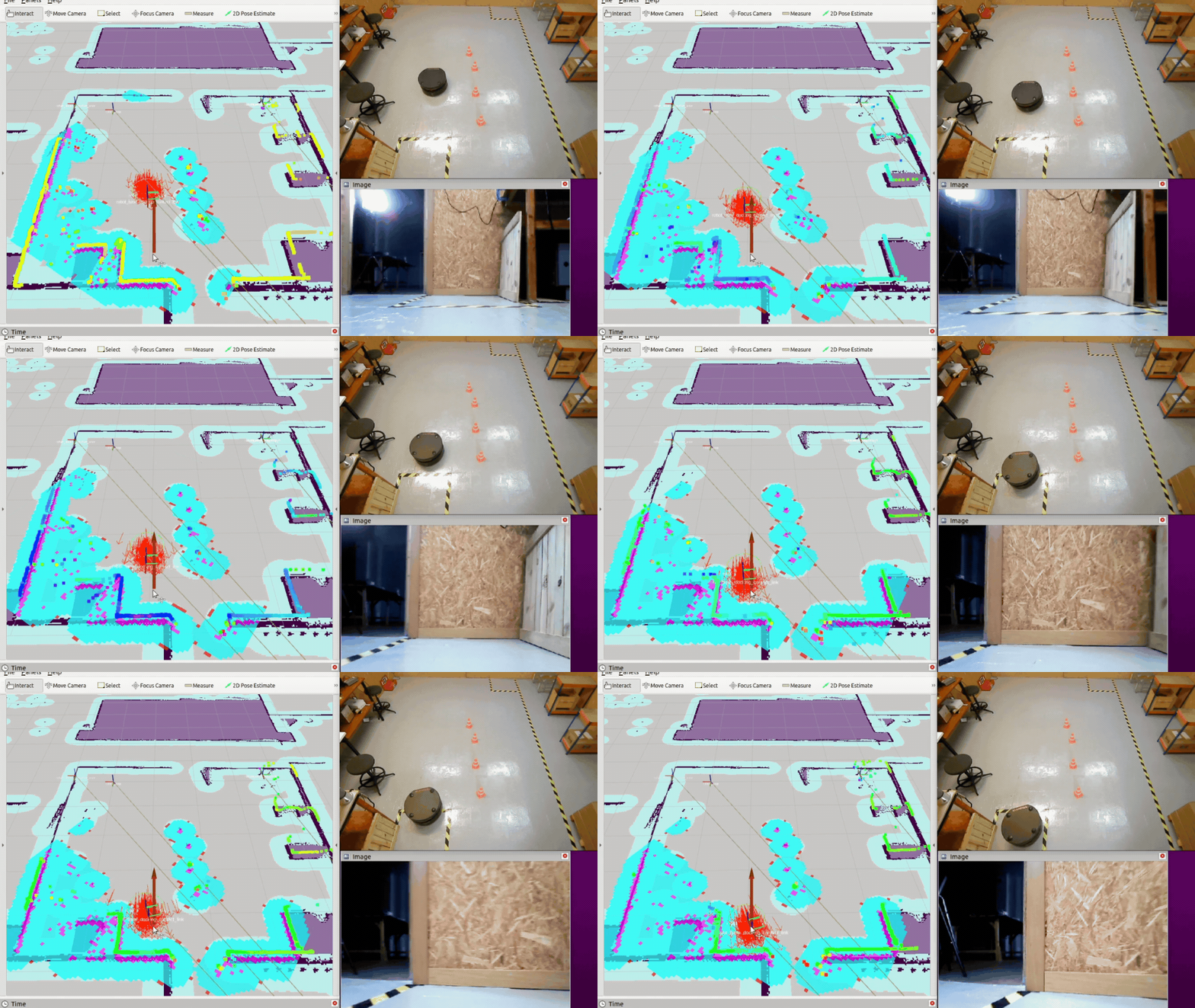
Can it actually navigate correctly? Can the robotic arm successfully pick up the object? Do the sensors behave properly under different conditions? Does obstacle avoidance still work in complex environments?
These problems cannot be solved with code validation alone. They must be tested in realistic scenarios.
But no company wants to physically test robots after every single code commit. It’s expensive, slow, and dangerous. That’s why modern Robotics QA heavily depends on simulation.
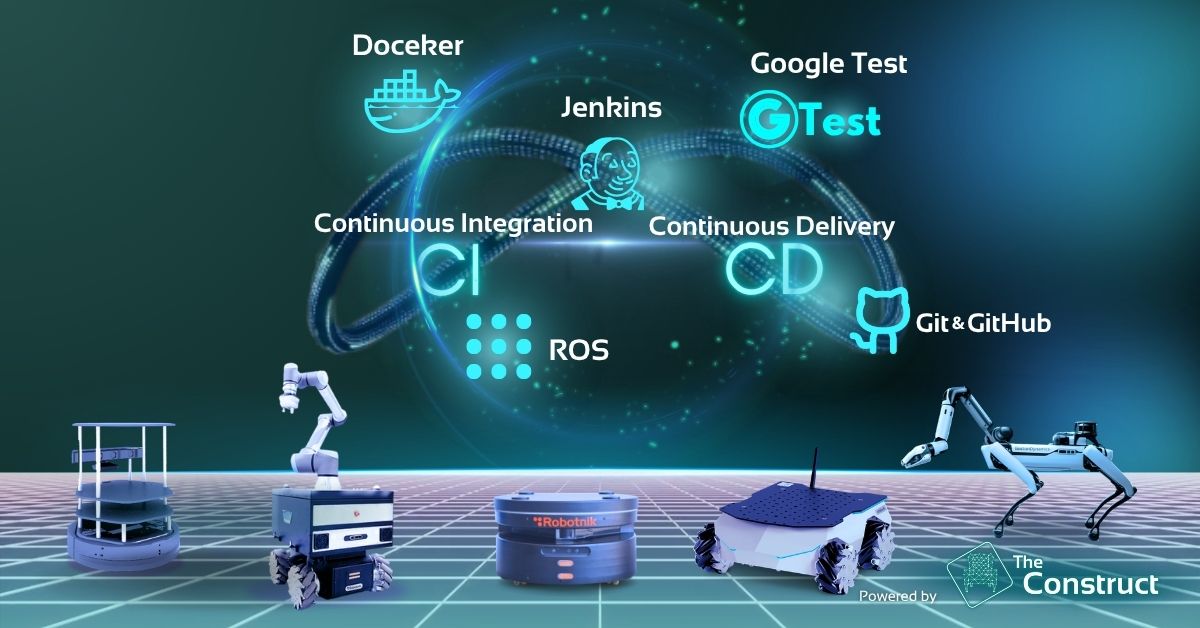
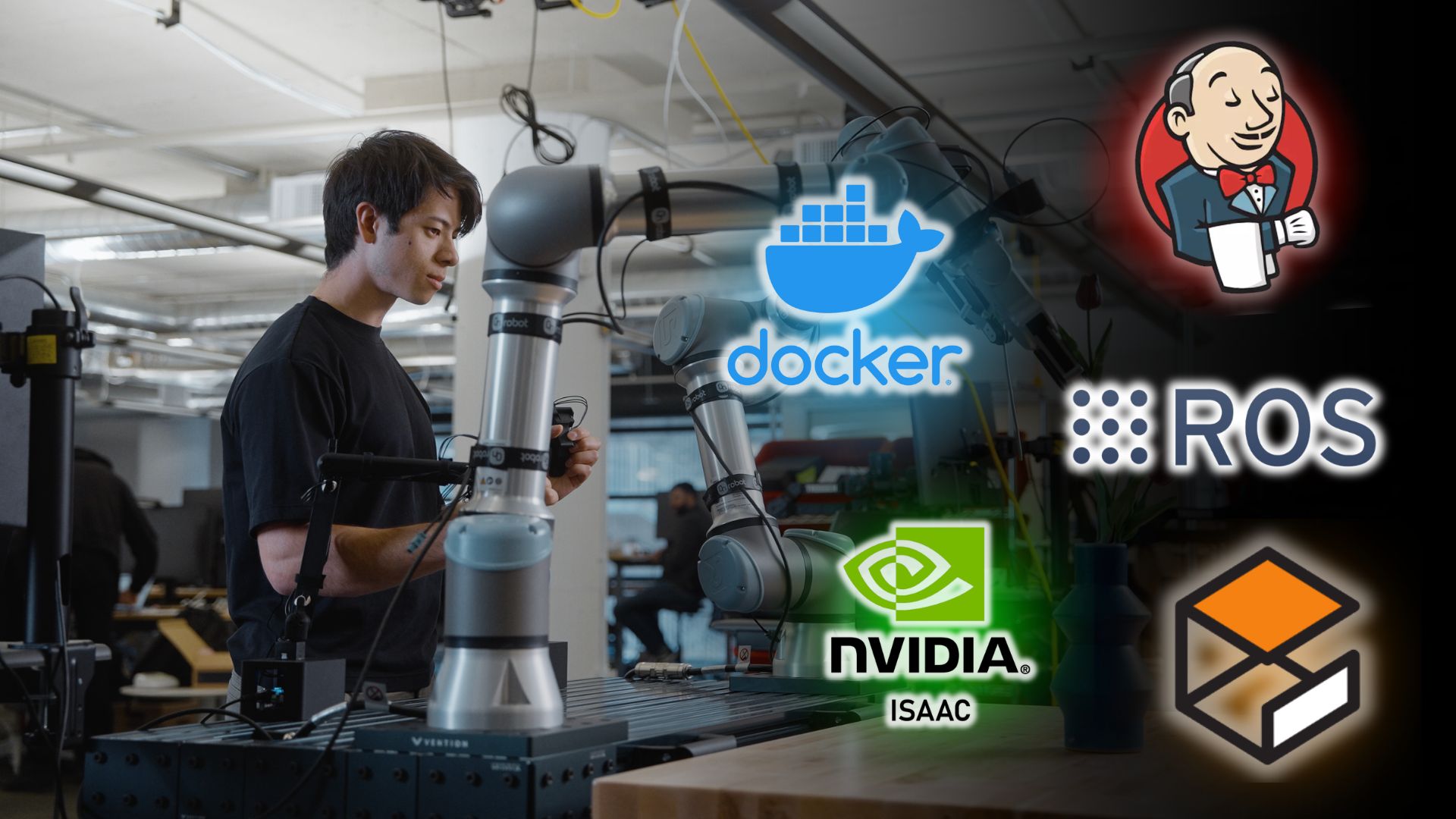
Robotics QA Engineers combine tools such as:
ROS
Gazebo or Isaac Sim
Docker
Jenkins
to build automated testing pipelines for robots.
Every time new code is pushed, the system automatically launches simulations, runs navigation tasks, validates sensor outputs, checks robotic behaviors, and generates reports.
In many ways, this is simply:
Continuous Integration for physical machines.
What makes this field especially interesting is that the barrier to entry is much lower than most people think.
You do not need to go back to university. You do not need a robotics degree. You do not need to become an expert in SLAM, controls, or AI research.
For many QA engineers, automation engineers, or DevOps engineers, the missing piece is simply robotics-specific functional testing skills.
That means learning things like:
ROS
Simulation environments
Robot workflows
Automated robotics testing pipelines
Once you stack those skills on top of an existing QA background, you become an extremely rare profile in the market.
Because the truth is:
Most robotics companies do not lack software engineers. They do not lack algorithm engineers either.
What they truly lack are engineers who can make robotic systems stable, testable, and scalable.
And as robotics continues to expand, that demand will only grow.
cr. zacuaventures
A lot of people still think of QA as a “support role.”
But in robotics, Robotics QA is becoming part of the industry’s core infrastructure.
Over the next decade, robots will move deeper into the real world — into factories, hospitals, logistics, retail, and transportation. And every one of those systems will face the same challenge:
How do you make robots reliable, safe, and continuously testable?
That is why Robotics QA may become one of the most overlooked — yet most valuable — career paths in the entire robotics industry.
This isn’t another course. It’s a training ground — built by engineers who are still in the field, actively working with the technology you’ll be testing. The curriculum isn’t a playlist. It’s a roadmap. Phase by phase. Real projects. Graded by expert engineers.
You’ll get hands-on with ROS, robot simulations, and real robotics workflows inside a cloud-based environment — no robot required to get started. And as a QA engineer, you’re not starting from zero. You’re already ahead. You just need to plug in the robotics layer.
Over 200,000 developers worldwide have trained here. The roadmap is structured. The mentorship is real. The skills you leave with are the ones robotics companies are hiring for — right now.
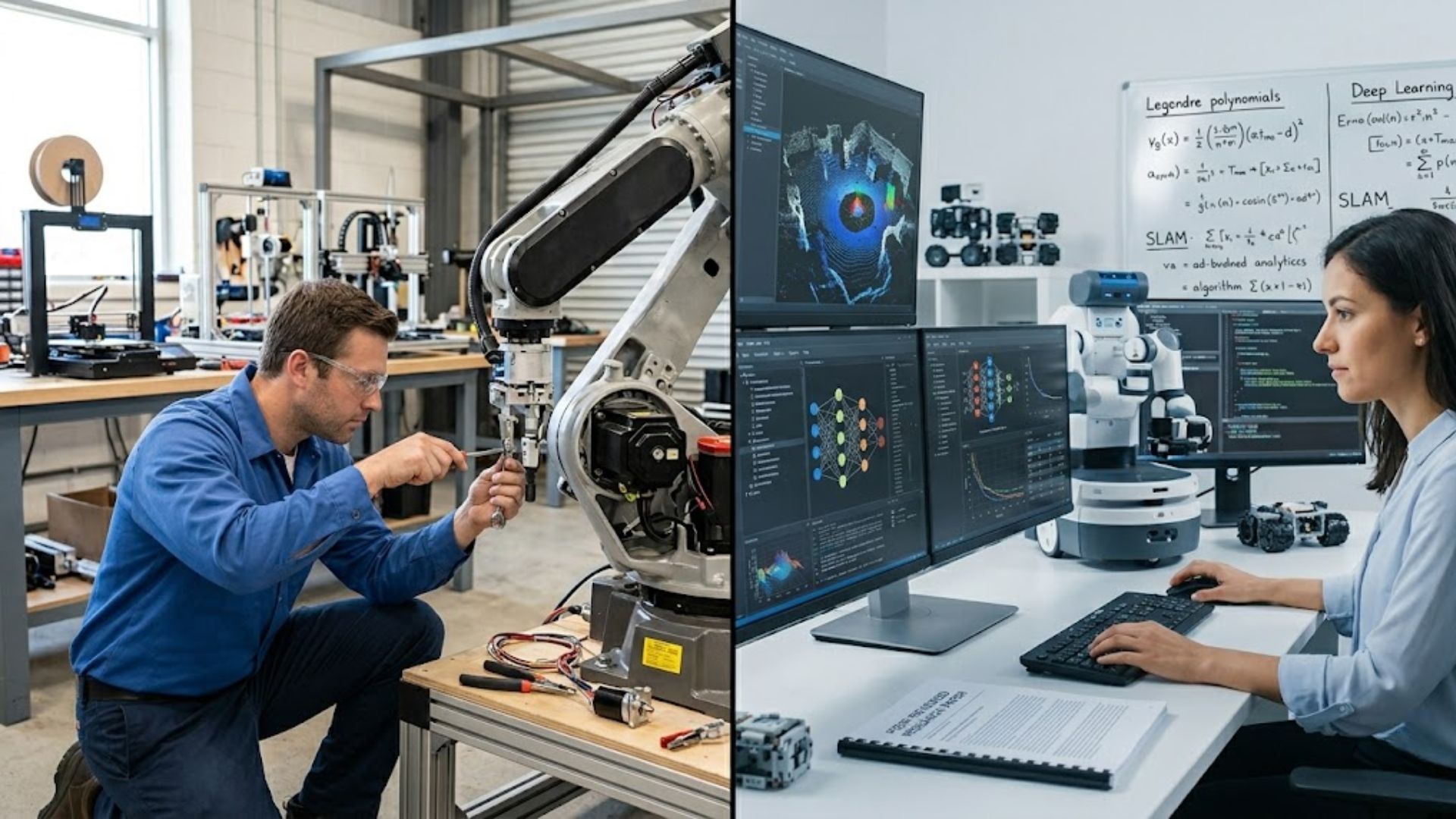
A lot of people say they want to “work in robotics” without realizing the field splits into two fundamentally different paths:
Robotics Engineer
Robotics Researcher
Same industry. Different incentives, tools, and career trajectories.
The Core Difference
A Robotics Engineer builds systems that ship.
Their job is to make robots operate reliably in the real world — under latency constraints, sensor noise, hardware failures, and unpredictable environments. They usually own a subsystem like perception, navigation, controls, or manipulation, and are judged by robustness and deployment.
A Robotics Researcher pushes the boundary of what’s possible.
Their job is to discover new methods, publish new findings, and solve problems nobody has solved before. Success is measured by novelty and research contribution, not production reliability.
Researchers expand the frontier.
Engineers turn the frontier into products.
Different Toolchains, Different Priorities
The difference shows up immediately in the tooling.
Robotics Engineers
The engineering stack is dominated by:
C++
ROS / ROS2
Embedded systems
Simulation pipelines
Real-time systems
Why C++? Because deployed robotics systems need performance, determinism, and reliability. The code has to survive outside the lab.
A robotics engineer is optimizing for:
latency
robustness
maintainability
hardware integration
production constraints
cr. Robotnik
Robotics Researchers
Research is largely Python-driven.
The goal is rapid iteration:
test hypotheses
validate ideas
compare methods
publish results
A proof-of-concept is often enough. The implementation does not need production-grade reliability — it needs to demonstrate that the idea works.
That’s why many research prototypes never make it into real-world systems without heavy engineering work afterward.
cr. Stanford Robotics Center
Education Requirements Are Not the Same
For Robotics Engineering, demonstrated skill matters more than credentials.
Strong candidates usually have:
real robotics projects
strong C++ fundamentals
ROS experience
simulation experience
understanding of sensors, controls, and hardware
A degree helps, but it is no longer the main differentiator. Many strong engineers build their portfolio independently through open-source work, side projects, or competitions.
Research is different.
If you want to become a Robotics Researcher in a serious capacity, a PhD is effectively mandatory. Research hiring is tied to:
publications
citations
peer review
institutional credibility
Without a doctorate, access to top-tier research roles is extremely limited.
Where They Work
Robotics Engineers typically work in:
robotics startups
autonomous vehicle companies
industrial automation
defense
warehouse robotics
consumer robotics
Robotics Researchers are usually found in:
universities
research institutes
corporate research labs
A small number work at elite industrial labs such as:
Boston Dynamics
Google DeepMind
Toyota Research Institute
NVIDIA Research Labs
Those roles are highly competitive and generally reserved for researchers with strong publication records.
cr. NVIDIA Newsroom
Compensation and Career Dynamics
Engineering generally pays better.
Senior robotics engineers in industry can reach compensation levels that exceed many academic research positions, especially in high-growth sectors like autonomous systems and AI robotics.
Research careers trade compensation for intellectual freedom and frontier work.
cr. CarrersInRobotics
Another reality: the larger the institution, the smaller your individual ownership tends to become. In large labs and corporations, work is distributed across many teams and contributors.
Smaller environments often provide:
faster responsibility growth
more ownership
broader technical exposure
clearer individual impact
Which Path Fits You?
Choose Robotics Engineering if you want to:
build deployable systems
work directly with hardware
optimize for real-world reliability
ship products used by customers
Choose Robotics Research if you want to:
develop new algorithms
publish papers
explore unsolved problems
advance the state of the field
Neither path is better.
But choosing the wrong one wastes years.
The earlier you understand the distinction, the more intentionally you can build your skills, portfolio, and career direction.
Whichever path you’re building toward, The Construct gives you the hands-on robotics foundation to get there faster.
The Robotics Developer Masterclass program is designed to help you build the exact skills, projects, and portfolio needed to enter the robotics job market confidently.
The program provides:
Structured robotics learning paths
Hands-on real-world projects
Portfolio-ready systems
Practical engineering guidance
Industry-focused training
Instead of spending years wondering what to build next, you’ll follow a clear roadmap designed to help you become job-ready faster.




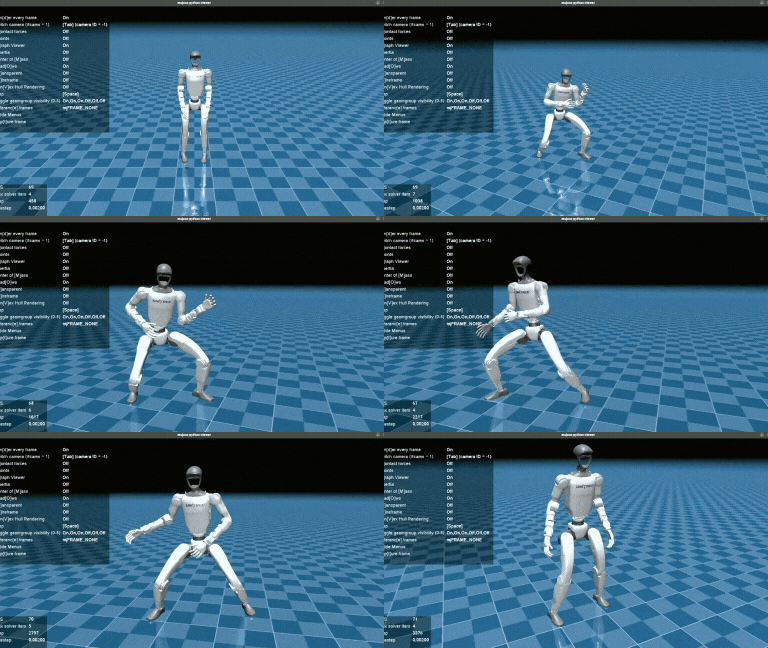
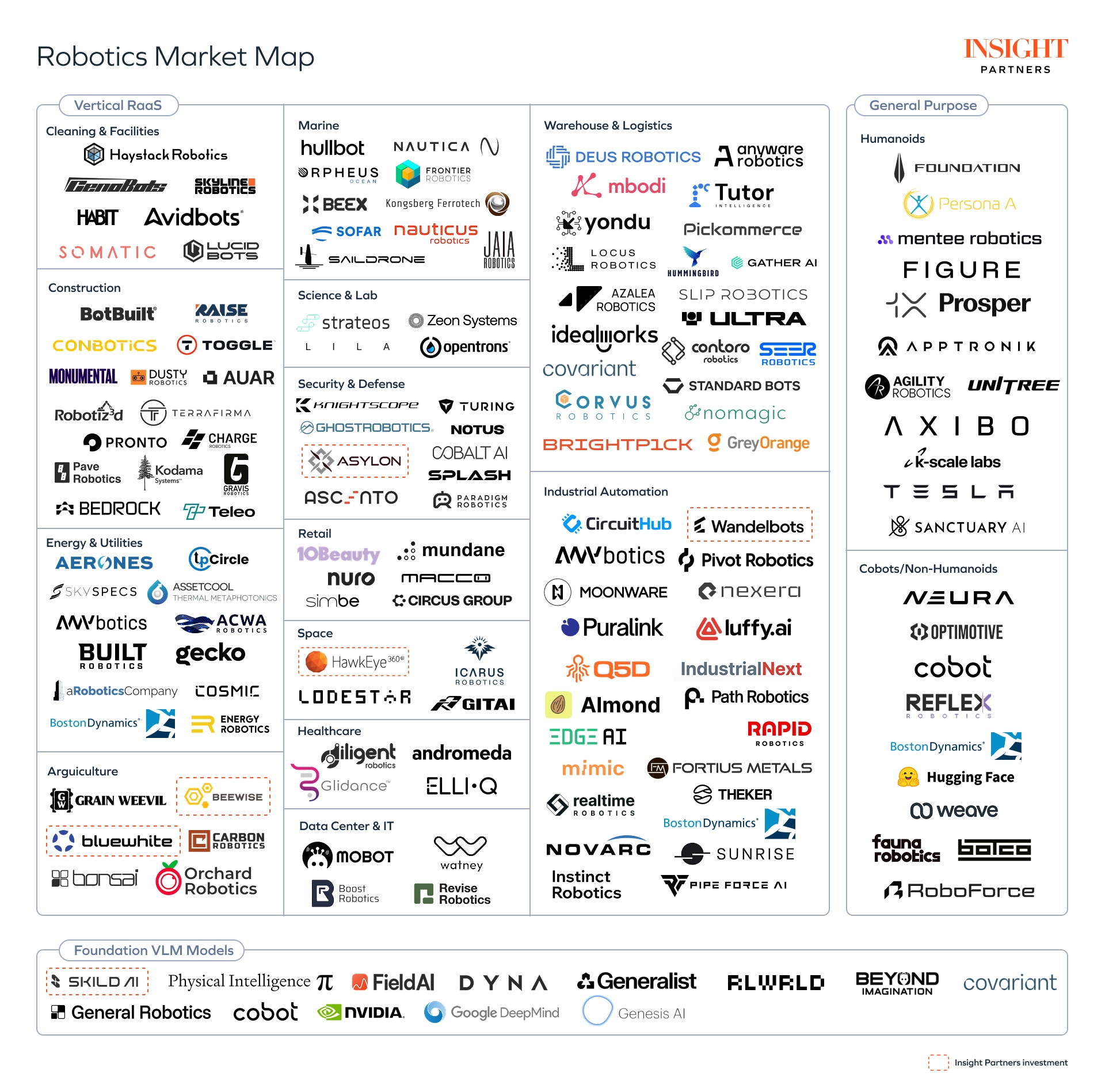
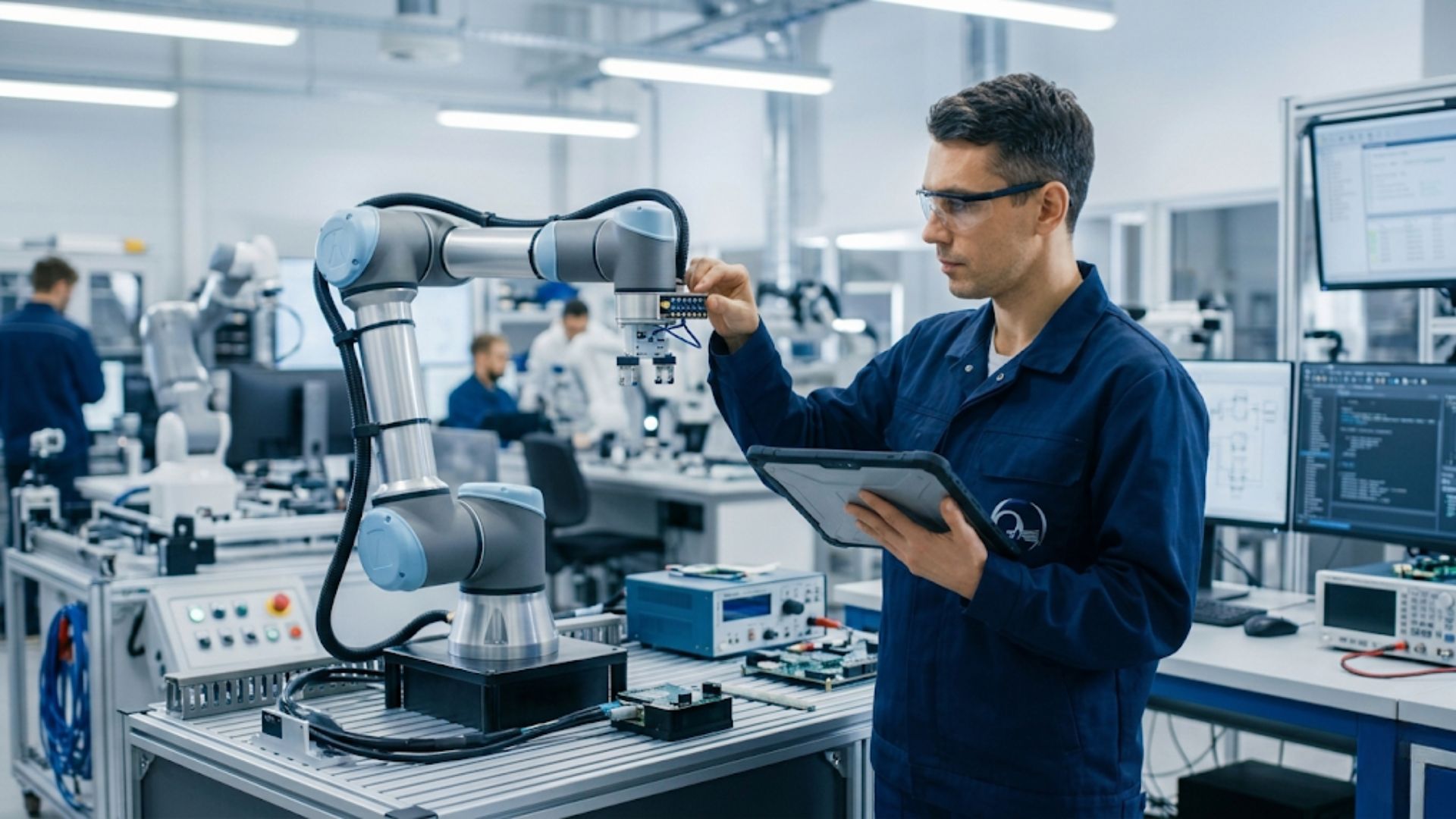
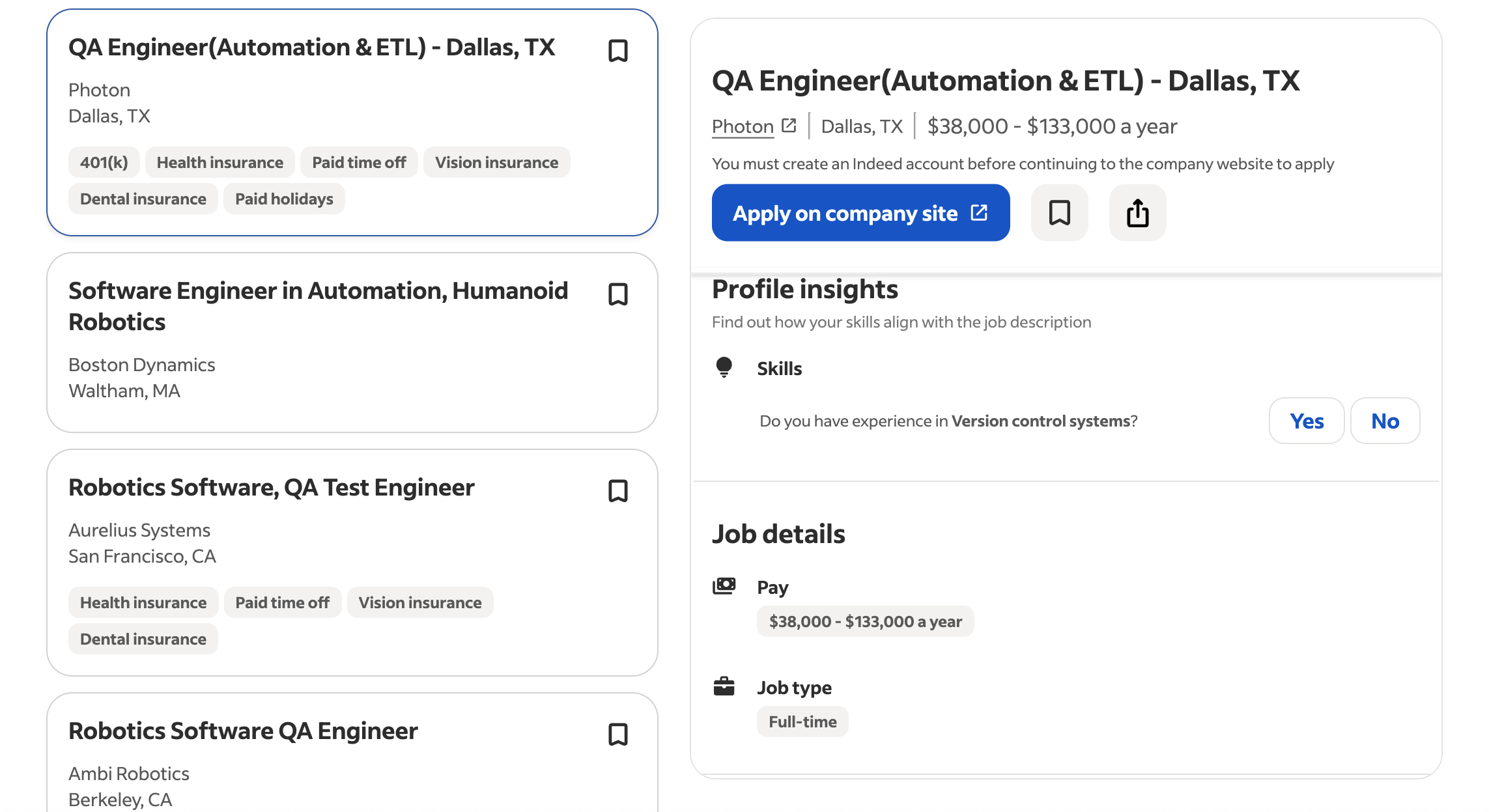
 cr. zacuaventures