
1. Why Robotics Needs Software Engineers
The robotics industry is growing rapidly, but one of its biggest challenges is not hardware—it’s software.
Many robotics systems are built by talented roboticists who excel at making machines move and interact with the physical world. However, building production-quality software requires a different set of skills. As robotics projects scale, teams often encounter familiar software problems:
- Fragile codebases
- Limited testing infrastructure
- Poor maintainability
- Difficulty scaling systems and teams
This is where software engineers bring tremendous value.
Strong software engineers already understand:
- Software architecture
- Code quality and maintainability
- Testing and debugging
- Modular system design
- Scalable development practices
In robotics, the goal is rarely to invent new algorithms. Instead, robotics developers are responsible for understanding existing algorithms, integrating them into larger systems, and building reliable software that allows the robot to perform real-world tasks.
For many robotics companies, that combination of software engineering discipline and robotics knowledge is significantly harder to find than most developers realize.
2. You Don’t Need Hardware Expertise to Get Started
Many software engineers are attracted to robotics because it offers the opportunity to build something that exists in the real world.
However, the excitement often disappears when topics such as electronics, sensors, embedded systems, or firmware enter the conversation.
The good news is that these do not need to be your starting point.
Modern robotics development is largely built around ROS (Robot Operating System), an open framework that abstracts hardware details and exposes robots through standardized software interfaces.
You can think of ROS as an operating system for robots. It allows developers to interact with sensors and actuators without needing to understand every hardware component underneath.
By learning concepts such as:
- Topics
- Services
- Actions
- Message types
developers can access:
- Camera streams
- LiDAR data
- Joint states
- Motor controls
through clean and consistent APIs.
For a software engineer, interacting with a robot through ROS often feels much closer to building distributed systems than working with electronics.
3. Learning Robotics Through Simulation First
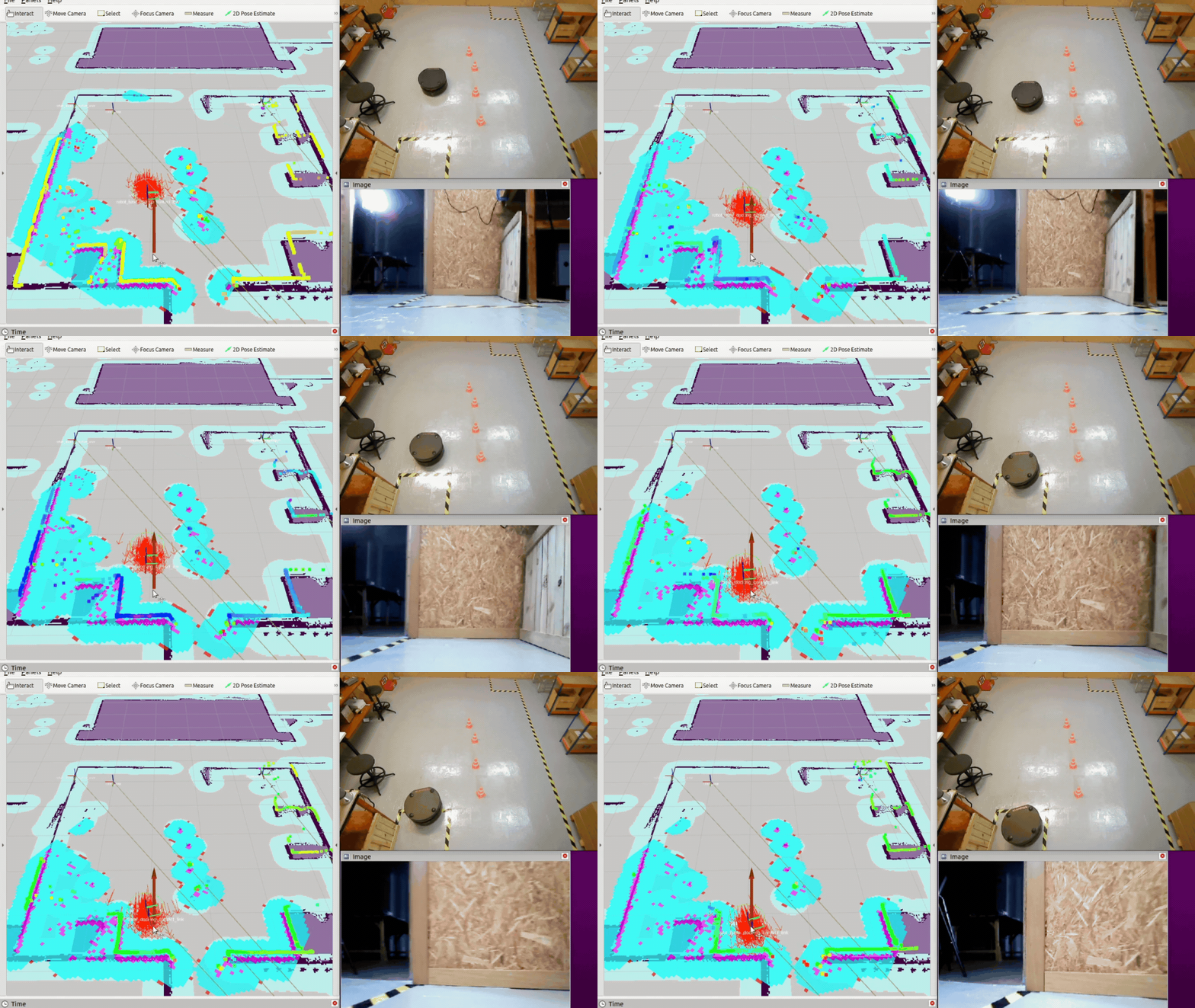
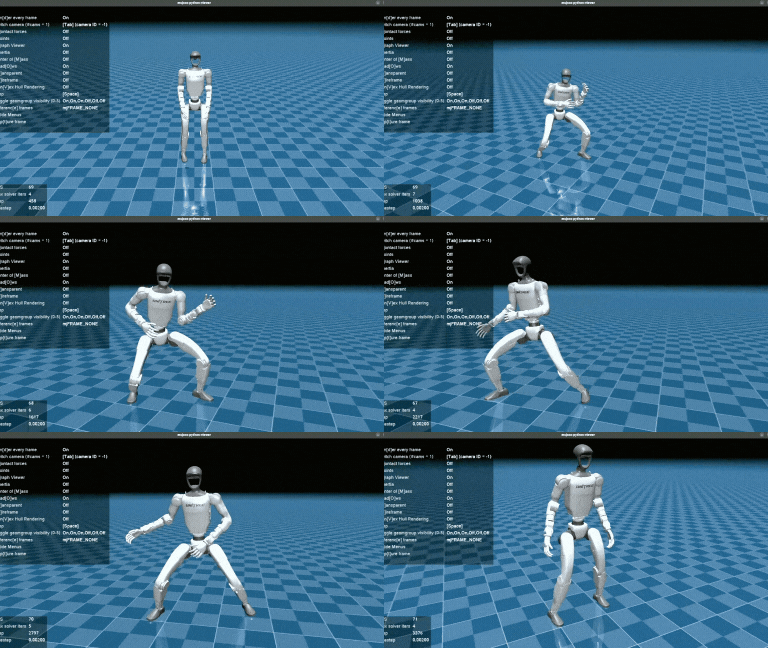
One of the most approachable aspects of robotics development is the ability to work entirely in simulation before touching real hardware.
Tools such as:
- Gazebo
- Isaac Sim
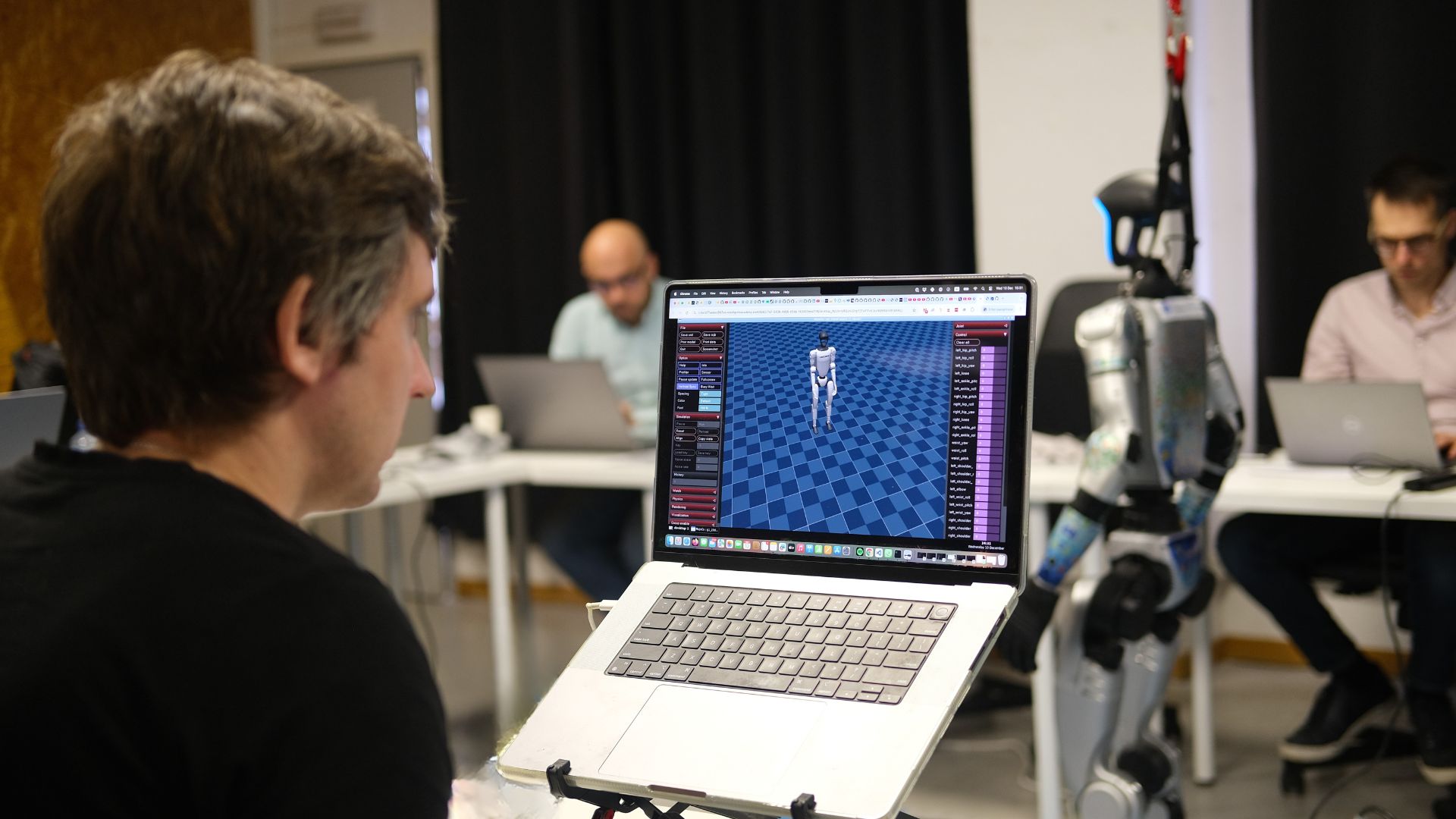
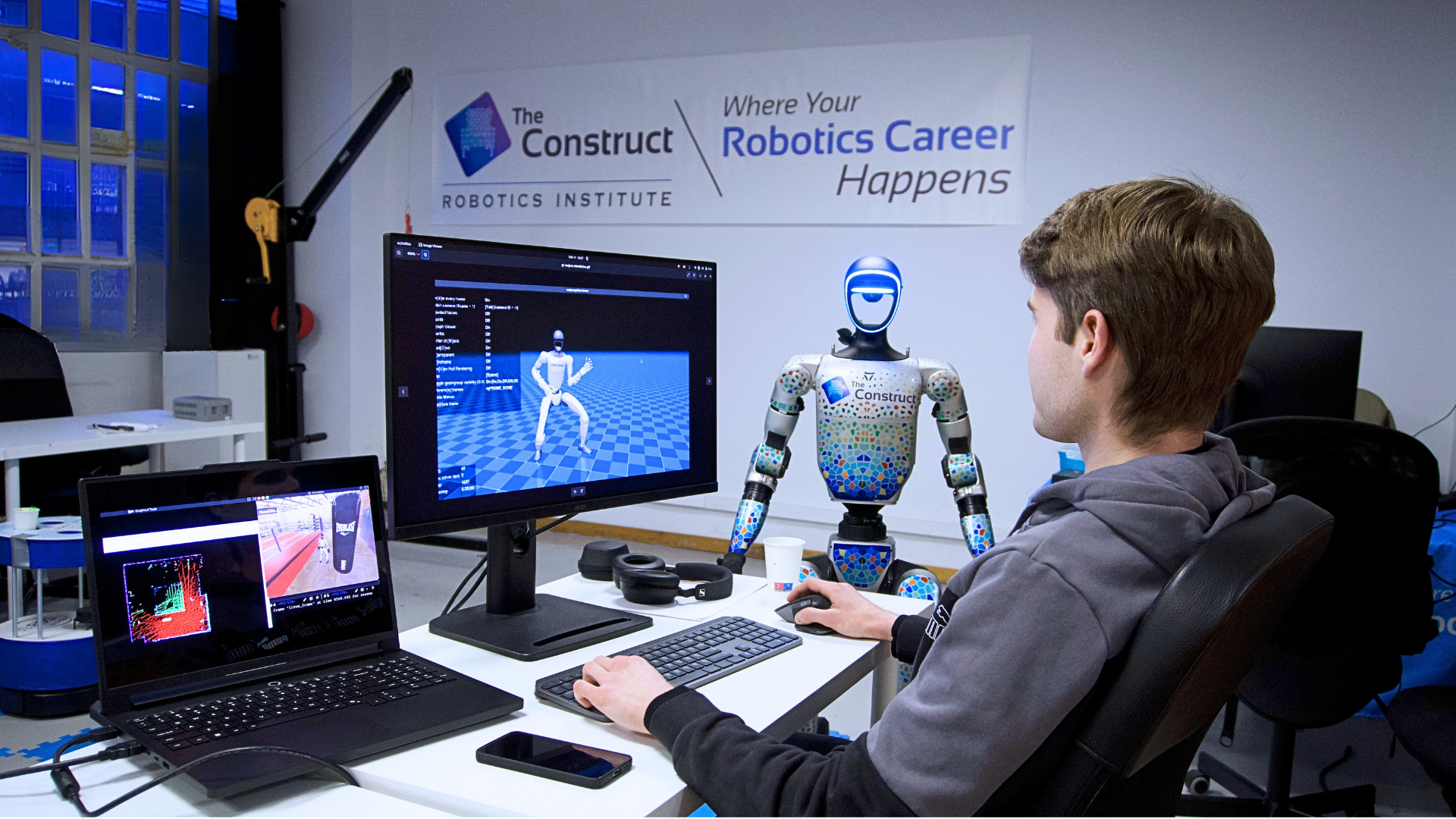
allow developers to run realistic robot simulations on their own computers.
These simulators expose the same ROS interfaces used by physical robots, enabling developers to:
- Write robot software
- Send commands
- Receive sensor data
- Test behaviors
- Debug complete systems
all without purchasing a robot or setting up a lab.
This dramatically lowers the barrier to entry.
Once your software works reliably in simulation, the next step is deploying it to a real robot. Fortunately, the transition is often smoother than expected.
Because ROS provides a consistent interface across simulation and hardware:
- Topics remain the same
- Message structures remain the same
- Software architecture remains largely unchanged
What changes is the environment.
In simulation, everything is predictable. In the real world, sensors introduce noise, motors experience latency, and environments are imperfect.
This is where software engineering skills become particularly valuable. Diagnosing issues through logs, monitoring data streams, and systematically debugging system behavior are skills experienced developers already possess.
Rather than becoming an electronics expert overnight, you gradually learn how software interacts with physical systems and how to interpret the feedback coming from real hardware.
4. Why This Is the Right Time to Make the Transition
The demand for robotics software engineers continues to grow across industries including manufacturing, logistics, autonomous systems, healthcare, and consumer robotics.
At the same time, companies consistently struggle to find engineers who combine strong software fundamentals with robotics knowledge.
ROS has emerged as the industry’s de facto standard, powering a large portion of modern robotics development. Skills learned within the ROS ecosystem are transferable across a wide range of robots and companies, making the learning investment highly reusable.
For software engineers, this creates a unique opportunity.
You already possess the most difficult part of the skill set:
- Programming experience
- Software design principles
- System architecture knowledge
- Debugging and testing expertise
The remaining challenge is learning the robotics layer on top of those existing foundations.
Compared with switching into an entirely new field, the path into robotics is more accessible than many developers assume. You do not need to become a hardware engineer first. You simply need to understand how robots expose their capabilities through software and how to build reliable systems around them.
As robotics adoption accelerates over the coming years, developers who can bridge the gap between software engineering and robotics will be among the most valuable engineers in the industry.
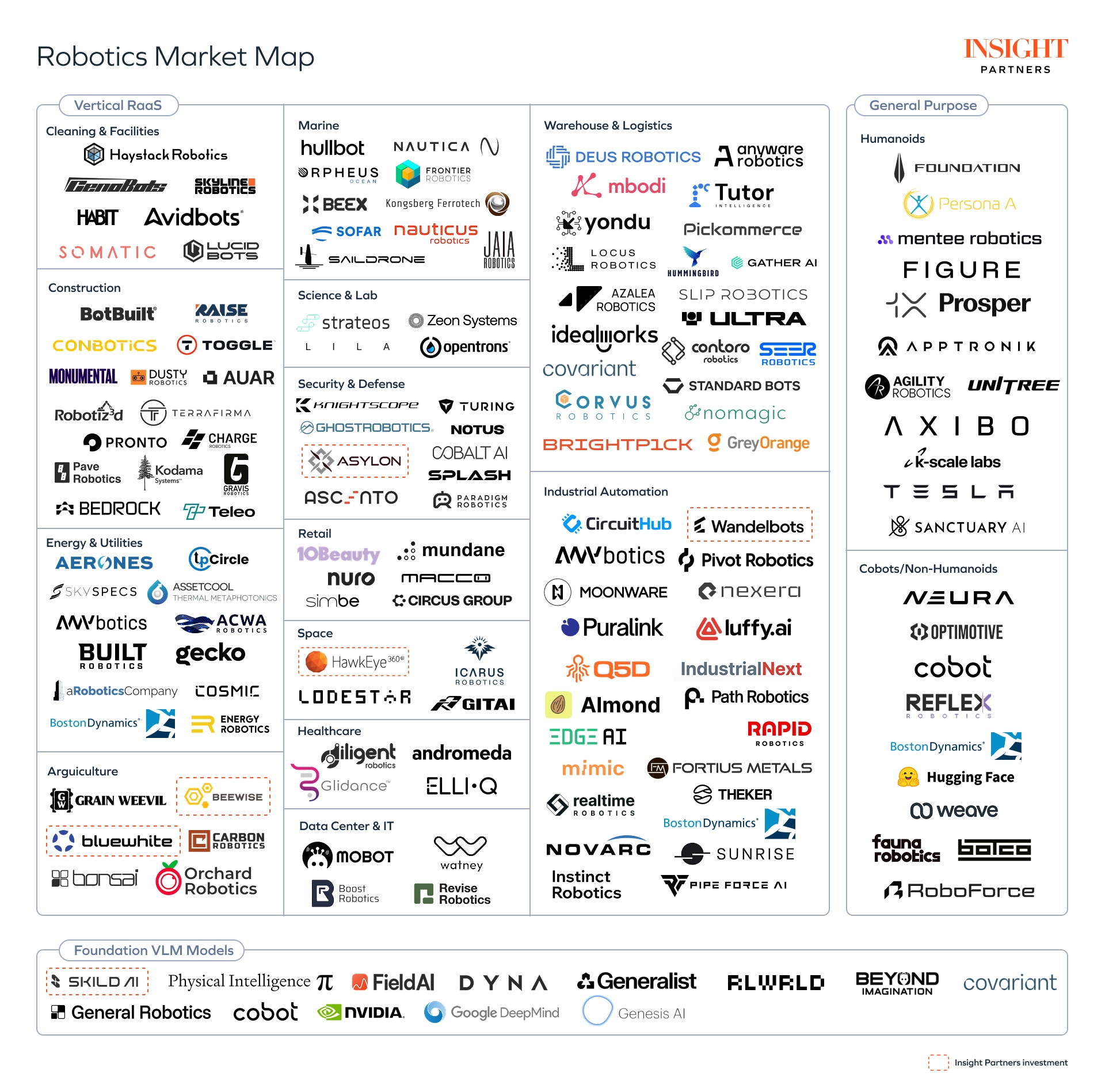
cr. Insight Partners
The opportunity is clear—but making the transition efficiently requires a structured way to build robotics-specific skills on top of your existing software background.
If you’re looking to accelerate that journey, The Construct’s Robotics Developer Masterclass provides hands-on training, real-world projects, and portfolio-building experience designed to help software engineers confidently break into robotics.
The program provides:
- Structured robotics learning paths
- Hands-on real-world projects
- Portfolio-ready systems
- Practical engineering guidance
- Industry-focused training
Instead of spending years wondering what to build next, you’ll follow a clear roadmap designed to help you become job-ready faster.
More Info & Enroll at: roboticsdeveloper.ai
0 Comments