
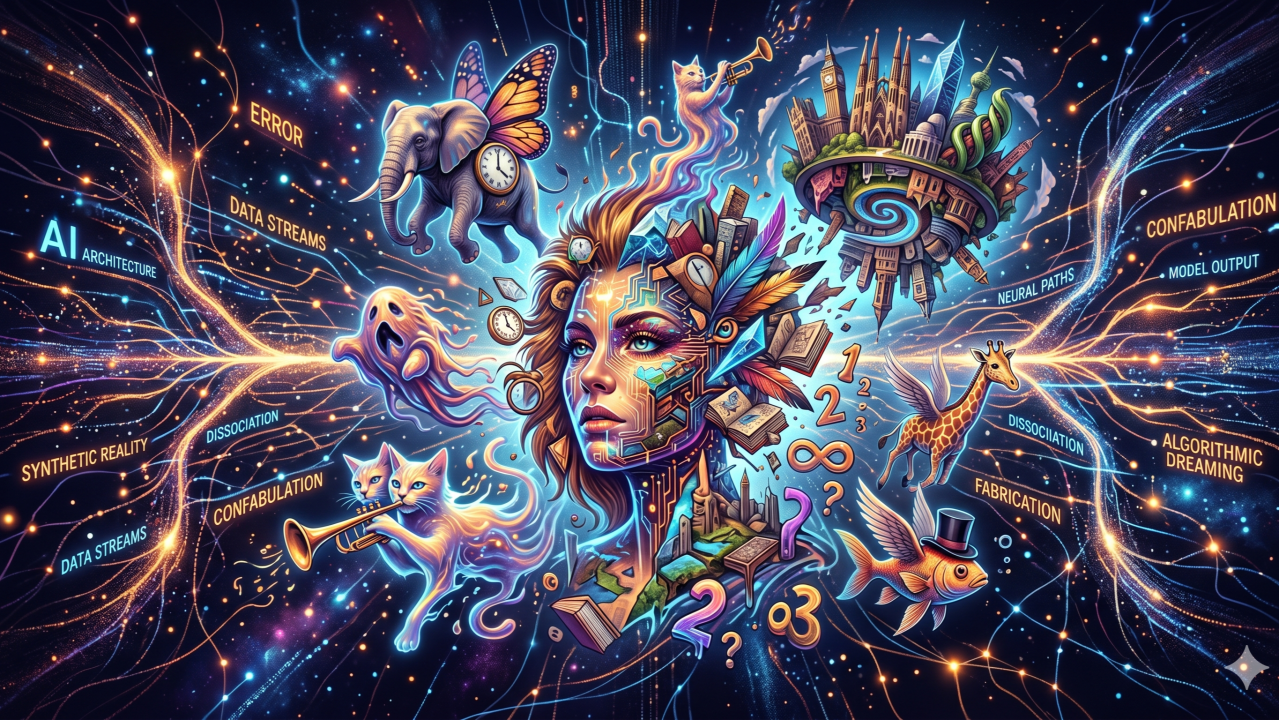

On the misuse of a word that is quietly shaping — and distorting — how we think about artificial intelligence.
Every time an AI model gives you a wrong answer, someone calls it a hallucination. The word has spread from research papers to headlines to casual conversation with remarkable speed. It sounds precise — almost clinical. It sounds like it explains something. It does not.
What hallucination actually means
To hallucinate is to perceive something as real — vividly, convincingly — while in an altered state of mind. The human brain, under the influence of fever, psychedelic substances, or certain psychiatric conditions, generates perceptions that feel entirely genuine but have no basis in external reality.
The key word there is altered. Hallucination presupposes a normal baseline and a departure from it. It presupposes a subject — a consciousness capable of perceiving, of believing, of being deceived.
AIs have none of that
A language model has no beliefs. It cannot perceive. There is no “normal” state from which it deviates when it produces a wrong answer. The model’s internal process when it writes something correct is, mechanically, identical to when it writes something false. Same weights. Same forward pass. Same temperature.
There is no altered state. There is no state at all, in the experiential sense. There is just computation — and sometimes, that computation produces an incorrect result.
"The model cannot tell the difference between a correct output and an incorrect one. Neither its architecture nor its process changes. We humans can feel when something is off in a hallucination. An AI cannot feel (detect) anything."Hallucination vs. wrong output

But does it matter if the result is wrong either way?
Yes. Profoundly. The words we use to describe a problem shape — often unconsciously — the solutions we reach for.
If we call AI errors “hallucinations,” we frame the model as a mind that loses its grip on reality. The implied fix is something like grounding — tethering the model back to the real, as you might a person who has wandered off. We start thinking in metaphors of mental illness and recovery for a system that has none of them. We propagate the idea that machines are getting conscious.
Wrong words lead to wrong solutions and confusions
If instead we say the model produces wrong outputs, the framing shifts immediately to engineering. Where in the training data did this error originate? What is the probability distribution over likely next tokens in this context? How do we design evaluation pipelines to catch these failures before deployment?
One framing invites poetry and apocalyptical visions of the future. The other invites precision. Only one of them moves us closer to actually solving the problem.
"A clever media headline chose hallucinate over error because it conjures an image. It gets the click. But every click spent on the metaphor is attention not spent on the mechanism."Two sides. Choose one.
There is a side that reaches for the vivid word — the one that travels well, sounds dramatic, fills a headline. And there is a side that reaches for the accurate word — the one that, when you follow it, actually leads somewhere useful.
The word “hallucinate” applied to AI is not a harmless metaphor. It is a category error dressed up as an insight, propagated by people who found it generated engagement and adopted by everyone else who assumed someone upstream had thought it through.
AIs do not hallucinate. They produce wrong outputs. Say that, and you are already thinking more clearly about what artificial intelligence actually is — and what it will take to make it better.
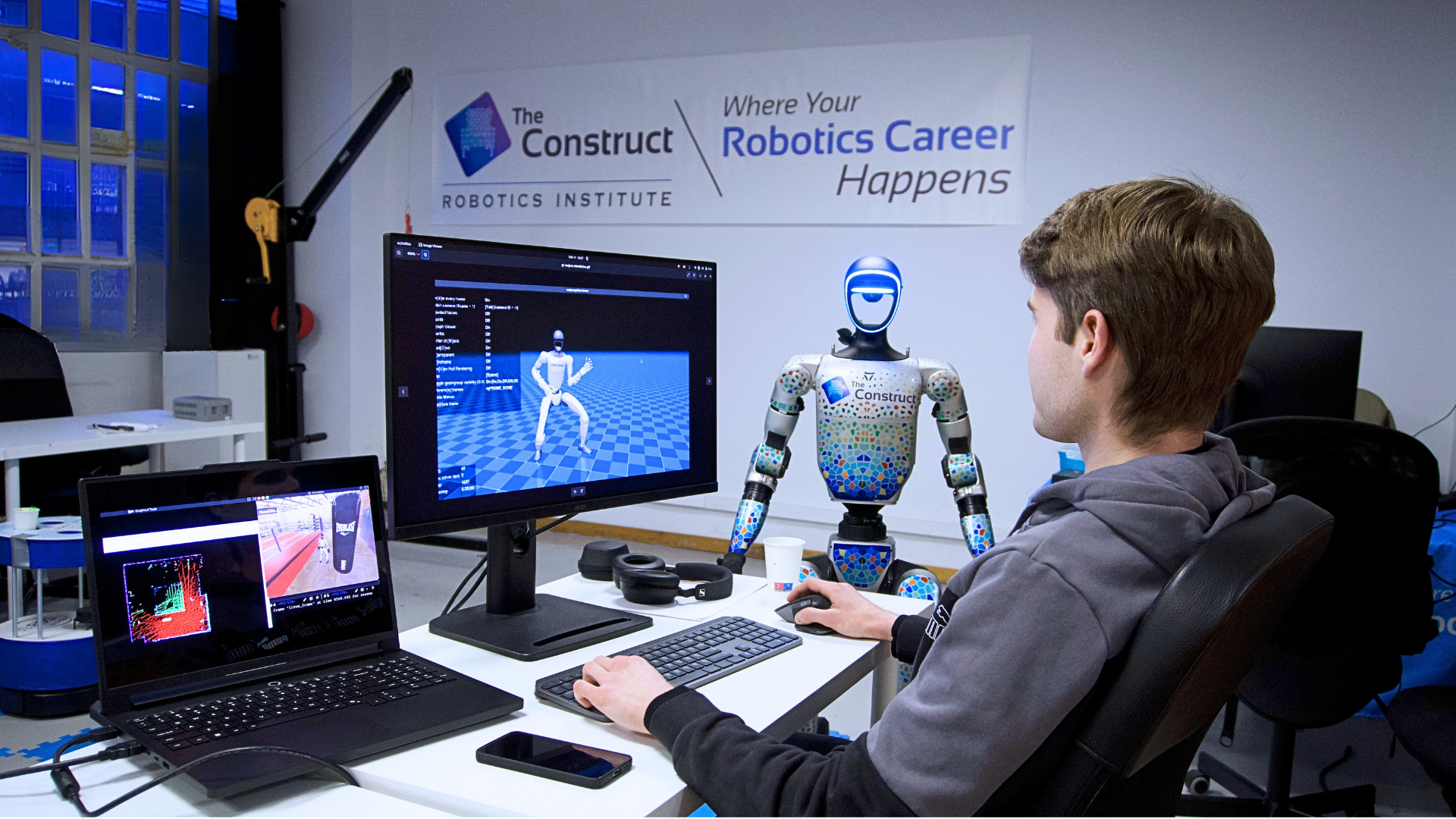
If your team is exploring humanoid robotics, this 3-day intensive humanoid RL training is designed to take you from zero setup to a real humanoid demo in just 3 days:
• Sim-to-real reinforcement learning workflows • RL for locomotion and whole-body control • Vision-Language-Action (VLA) models for humanoid skills • Deployment on real humanoid robots.
More Info: theconstruct.ai/humanoid-robot-reinforcement-learning-training/

0 Comments