

If you’re aiming for a career in robotics engineering, you’ve probably heard that high-level tools, low-code platforms, and AI-assisted development are the future.
And that’s true—to a certain extent.
But there’s a hard truth every aspiring robotics engineer needs to understand early:
If you want to build production-ready robots that reliably operate in the real world, C++ is not optional.
It’s a non-negotiable requirement.
Even with AI helping us generate code faster than ever, deep C++ knowledge remains one of the most important skills robotics companies look for when hiring engineers. And honestly, I don’t expect that requirement to disappear anytime soon.
In fact, the opposite may happen:
The more we rely on AI to generate code, the more critical it becomes to understand what’s happening underneath the hood—because AI-generated errors are becoming increasingly complex.

The Problem With How Most Developers Learn C++
Many developers stop learning C++ far too early.
They learn:
- How to write functions
- How classes work
- Basic inheritance
- Some object-oriented programming concepts
And then assume they’re “ready.”
But robotics companies are not hiring engineers based on basic syntax knowledge.
They care about whether you can handle:
- Multi-threading
- Memory management
- Smart pointers
- Lambda expressions
- Real-time performance constraints
- System architecture decisions
- Concurrency and synchronization
Because robotics is not traditional software development.
Robots interact with the physical world.
That means:
- Sensor data must be processed in real time
- Control loops need millisecond-level responsiveness
- Multiple systems must run concurrently
- Memory leaks can crash entire systems
- One blocked thread can break robot behavior
In these high-stakes environments, relying on AI-generated “good enough” code without understanding what’s happening internally is simply not enough.
AI can help you write code faster.
But it cannot replace engineering judgment.
You still need to understand:
- Why certain architectural decisions matter
- How memory is allocated and released
- How threads communicate safely
- Where bottlenecks come from
- How to build scalable and maintainable systems

To Reach Industry Level, You Must Go Deep Into Modern C++
If you truly want to become an industry-level robotics engineer, you need to master Modern C++ deeply.
Not just enough to “use it,” but enough to understand:
- How smart pointers work internally
- The cost of virtual functions
- RAII principles
- Move semantics
- Thread synchronization
- Object lifetime management
- Performance optimization techniques
These are the skills that separate:
- Hobbyists
- Junior developers
- Senior robotics engineers
And this depth matters even more in robotics, where performance and reliability directly impact real-world behavior.
How to Actually Improve Your C++ Skills
1. Study Modern C++ Systematically
A great place to start is with a robotics-focused Modern C++ course.
For example:
- Advanced Modern C++ for Robotics by The Construct Robotics Institute
Courses like this are valuable because they focus on real robotics applications rather than isolated academic examples.
You’ll learn:
- Industrial coding practices
- ROS-oriented C++ workflows
- Real-time thinking
- Better software architecture habits
2. Read Effective Modern C++
One of the most recommended books for professional-level C++ development is:
Effective Modern C++
This book helps you understand:
- Proper use of
auto - Move semantics
- Efficient memory handling
- Modern best practices
- Common hidden mistakes in C++
A huge amount of senior-level engineering intuition comes from deeply understanding concepts covered in this book.
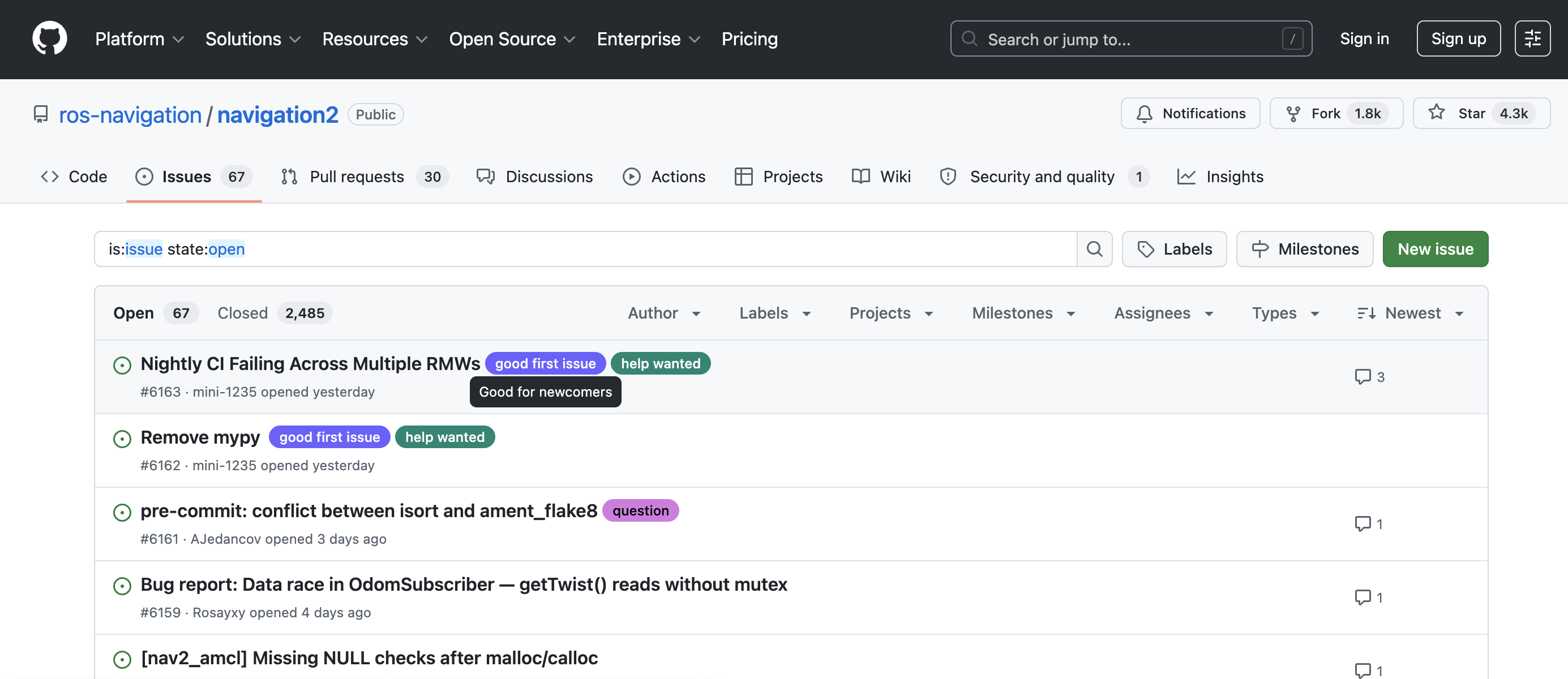
3. Contribute to ROS Open Source Projects
The best learning happens through real systems.
One of the fastest ways to level up is to:
- Find a ROS open source repository
- Read production-level code
- Solve issues
- Submit pull requests
- Learn how large robotics systems are structured
This exposes you to:
- Large codebases
- Real engineering workflows
- Industrial software architecture
- Collaborative development
- Real debugging challenges
And those experiences are far more valuable than building isolated tutorial projects.
Stop Treating C++ as Just Another Resume Skill
A lot of people list C++ on their resume.
But when they actually build projects, everything is still written in Python.
Python is great.
It’s fast to develop with, easy to prototype, and extremely powerful.
But if your goal is to work in serious robotics engineering roles, you need to start:
- Writing ROS nodes in C++
- Building control systems in C++
- Optimizing performance in C++
- Developing production-ready robotics applications in C++
Even when Python would be faster.
Because companies are not just hiring people who “know” C++.
They are hiring engineers who can build reliable systems with it.
Build Projects and Prove Your Skills
The most important part of learning C++ is not saying you studied it.
It’s proving that you can use it.
So starting today:
- Build robotics projects in C++
- Practice deep Modern C++ concepts
- Contribute to open source
- Work on real systems
- Showcase everything in your portfolio
Because at the end of the day:
The engineers who can make robots reliably work in the real world are the ones the industry truly needs.
And if you want to understand why your portfolio matters so much in robotics hiring, check out this blog:
https://www.theconstruct.ai/your-portfolio-is-your-real-robotics-degree/
Ready to Break Into Robotics Faster?
If you don’t know where to start, our Robotics Developer Masterclass program is designed to help you build the exact skills, projects, and portfolio needed to enter the robotics job market confidently.
The program provides:
- Structured robotics learning paths
- Hands-on real-world projects
- Portfolio-ready systems
- Practical engineering guidance
- Industry-focused training
Instead of spending years wondering what to build next, you’ll follow a clear roadmap designed to help you become job-ready faster.
More Info & Enroll at: https://www.theconstruct.ai/robotics-developer/

0 Comments