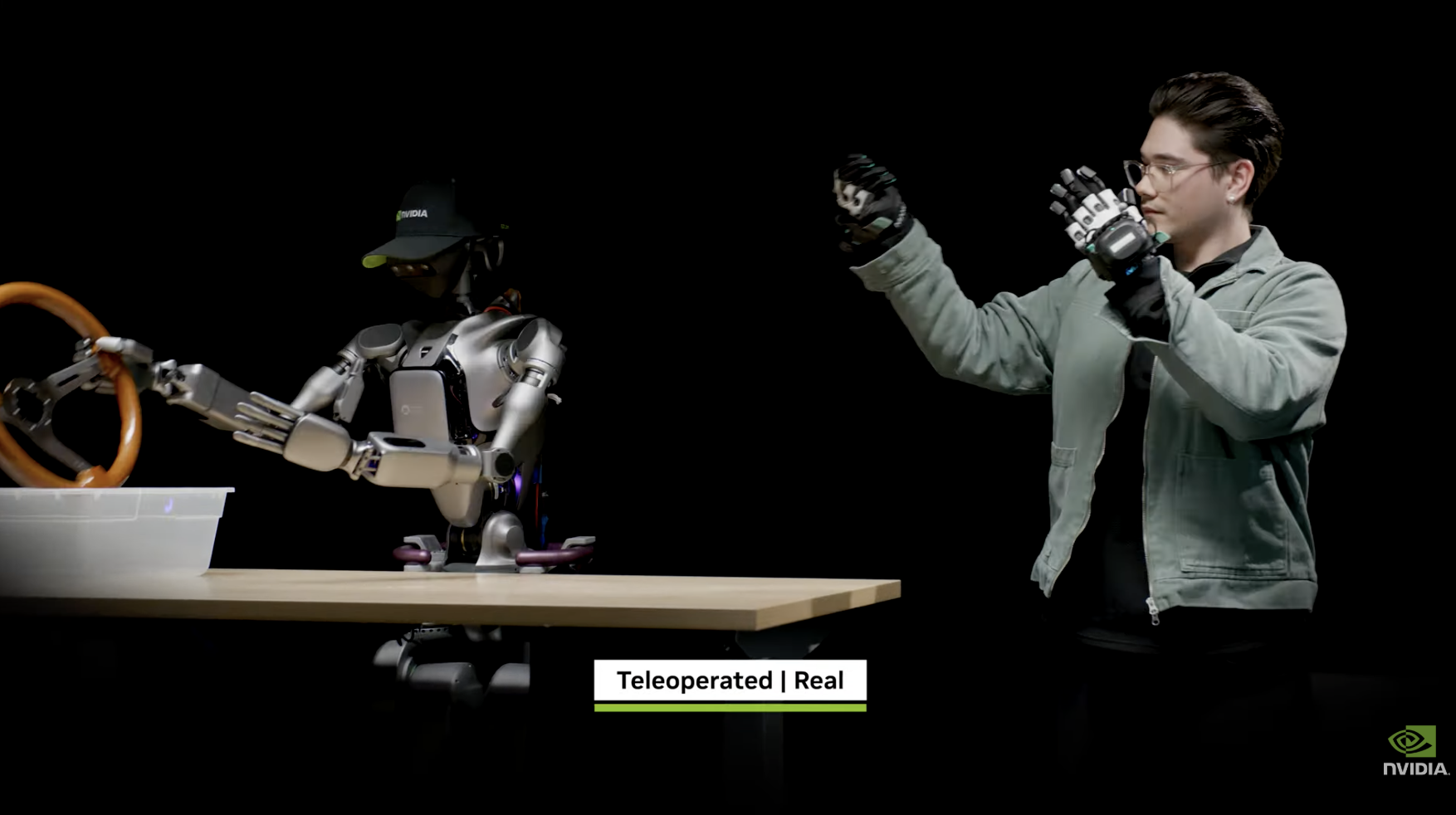

Teleoperation is one of the coolest things you can do with humanoid robots!
🧠 1. But What Is Teleoperation?
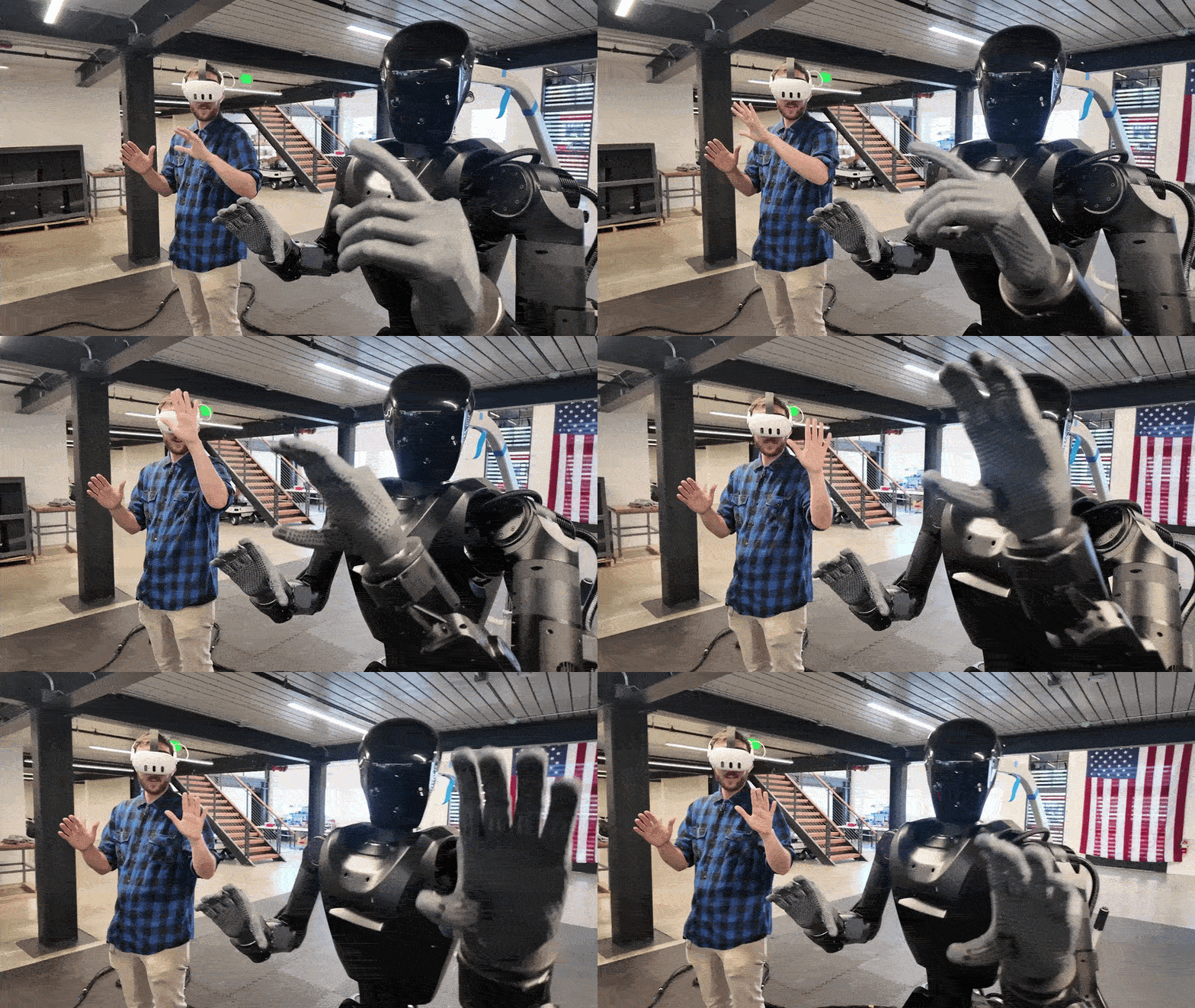
At its core, teleoperation is simple: a human moves, and a robot mirrors those movements in real time.
While teleoperation has long been explored in research, similar interaction paradigms have been widely depicted in popular media — for example, synchronized robot control in Pacific Rim, motion-driven robot boxing in Real Steel, and full-body avatar embodiment in Ready Player One.

During the Chinese Spring Gala 2026, Unitree showcased one of its largest humanoid robots performing complex movements on stage — powered by real-time teleoperation.

⚙️ 2. How Does Teleoperation Work?
Take the Unitree G1, a humanoid robot with arms, legs, and dexterous hands.
A human operator is equipped with:
- A VR headset
- Hand controllers
- Ankle motion trackers
These sensors capture the operator’s movements in real time. Specialized software then translates those movements into commands the robot can execute.

But here’s the key challenge: Humans and robots don’t share the same body structure.
You can’t simply copy joint angles directly — doing so could destabilize the robot or produce unnatural motion.
This is where retargeting comes in.

Retargeting adapts human motion to the robot’s physical constraints, proportions, and balance requirements. The result: movements that look natural and remain stable — regardless of differences in height, weight, or structure.
🌍 3. Why Teleoperation Matters
Teleoperation goes far beyond remote control. It is becoming a foundational tool for building intelligent robots in two major ways:
– Imitation Learning
Humans demonstrate tasks — such as grasping objects or performing complex sequences — and robots learn by observing and recording these actions.
No manual programming is required, and it lowers the barrier to teaching robots new skills.

– Training Data for AI
Teleoperation also enables large-scale data collection.
A human can perform a task repeatedly while controlling the robot. The recorded data is then used to train reinforcement learning models.

Over time, the robot:
- Learns to perform the task autonomously
- Improves beyond the original human demonstration
Teleoperation enables robots to acquire skills from human demonstrations, reproduce complex motor behaviors, and operate in environments beyond direct human reach.
But we are still at an early stage of this transition.
🔹If you want to learn humanoid teleoperation hands-on, join our 3-day Humanoid Reinforcement Learning Bootcamp in Barcelona — and go from zero setup to a real humanoid robot demo.
More Info: theconstruct.ai/humanoid-robot-reinforcement-learning-training/

Watch the full Video

0 Comments