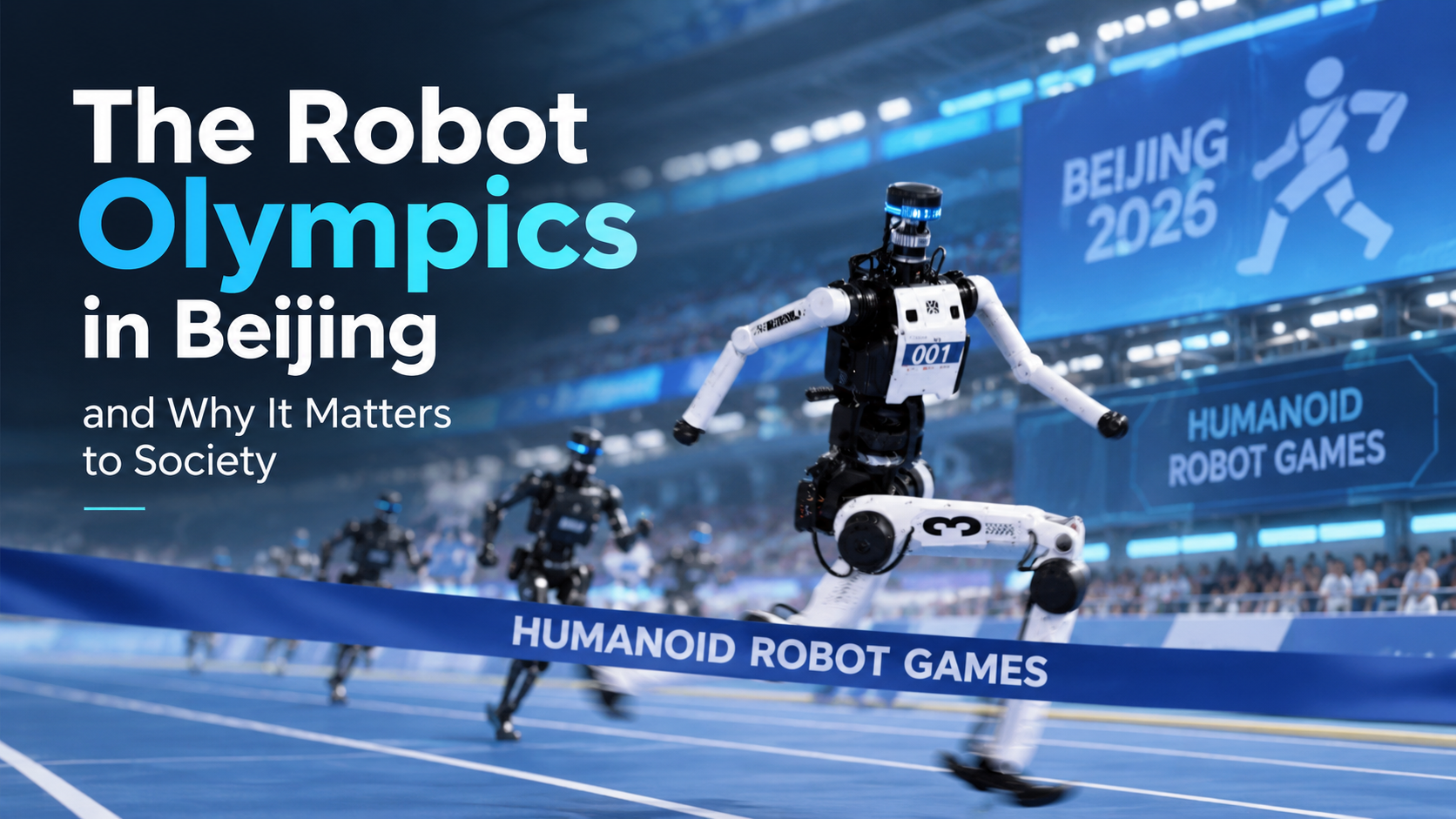

A humanoid robot recently ran 100 meters in 8.64 seconds.
That is faster than Usain Bolt’s 9.58-second world record.
The performance happened at the second World Humanoid Robot Games in Beijing, where more than 2,000 robots from 666 teams competed in 51 events. Some events looked like traditional sports, including running, football, boxing, and table tennis. Others were designed around practical tasks such as hotel service, object manipulation, and firefighting.
The scale of the competition had also changed dramatically. In 2025, the first edition involved roughly 500 robots and 280 teams. Just one year later, participation had grown several times over.
But the most interesting part of the event was not simply how fast the robots could run.
It was the difference between being impressive and being useful.
Faster Than Humans, but Not Necessarily Better
Tiangong Ultra, developed by the Beijing Humanoid Robot Innovation Center, won the 100-meter final in 8.64 seconds. It also ran the 400 meters in around 38 seconds and achieved a standing high jump of nearly 2.9 meters.
The improvement from last year was particularly striking. The winning 100-meter time in 2025 was around 21.5 seconds. Twelve months later, it had fallen to 8.64 seconds.
Yet the fastest robot was not the biggest overall winner.
AgiBot, competing for the first time, collected 46 medals: 18 gold, 16 silver, and 12 bronze. Its strength was not primarily speed. Instead, its robots performed well in events involving object manipulation and practical tasks, including simulated hotel and library work.
The contrast is revealing. One team focused on pushing the limits of physical performance, while another demonstrated capabilities that are closer to what robots might eventually need in the real world.
Unitree provided another interesting example. After winning four running gold medals last year, one of its robots finished last in its first 100-meter heat this year. The company explained that it had been focused on manufacturing and selling robots rather than developing a specialized machine for racing.
Winning a robot race, in other words, is not necessarily the same thing as building a successful robot business.
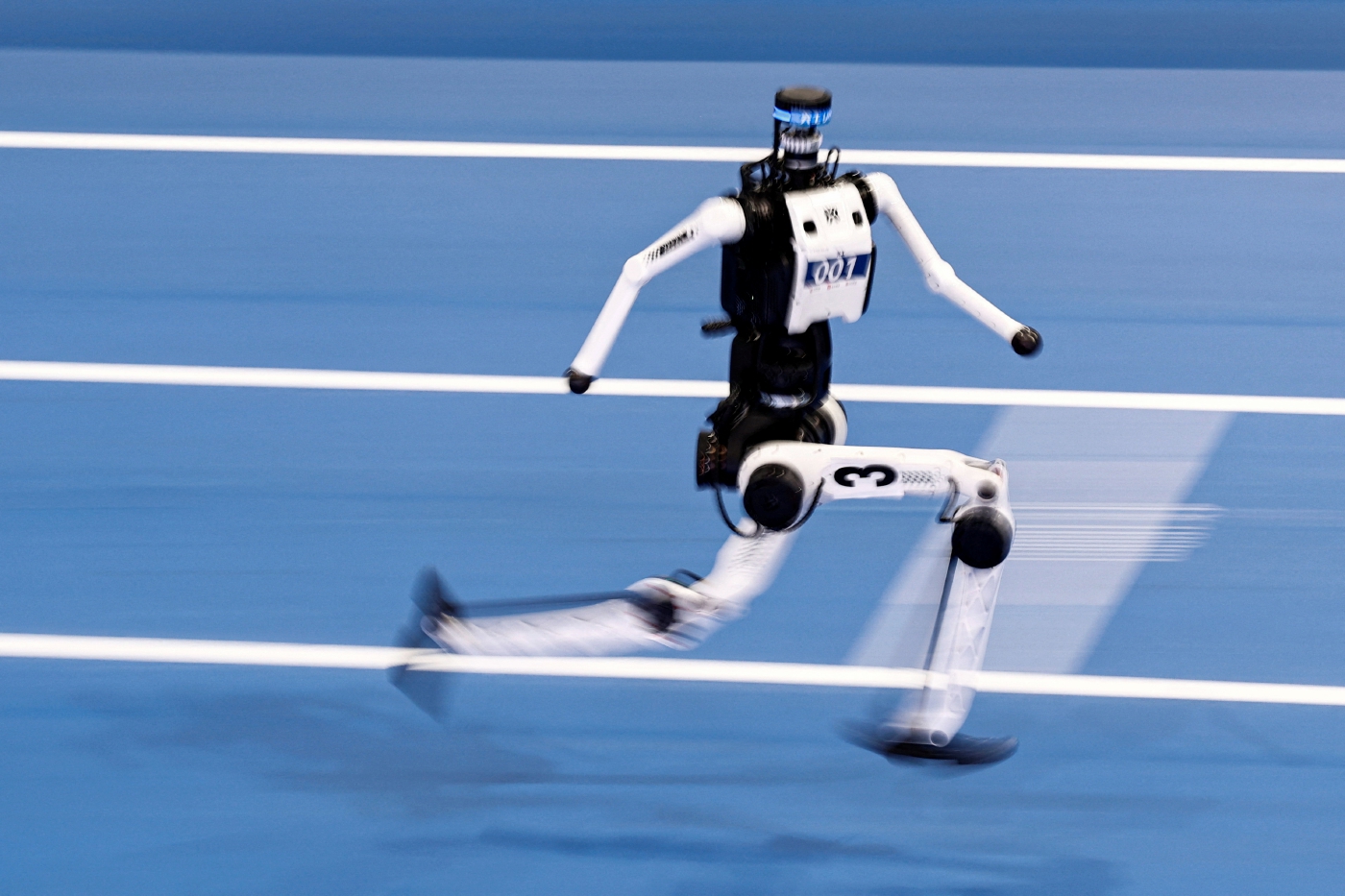
A Tiangong humanoid robot competes during a 100m large-sized group preliminary race, following the opening ceremony of the 2026 World Humanoid Robot Games, at the National Speed Skating Oval, in Beijing, China August 22, 2026. REUTERS/Tingshu Wang
Robots Still Have a Long Way to Go
The 8.64-second sprint can make humanoid robots seem remarkably advanced. But watching the rest of the competition provides a more balanced picture.
Many robots still require human assistance when they fall or need their batteries changed. Some struggle to recover their balance after unexpected movements, and during team events, one robot falling can sometimes cause others nearby to fall as well.
The competition also produced plenty of failures.
One robot appeared to come apart after finishing a 100-meter race. Another attempted a front flip and crashed. Several robots hit the padded wall at the end of the sprint, and one even caught fire, requiring staff to use a fire extinguisher.
These moments were entertaining, but they also highlighted an important limitation: robots can perform extremely well under specific conditions while still struggling with unpredictable situations that humans handle naturally.
That is precisely why competitions like this can be useful.
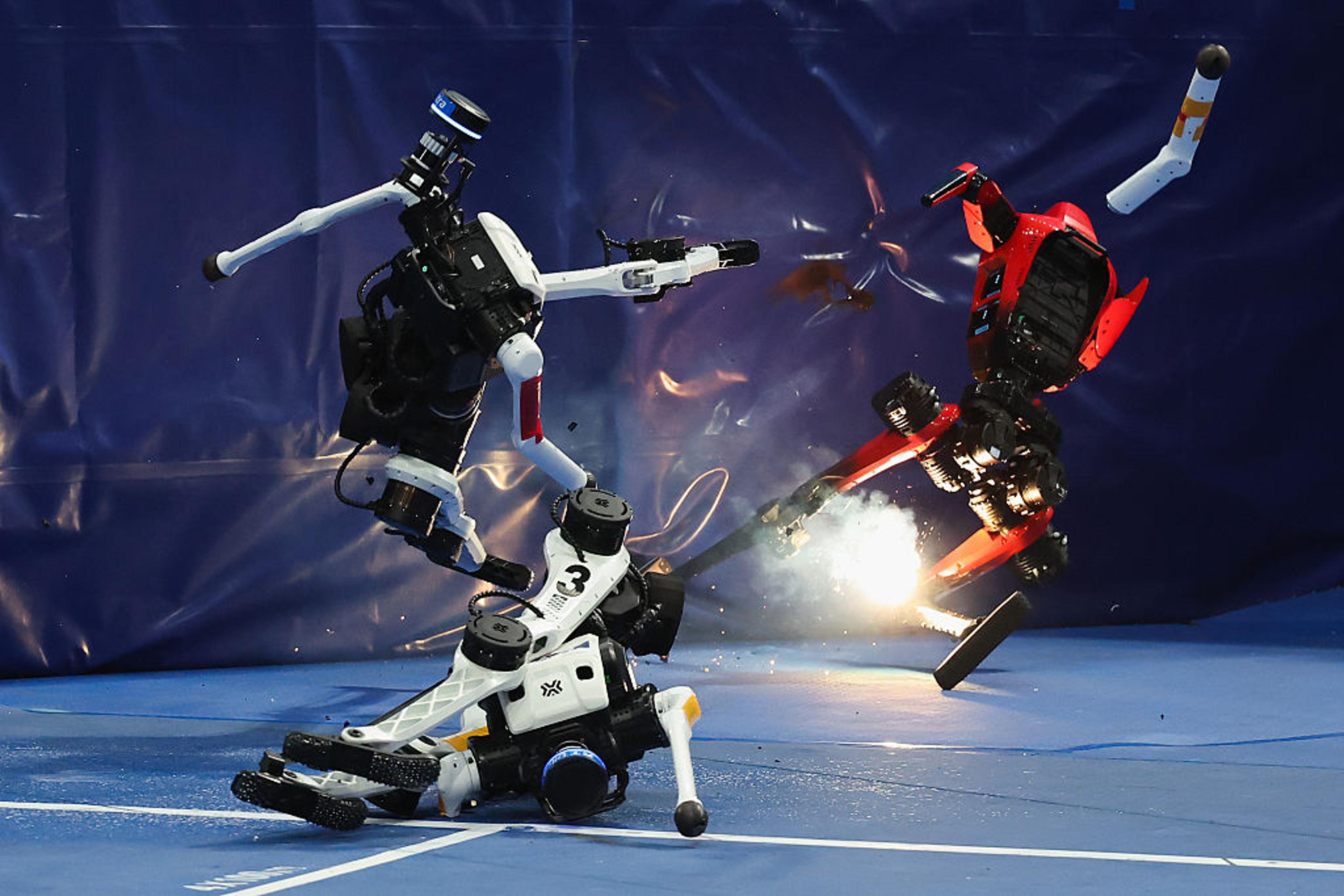
A humanoid robot collided with an obstacle and caught fire at the end of the 100 meter race during the 2nd World Humanoid Robot Games on Aug. 25, 2026.Lintao Zhang—Getty Images
The Real Purpose of the Competition
RoboCup has been using a similar approach since 1997. Its long-term goal is for autonomous robots to eventually defeat human football champions, but football itself is not really the point.
A football match forces robots to combine perception, movement, balance, decision-making, and real-time reactions. It is a much harder test than demonstrating each capability separately in a laboratory.
The World Humanoid Robot Games work in much the same way.
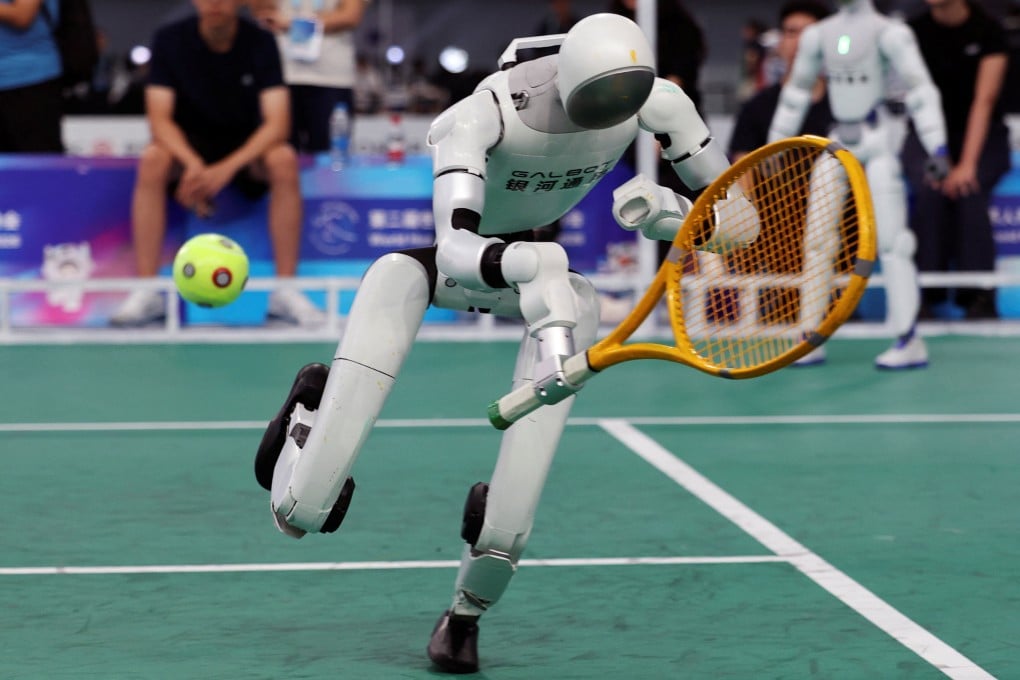
Running tests locomotion. Boxing tests balance and reaction. Manipulation tasks test how robots interact with objects. Practical simulations test whether those capabilities can translate into something closer to real work.
There is a useful parallel in Formula 1. Racing provides an extreme environment for developing and testing automotive technologies, some of which eventually make their way into consumer vehicles. Robotics competitions can play a similar role: the competition is the testing ground, while the technology developed for it can eventually be used elsewhere.
A robot learning to pick up objects in a simulated hotel, for example, is developing a capability that could one day be useful in a warehouse, factory, hotel, or home.
From the Stadium to the Real World
This is ultimately why the Robot Olympics matters.
The goal is not necessarily to create robots that can win medals. It is to create machines that can move safely, manipulate objects, recover from unexpected situations, and eventually perform useful tasks without constant human intervention.
The impressive performances show how quickly some of these capabilities are improving. The failures show how much work remains.
And both are valuable.
The rapid growth of the competition, combined with the dramatic improvement in performance from 2025 to 2026, suggests that humanoid robotics is progressing quickly. But the more important milestone will come when these machines can leave the competition environment and reliably operate in the real world.
If this is a future you would like to be part of, there has never been a better time to get started. The Humanoid Robotics Masterclass by The Construct Robotics Institute covers everything from robot hardware and simulation to programming, perception, locomotion, manipulation, and AI techniques such as Vision-Language-Action (VLA) models and robot learning. No engineering background or prior experience with humanoid robots is required, and the course is fully online and self-paced.
More Information About the Humanoid Robotics Masterclass: theconstruct.ai/humanoid-robotics-masterclass/
The next Robot Olympics may bring faster robots and more impressive records.
Ultimately, the real test will not be how fast these robots can run, but how well they can perform useful tasks in the real world.

0 Comments