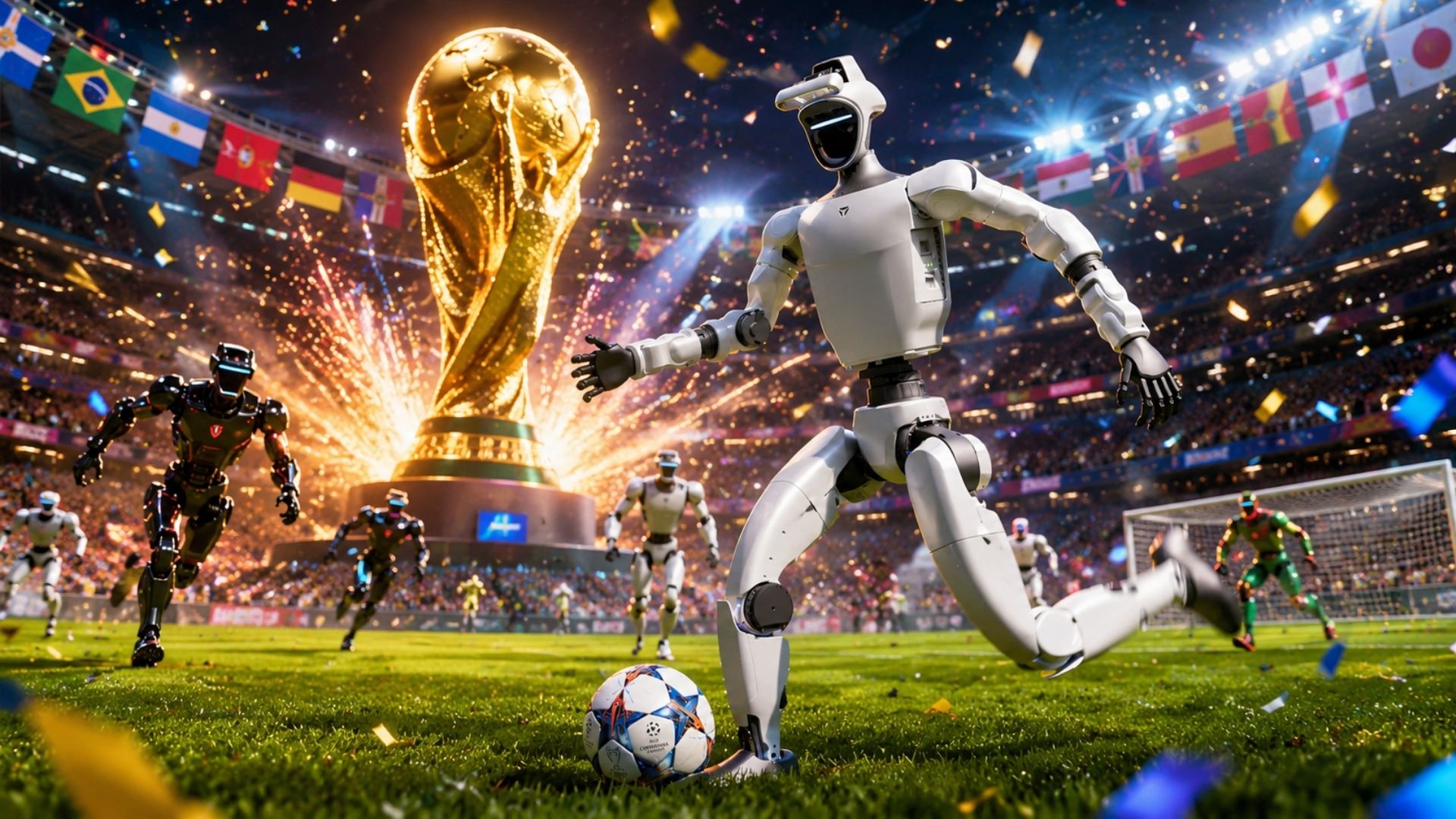

The FIFA World Cup is happening right now, and like millions of others around the world, football fans are following every match. But recently, another football video has been drawing attention online—not because of an incredible goal or a dramatic upset, but because the players are robots.
Humanoid robots, playing football. And surprisingly well.
For anyone who remembers what robot football looked like years ago, the progress is astonishing. It also serves as the perfect introduction to one of the most fascinating competitions that almost nobody outside the robotics community talks about.
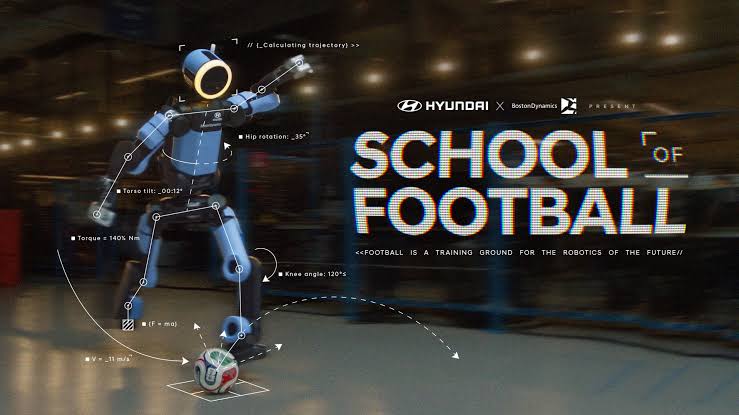
cr. Hyundai Motor Group
The Competition Nobody Talks About
Since 1997, a competition called RoboCup has brought together students, researchers, and engineers from around the world to compete in autonomous robot football.
Each team designs and builds its own robots, but once the match begins, there is no remote control and no human operator telling them what to do. The robots must see the field, locate the ball, recognize teammates and opponents, make decisions, and execute every movement entirely on their own.
The official goal of RoboCup has remained unchanged since the competition began: to build a team of humanoid robots capable of defeating the best human football team in the world by 2050.
Back in the late 1990s, that sounded almost like science fiction.
Today, it sounds far more realistic.
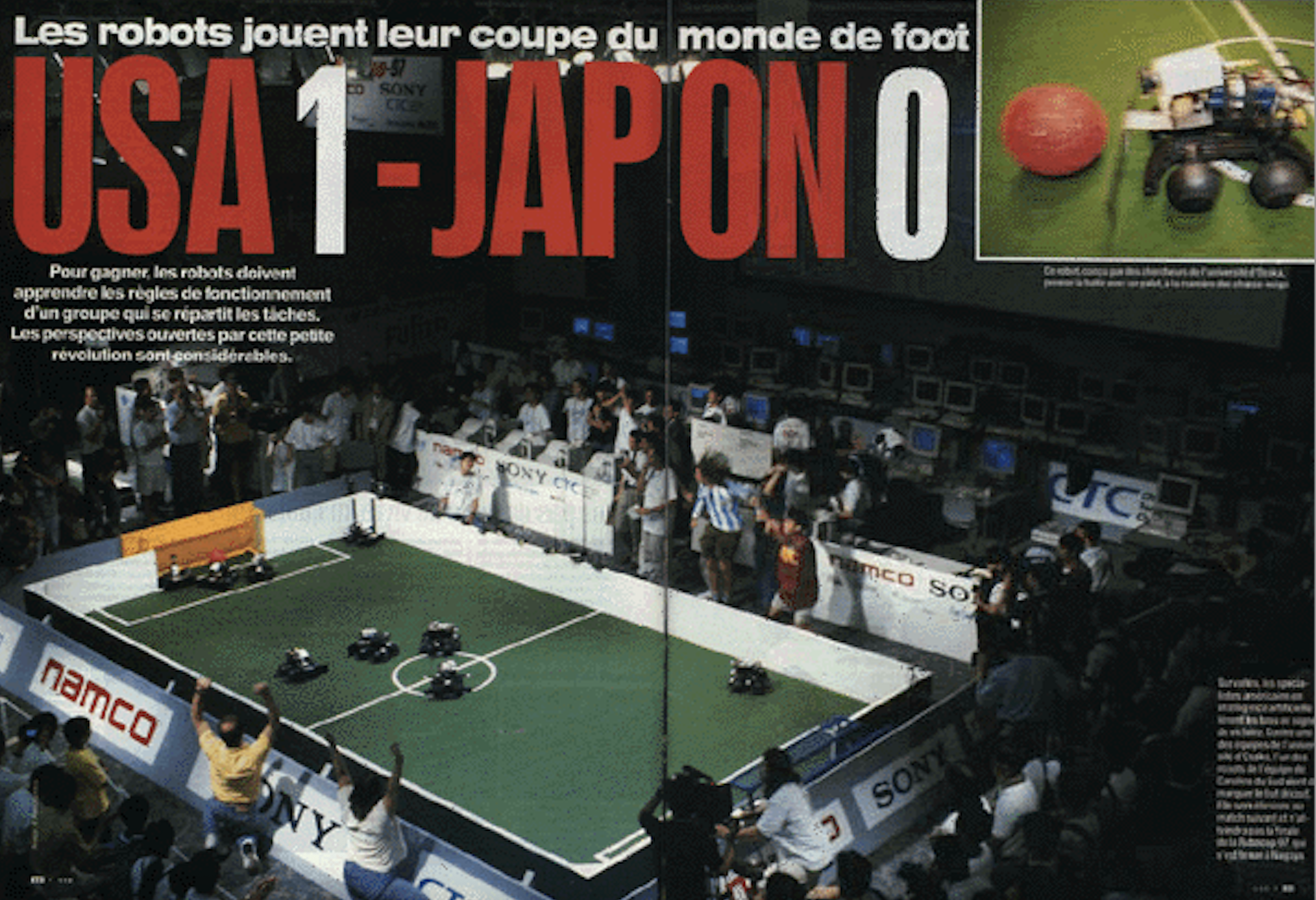
cr.Sony CSL
When Robot Football Was More Comedy Than Competition
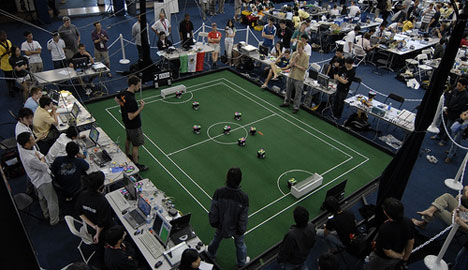
In 2007, RoboCup took place in Atlanta, where one of the participating teams experienced the competition firsthand—although not from the winner’s podium.
At the time, the robots were hardly intimidating. They were relatively small, moved slowly, frequently bumped into one another, occasionally kicked the ball in completely the wrong direction, and sometimes simply fell over for no obvious reason.
The matches looked less like professional football and more like a very confusing school play.
Nobody watching those games seriously believed that these machines would one day challenge the world’s best football players. If anything, the robots were simply entertaining to watch.
cr. core77
Then Everything Changed
Fast forward to 2025.
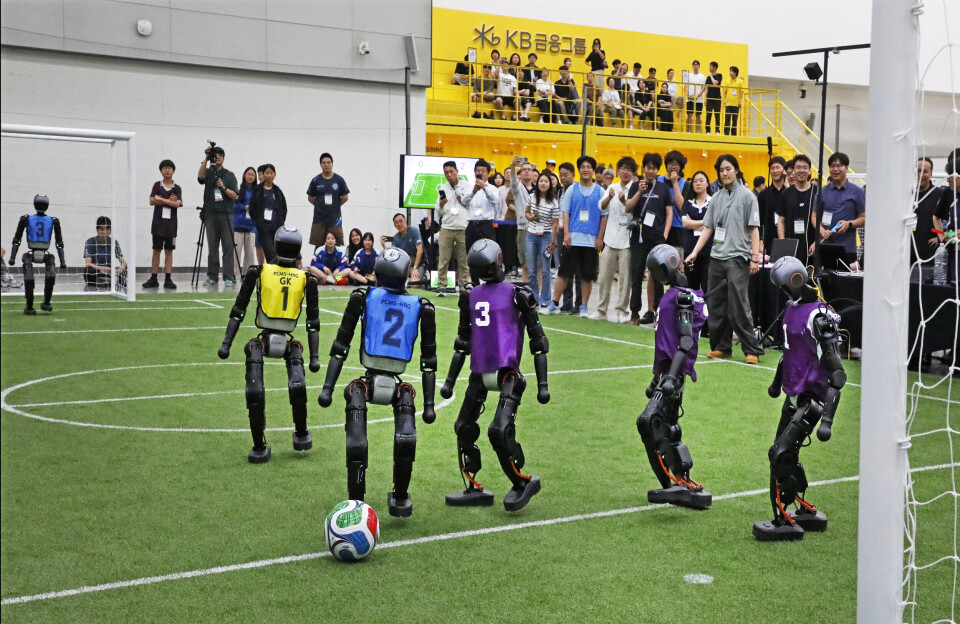
The RoboCup competition in Brazil revealed just how dramatically humanoid robotics had advanced. The robots were no longer stumbling around the field; they were running with confidence, passing to teammates, coordinating attacks, recovering the ball, and scoring goals. At certain moments, the footage genuinely looked like a real football match rather than a robotics demonstration.
Only a few months later, the team B-Human dominated a major robot football tournament in Germany, winning matches by scores of 6–1 and 4–1. Those were not victories that were merely “impressive for robots.” They were simply convincing wins.
And now, as RoboCup 2026 takes place in Korea, even more improvements are expected.
cr. Korea JoongAng Daily
Are We Closer Than Anyone Expected?
When RoboCup was founded, 2050 felt comfortably far away.
Nearly three decades later, the pace of progress invites an interesting question: was that original deadline actually too conservative?
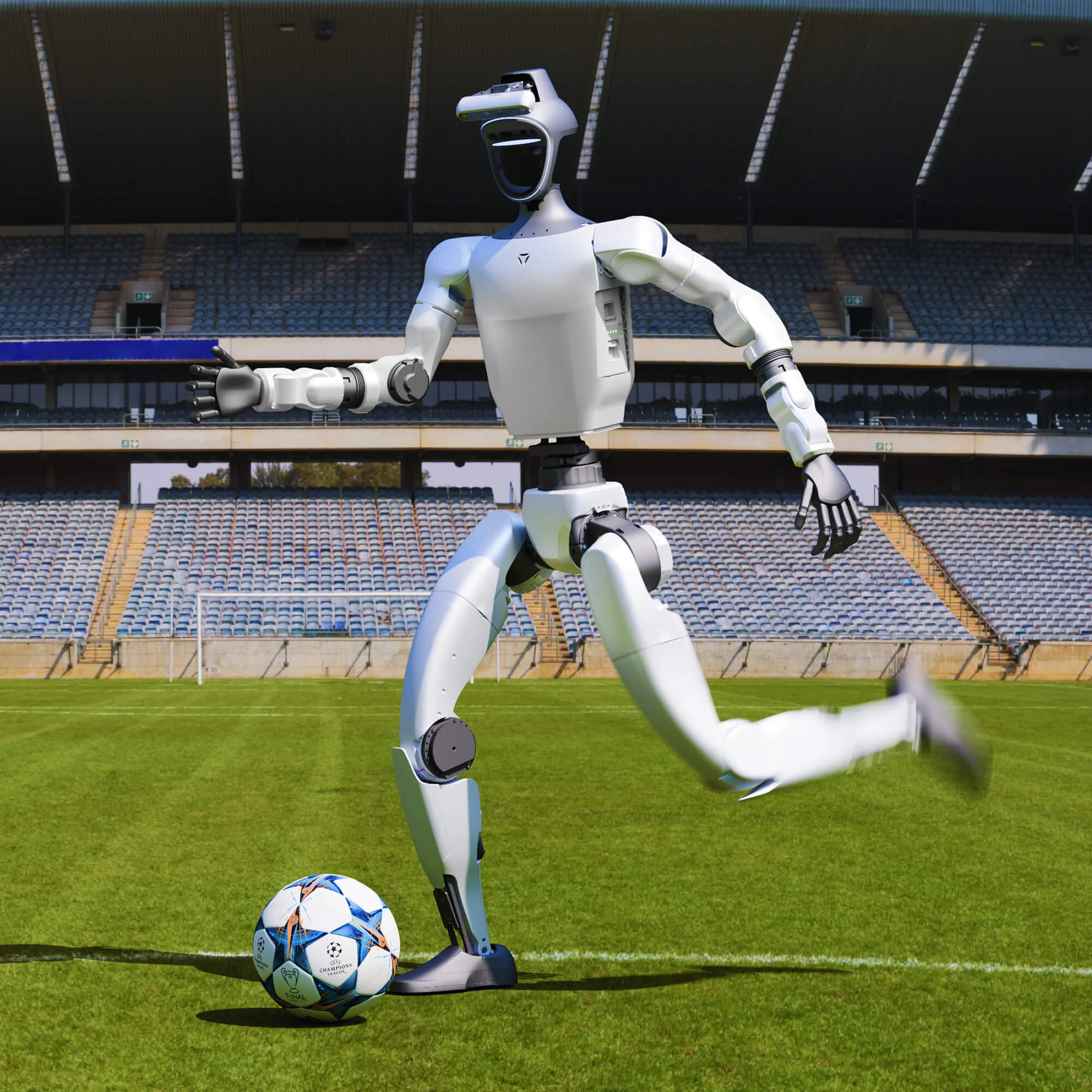
Recent footage shows humanoid robots behaving more and more like human players. Their movements are smoother, their teamwork is more coordinated, and their decisions are increasingly sophisticated. Watching those videos, it is easy to feel as though the RoboCup dream is almost within reach.
The reality, however, is more nuanced.
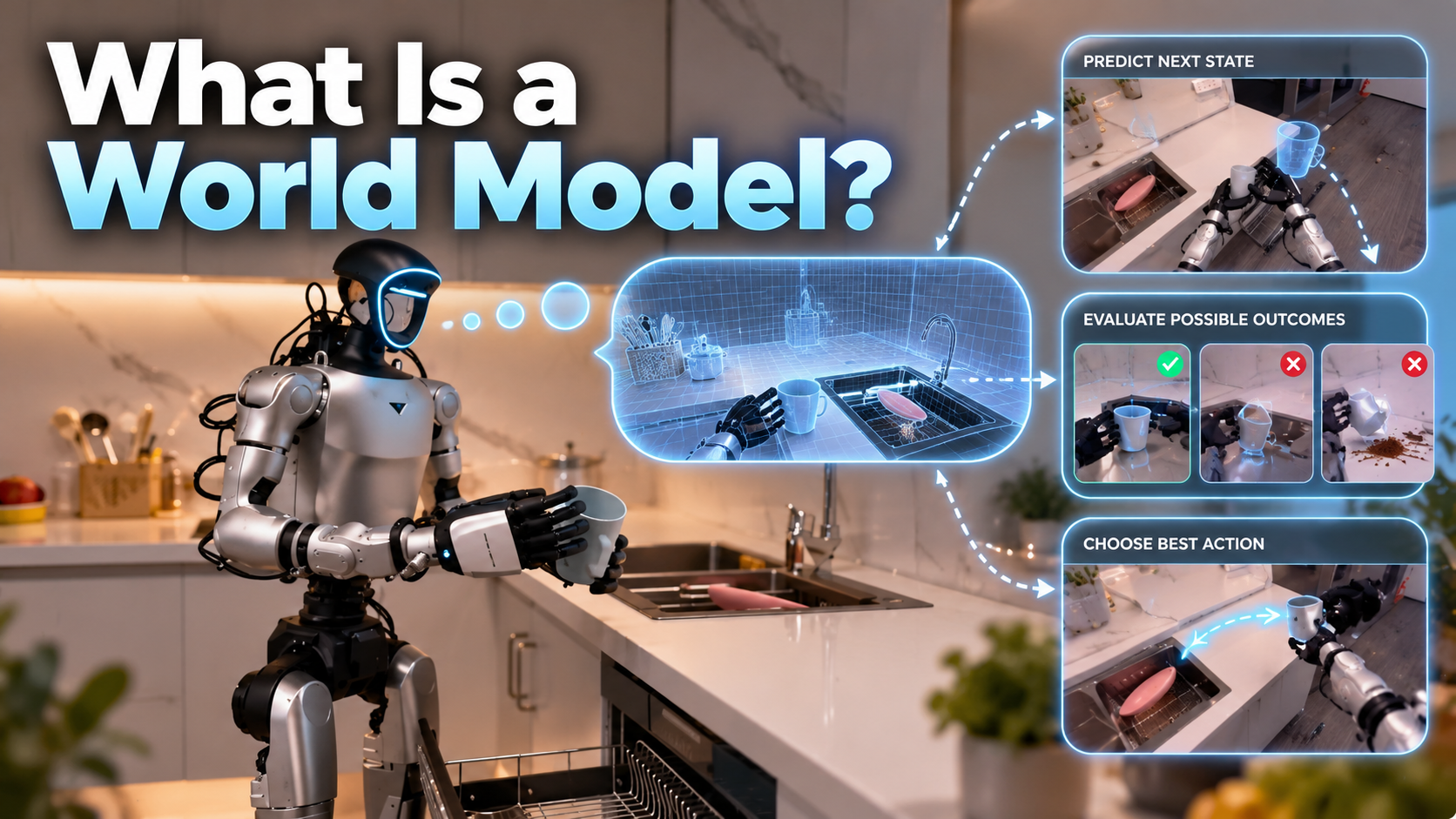
Humanoid robots have made remarkable progress, but several major challenges remain before they can compete with elite human athletes. Their perception systems still need to become significantly faster and more reliable so they can understand complex situations and build an accurate model of the game in real time. Their autonomy also needs substantial improvement, reducing dependence on external computing resources, while decision-making, reaction speed, balance, and adaptability all continue to be active areas of research.
In other words, the goal is getting closer—but there is still plenty of work left to do.
cr. Unitree Robotics
The Perfect Time to Join the Revolution
That remaining work is exactly what makes humanoid robotics such an exciting field today.
The technologies that will eventually make RoboCup’s 2050 vision possible are still being invented, which means there is plenty of room for the next generation of engineers, roboticists, and AI developers to make meaningful contributions.
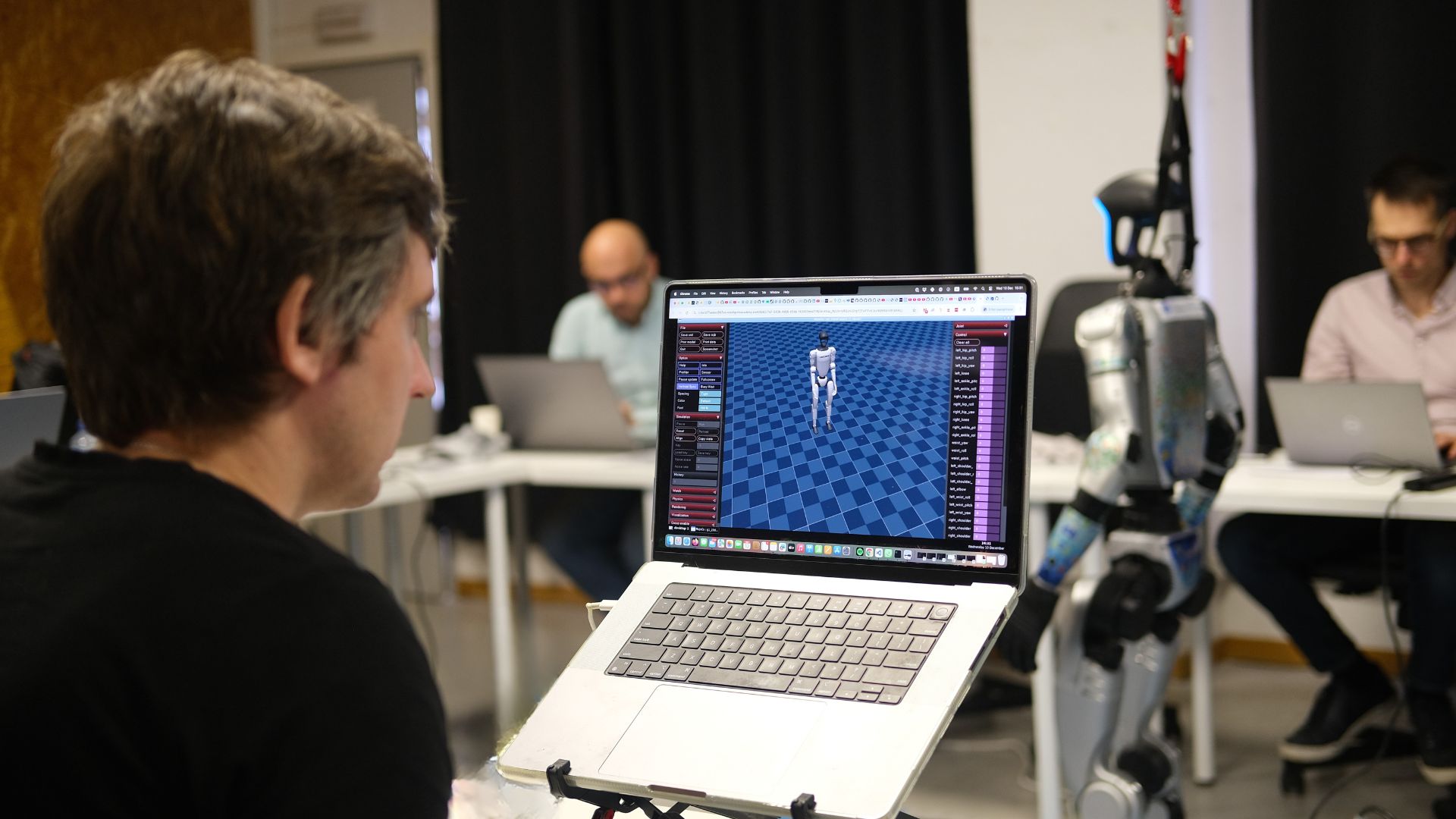
For anyone who wants to be part of that journey, learning how humanoid robots are built, programmed, and controlled is the natural place to start. A solid understanding of perception, locomotion, motion control, and autonomous decision-making provides the foundation for building robots capable of competing in RoboCup—and perhaps one day, against human teams.
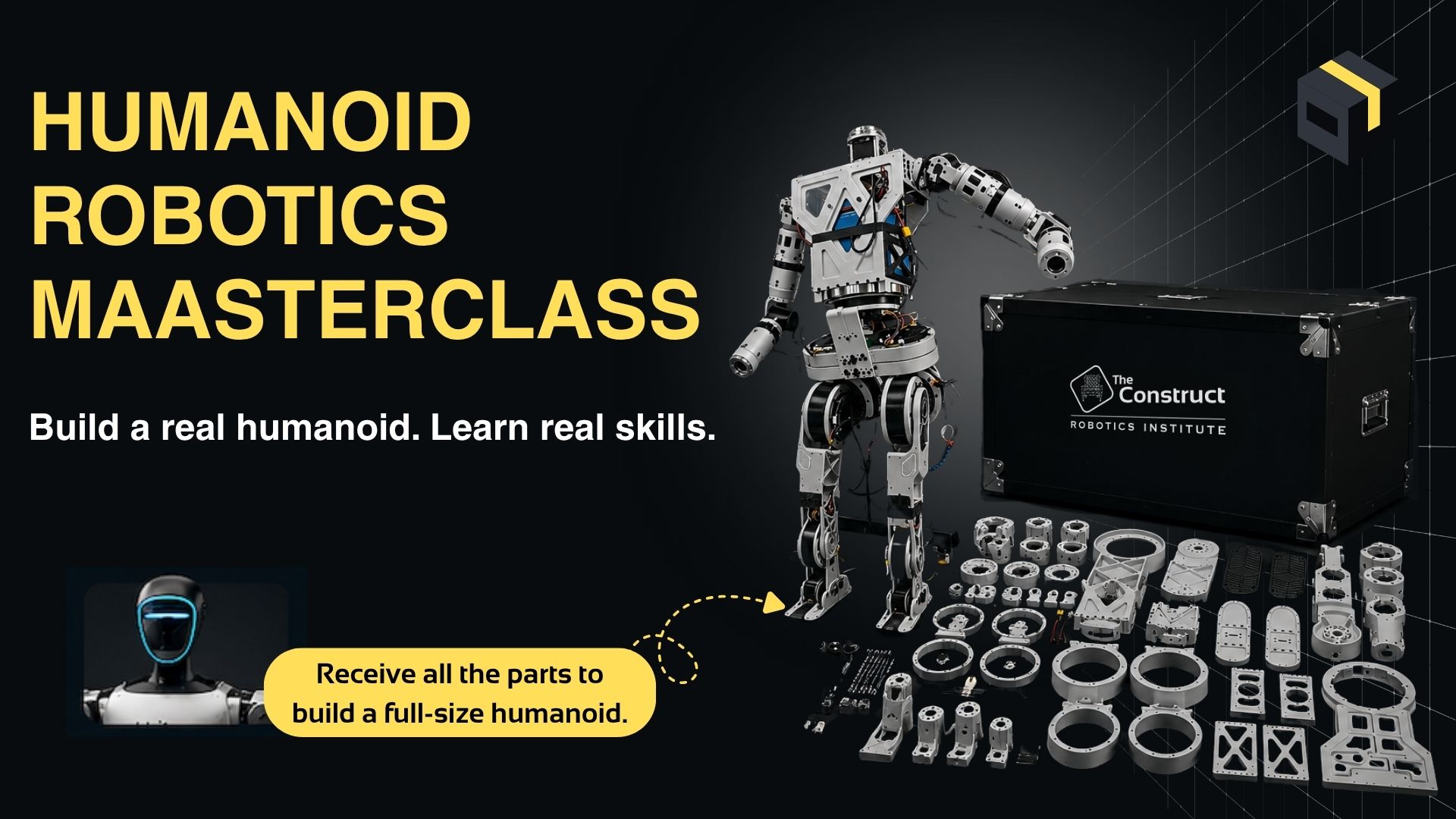
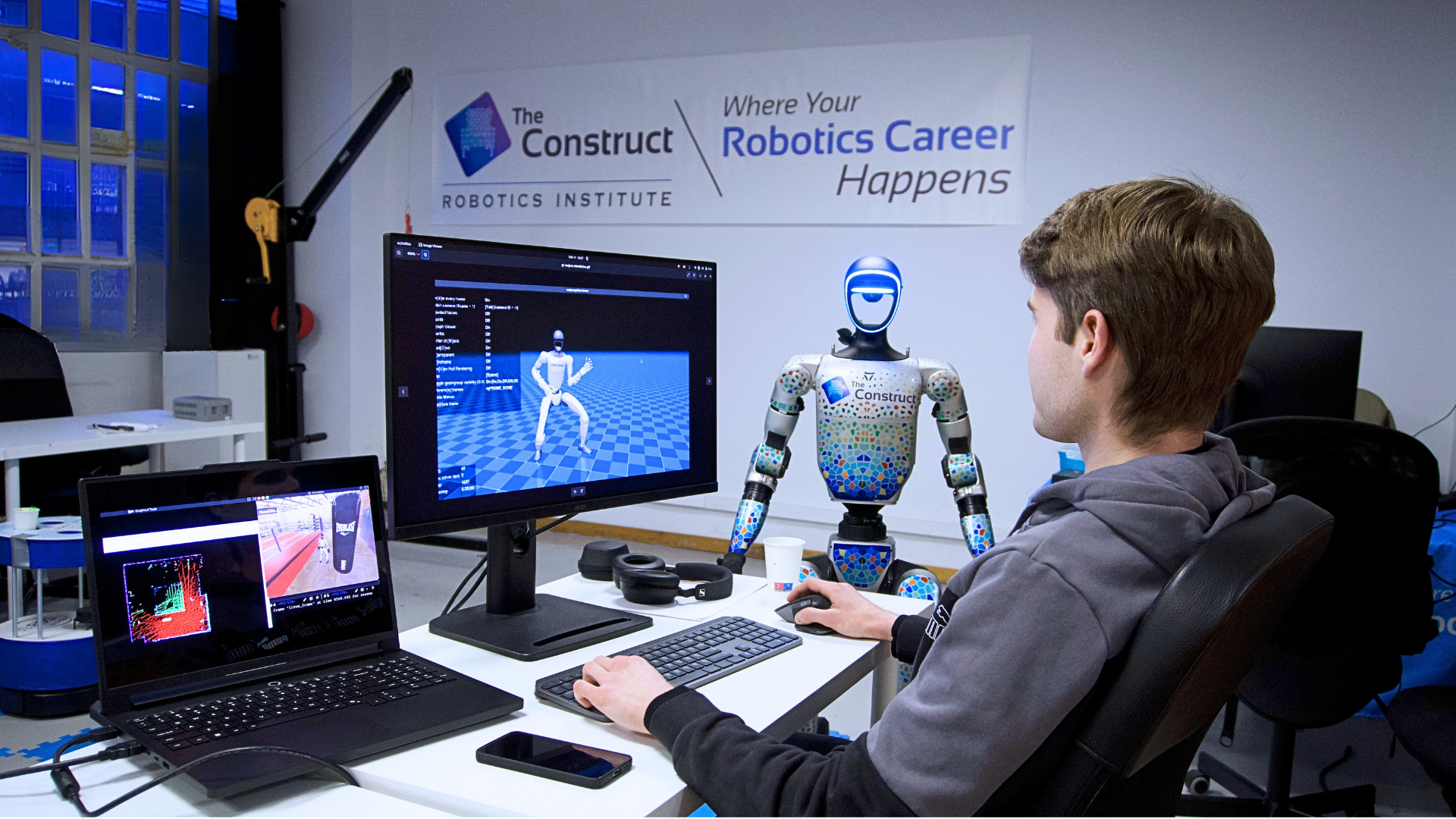
If you want to be part of the robotics revolution, start with the Humanoid Robotics Masterclass—a complete online program that teaches you everything you need to know about humanoid robots. You’ll learn how to build and program them, and even prepare to participate in RoboCup.
A Bold Prediction
By the time the next FIFA World Cup arrives in 2030, seeing a humanoid robot team playing an exhibition match alongside the tournament may no longer seem like science fiction.
If you want to be part of that future, join the Humanoid Robotics Masterclass and start building and programming humanoid robots today.
More Info & Enrollment: https://www.theconstruct.ai/humanoid-robotics-masterclass/
0 Comments