
For decades, teaching a robot to perform even the simplest household task was an incredibly tedious process. If you wanted a robot to open a refrigerator, fold a towel, or pick up a cup, you had to program every single movement, every joint angle, and every possible error the robot might encounter. That approach worked reasonably well in controlled environments, but the real world is anything but controlled. Homes are messy, objects move, lighting changes, and no engineer can realistically write code for every situation a robot might encounter.
So researchers started asking a much more human question:
What if, instead of programming robots, we simply showed them how we do things?
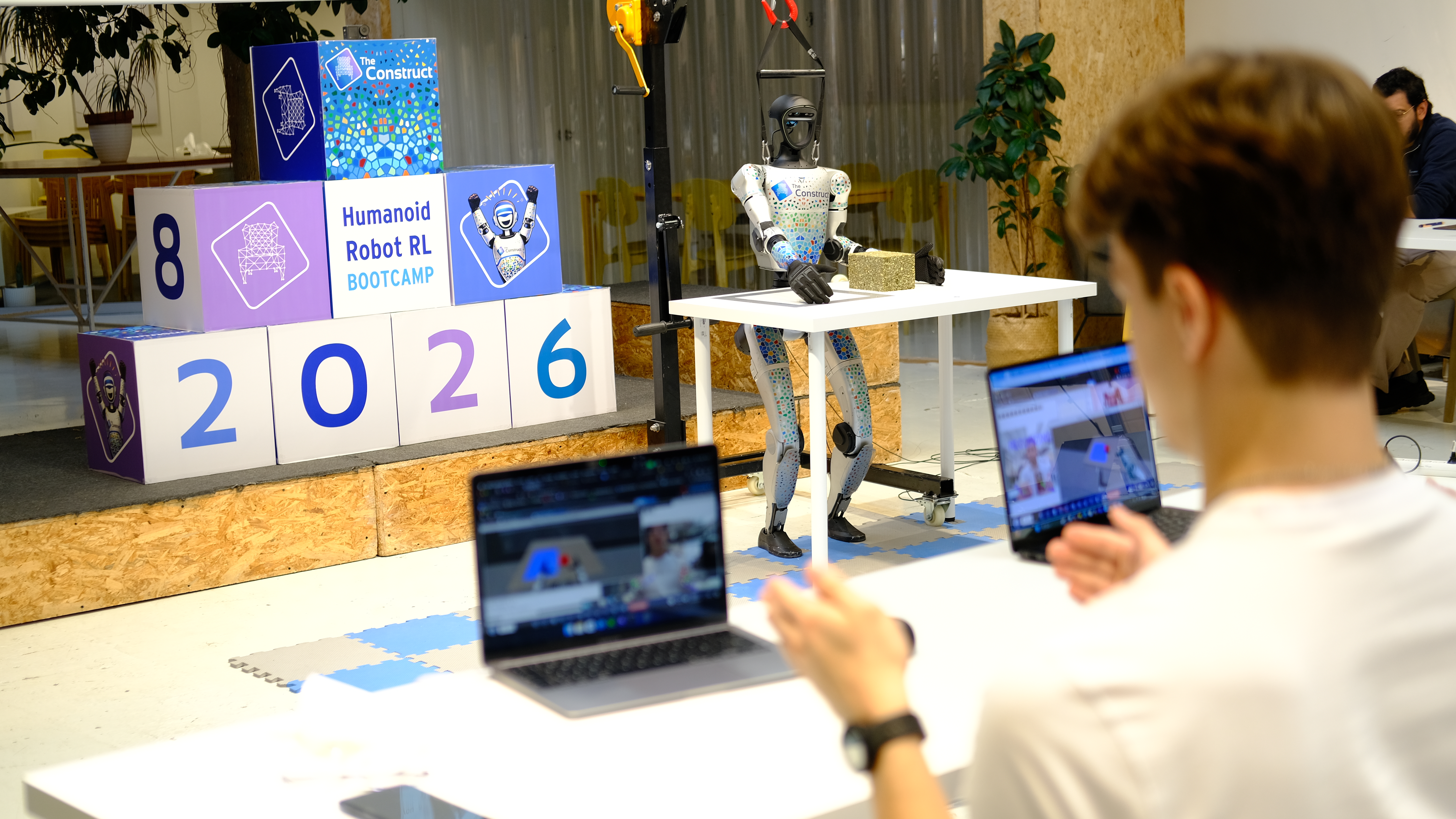
Humanoid Robotics Bootcamp Organized by The Construct Robotics Institute
Learning Like a Child
Think about how children learn. Nobody hands a child a 50-page instruction manual explaining how to tie shoelaces. Instead, a parent demonstrates the process, the child watches, imitates, makes mistakes, and gradually improves through practice. This simple idea inspired one of the most exciting directions in modern robotics: Imitation Learning. Rather than explicitly programming every action, researchers allow robots to observe humans performing a task over and over again. A person might repeatedly open a refrigerator, fold a shirt, place an object on a shelf, or organize items into containers while the robot records every demonstration through cameras and sensors. After seeing enough examples, it begins to recognize the patterns behind successful behavior—not because someone programmed those patterns into code, but because it has learned what successful execution actually looks like. This simple shift fundamentally changes how robots acquire new skills.
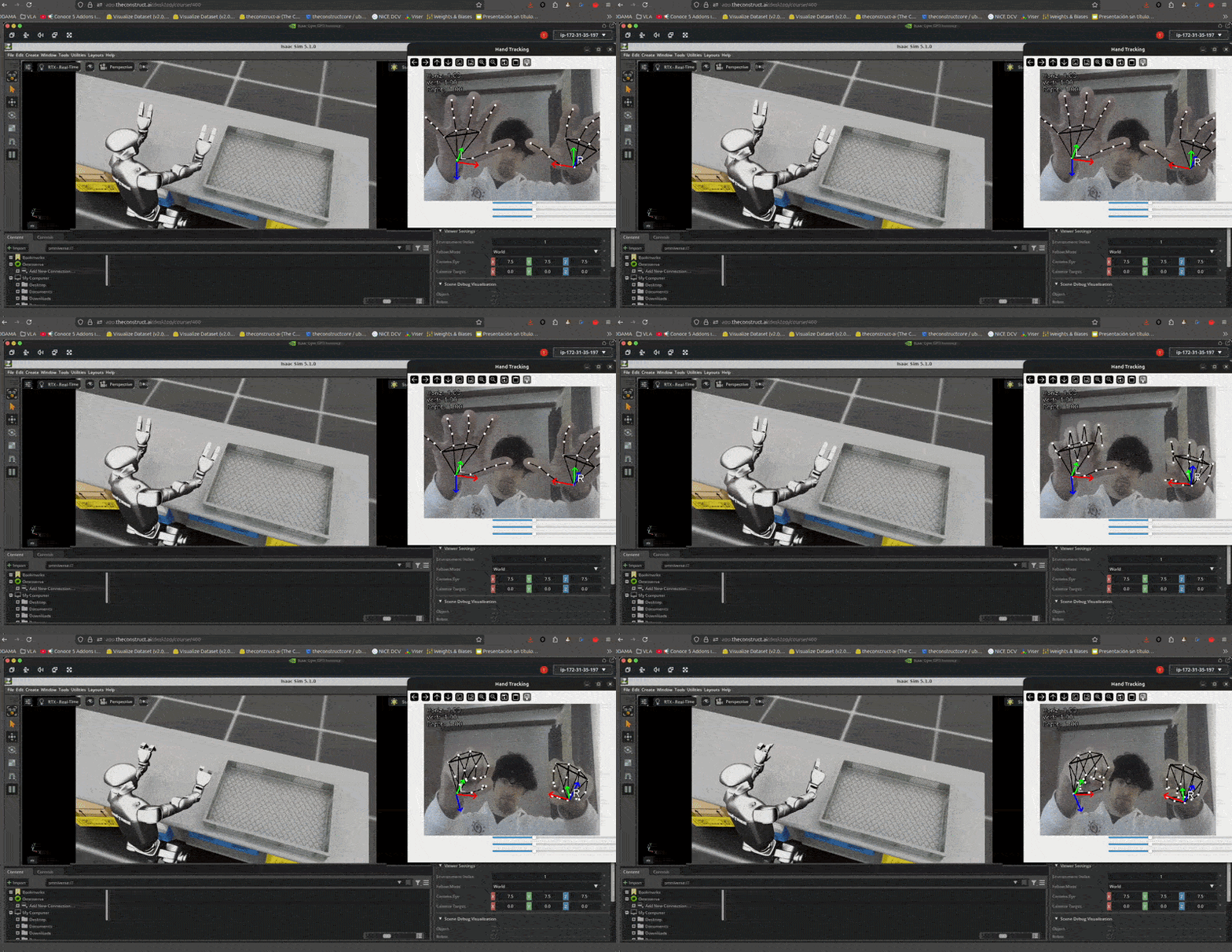
Humanoid Robotics Masterclass – by The Construct Robotics Institute
The Results Are Surprisingly Good
The idea isn’t just elegant—it works. Researchers at UC Berkeley demonstrated this by teaching a robot to fold laundry through thousands of human demonstrations. Instead of manually programming every fold, the robot learned simply by observing people perform the task. The result was impressive: it successfully folded clothes 93% of the time—better than quite a few humans after laundry day.
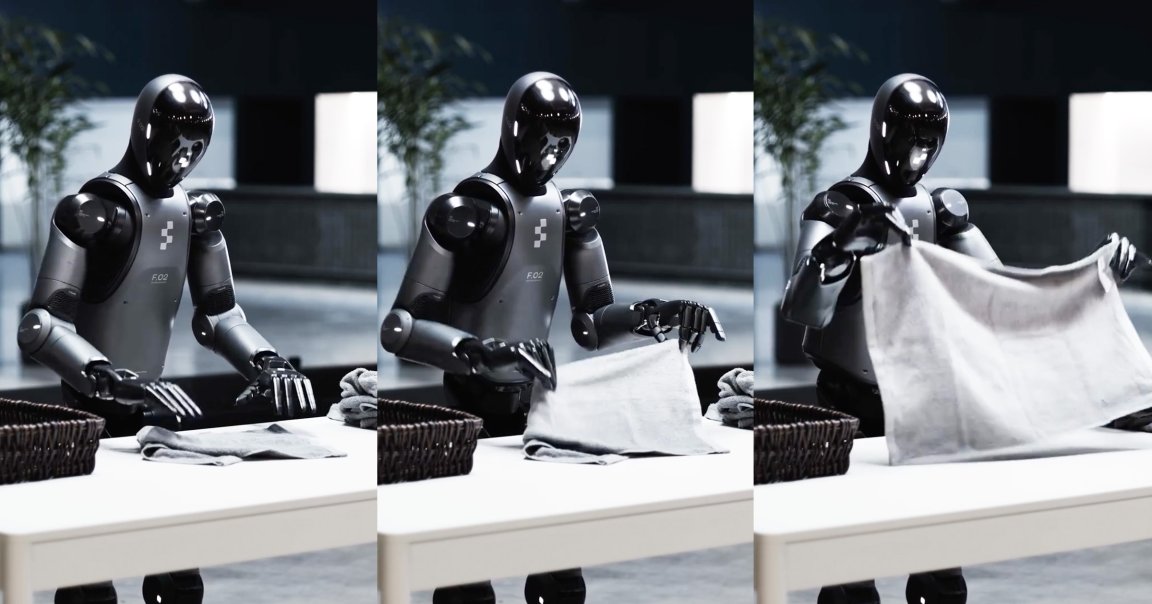
Figure 02, powered by the VLA model Helix, folding clothes. (Credit: Figure AI)
Then Language Models Changed the Game
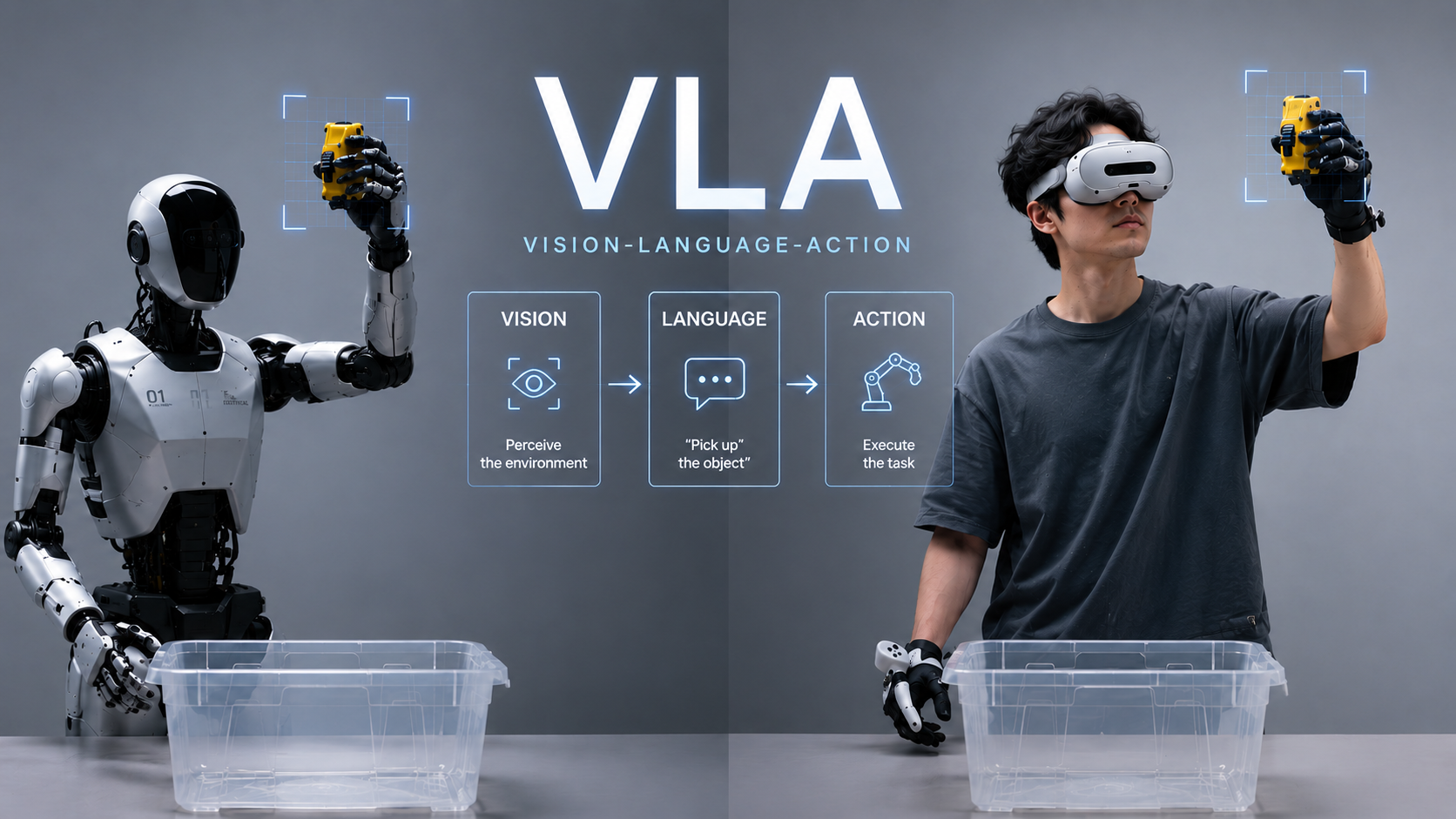
Imitation learning alone is already impressive, but in the past few years researchers have started combining it with another breakthrough you’ve almost certainly heard about: large language models (LLMs). These models can understand language, recognize images, and reason about context. When those capabilities are integrated with robots that learn from demonstrations, they create what researchers call a Vision-Language-Action (VLA) model. The name may sound technical, but the underlying idea is surprisingly intuitive. Instead of training a robot to perform one very specific task under one fixed set of conditions, VLA models allow robots to understand instructions much more like humans do. Imagine saying, “Put the apple in the bowl.” A traditional robot might fail if the apple isn’t exactly where it expected, if the bowl is a different color, or if the kitchen layout has changed. A VLA-powered robot, however, can look at the scene, identify the apple, recognize the bowl, understand the instruction, and complete the task even when everything is slightly different from previous training examples. Rather than replaying a predefined script, the robot is interpreting what you actually mean.

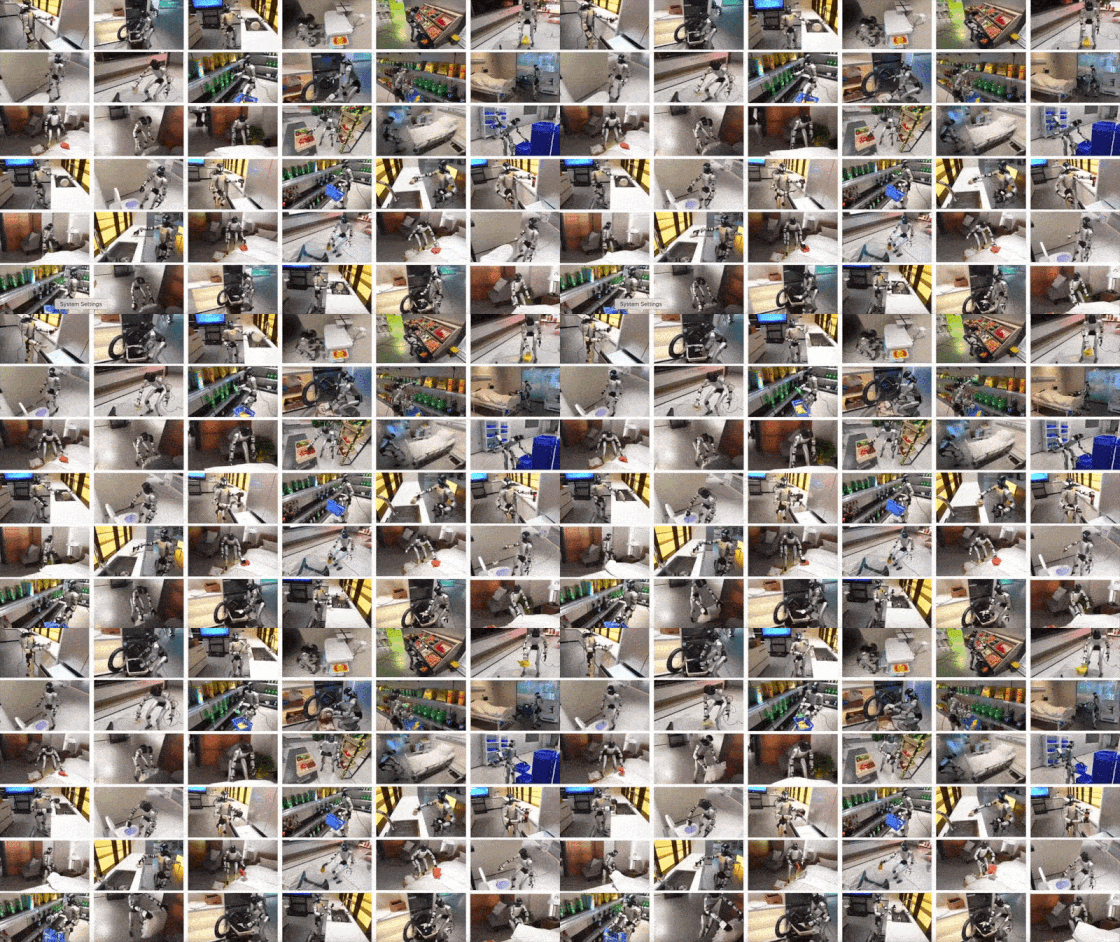
cr. EgoVLA
Why This Matters for Everyday Life
People often ask why home robots still aren’t common. The answer isn’t that robots aren’t powerful enough or fast enough—it’s that homes are incredibly unpredictable. A glass reflects light differently throughout the day, furniture gets rearranged, objects disappear into drawers, and people naturally describe the same task in many different ways. Rigidly programmed robots struggle in environments like these because they rely on fixed assumptions about the world. Robots that learn from human demonstrations while also understanding language and context have a much better chance of adapting. Researchers at Georgia Tech recently demonstrated Vision-Language-Action robots performing tasks such as:
- stacking cups
- folding cloth
- plating fruit
- packing food
After further refinement, these robots completed some tasks three to four times faster than the humans who originally demonstrated them. The robot learned from the human. Then it became faster than the human. That’s a sentence that’s both slightly unsettling—and incredibly exciting.
Who Gets to Teach Robots?
Perhaps the most inspiring aspect of this technology isn’t the algorithms themselves, but what they mean for who gets to teach robots. If robots learn by observing humans, then teaching them is no longer something reserved exclusively for software engineers. Imagine:
- A chef teaching a robot how to plate food beautifully.
- A nurse demonstrating how to help a patient sit up safely.
- A warehouse worker showing a robot the most efficient packing method.
- A parent demonstrating the “right” way to fold laundry.
Expert knowledge suddenly becomes teachable through demonstration rather than programming. In many ways, this could democratize robotics by allowing people from many different professions to directly contribute to how robots acquire new skills.
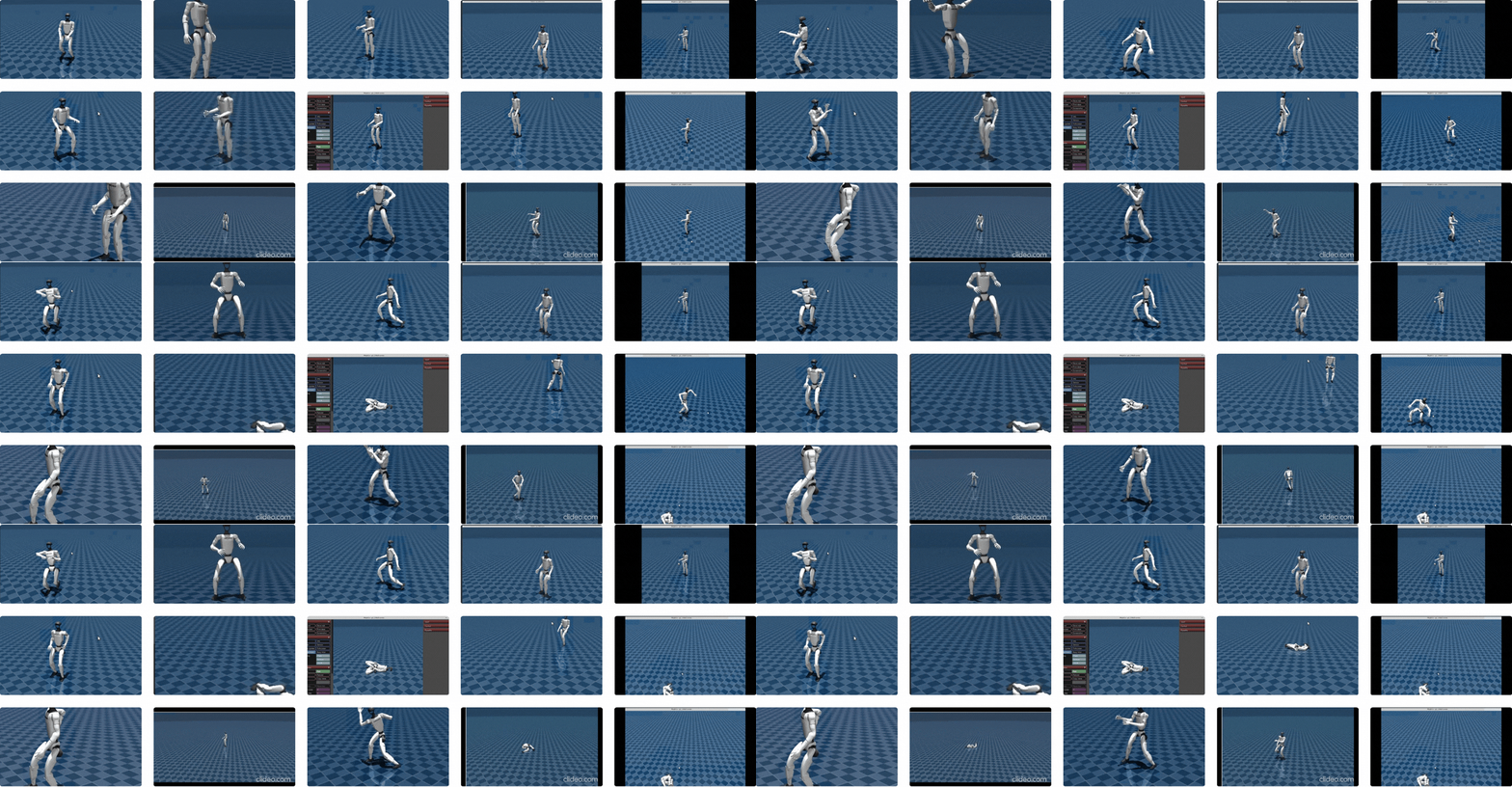
UnifoLM_WBT_Dataset (credit. Unitree Robotics)
Of course, we’re not quite there yet. Today’s robot trainers still rely on specialized tools to convert human demonstrations into data that robots can understand. Simply performing a task in front of a robot isn’t enough—yet. But that’s exactly where the field is heading. The next major milestone is making robot learning as natural as human learning: simply showing the robot what to do.
The Future Is Closer Than You Think
Robots learning by watching humans is no longer science fiction. It’s happening today in research labs around the world, and it’s steadily making its way into real-world products. As robots become better at understanding language, interpreting visual scenes, and learning from demonstrations, they’ll become far more useful in the environments where people actually live and work. The age of robots learning from humans has already begun. The question is no longer whether it will happen—but how quickly it will transform the way we interact with machines.
If You Want to Learn How Modern Humanoid Robots Work?
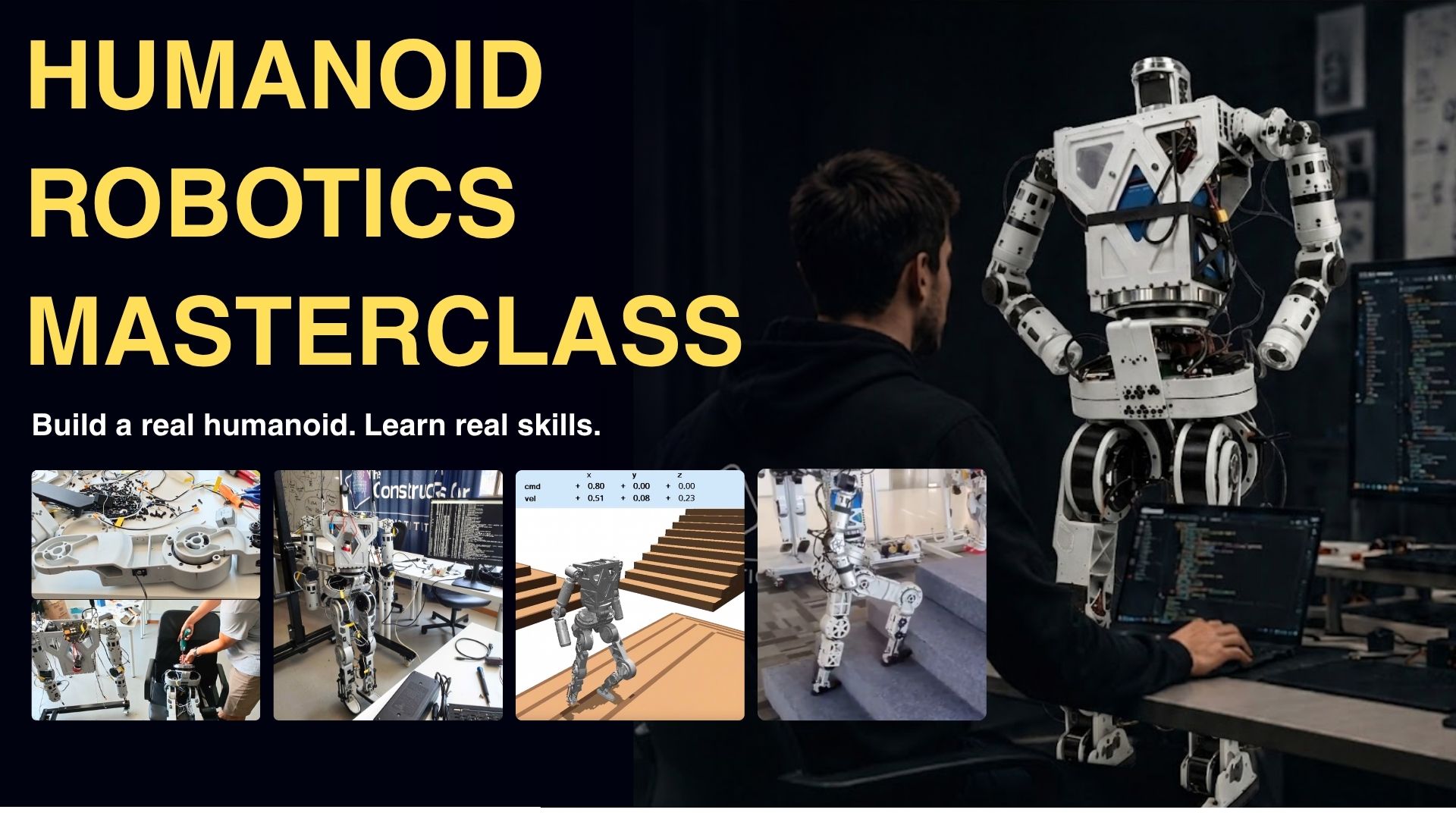
If this is the future you’d like to be part of, there has never been a better time to get started. The Humanoid Robotics Masterclass by The Construct Robotics Institute covers everything from humanoid robot hardware and simulation to programming, perception, locomotion, manipulation, and the latest AI techniques, including Vision-Language-Action (VLA) models and robot learning. The course is fully online, self-paced, and designed for learners of all backgrounds—no prior experience with humanoid robots is required. Learn more about the Humanoid Robotics Masterclass here: https://www.theconstruct.ai/humanoid-robotics-masterclass/

0 Comments