
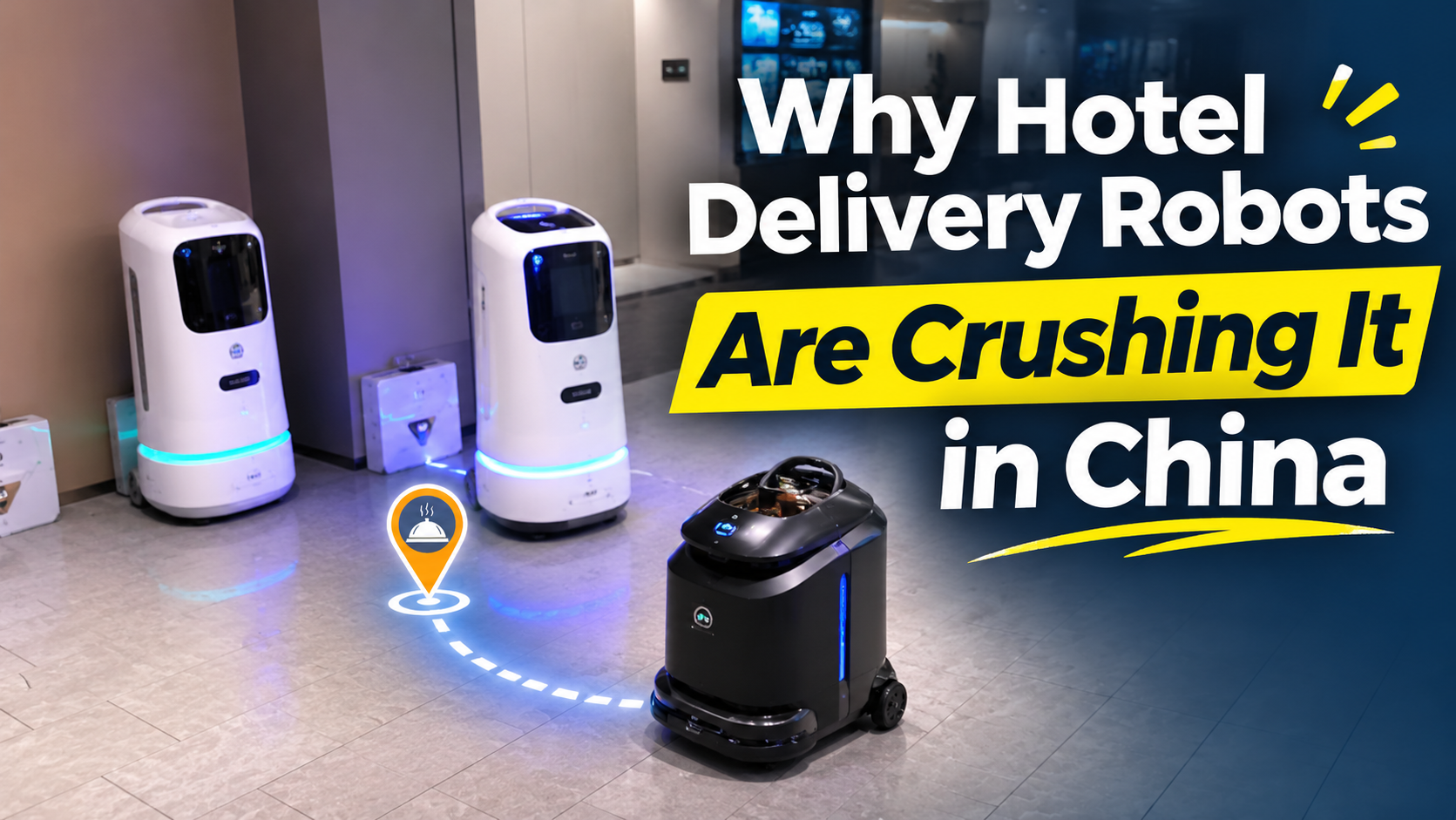

Imagine you’re staying in a hotel in China. It’s 11 PM, you’re hungry, and you decide to order some noodles through a food delivery app.
Twenty minutes later, your phone buzzes. Then your hotel room phone rings.
You pick it up, and instead of hearing a hotel receptionist, you hear something unexpected: a robot has arrived outside your room.
You open the door, and there it is. A small, R2-D2-looking robot waiting patiently in the hallway. You enter a pickup code on its screen, a compartment opens, and your noodles are ready.
No delivery person. No unnecessary interaction. Just a robot delivering your food directly to your hotel room.
At first, it feels like something straight out of a science fiction movie. But in China, this experience is becoming surprisingly common.
Naturally, this got me curious. How did hotel delivery robots become so popular in China? Who is building them? And why haven’t we seen the same level of adoption in other countries?
The more I looked into it, the more interesting the story became.
1. Hotel Delivery Robots Are Not a New Idea
You might think hotel delivery robots are a recent innovation, but the concept actually goes back more than a decade.
Back in 2013, Steve Cousins founded a Silicon Valley startup called Savioke. If you’re familiar with robotics, his name might sound familiar. Cousins was also one of the key figures behind ROS (Robot Operating System), the open-source framework widely used in robotics development.
Savioke developed a hotel delivery robot called Relay, which was also built on ROS.
And it wasn’t just an experimental project. Relay robots were deployed in hotels operated by major hospitality brands, including Marriott, Hilton, and Westin. Over time, they completed more than one million deliveries.
At the time, Savioke looked like one of the companies leading the hotel robot revolution.
But then came an unexpected turn.
The company struggled during the COVID-19 pandemic, when hotel occupancy and demand for hotel services dropped dramatically. Eventually, its technology was acquired by a new company, Relay Robotics, which continues to offer robotic delivery solutions.
It’s an interesting reminder: even when a technology works, building a sustainable business around it is a completely different challenge.
And this is where the story gets even more interesting.
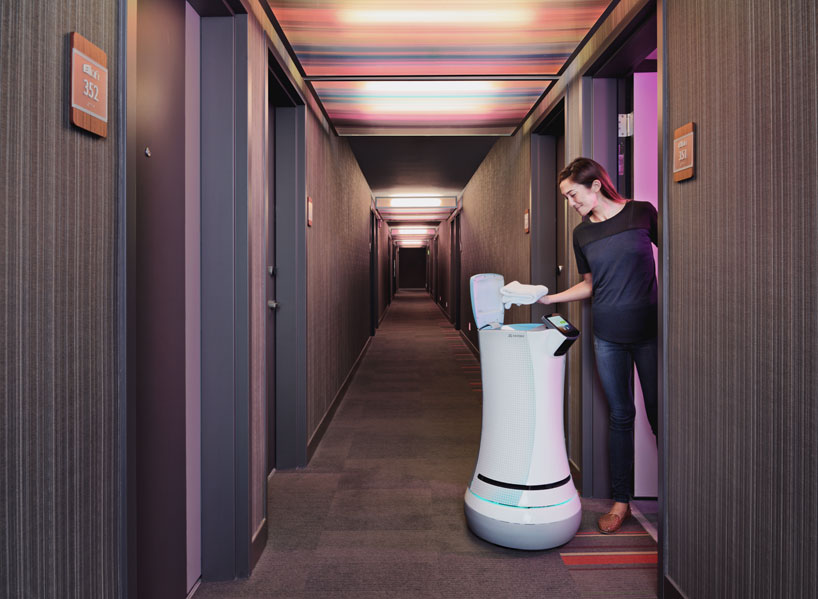
Photo credit: The Robot Report
2. Why Are Hotel Delivery Robots Everywhere in China?
In the US and many other countries, hotel delivery robots are still relatively niche. You might find them in a few hotels, sometimes as an innovative addition to the guest experience.
But in China, the situation feels completely different.
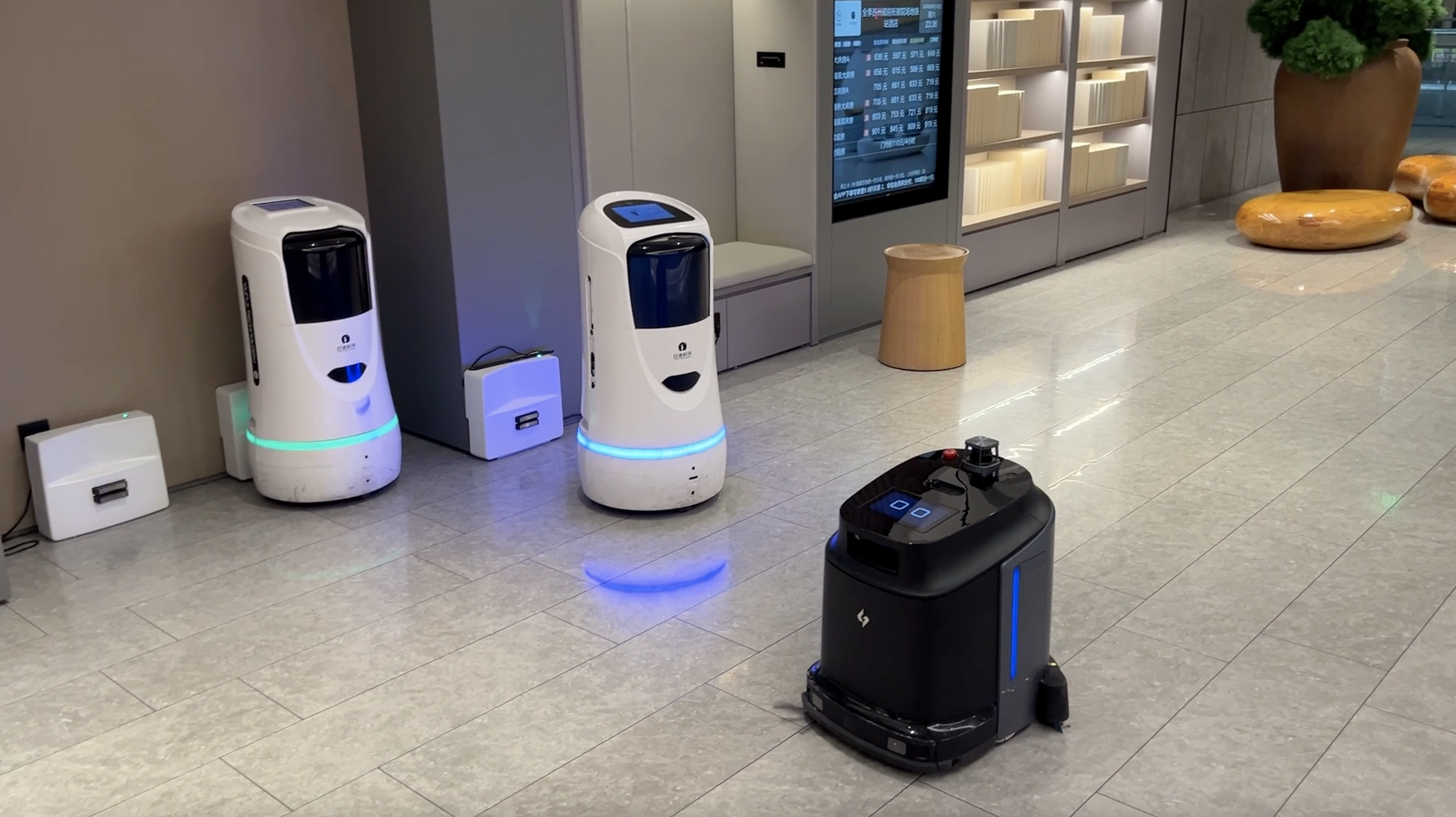
During my stay, it seemed like almost every hotel I visited had a delivery robot. And this isn’t simply because one company dominates the market.
Instead, there are numerous companies developing and selling hotel delivery robots, including Chinese robotics companies such as Keenon, Pudu, and YOGO.
With so many companies competing for the same market, you might expect healthy competition to drive innovation.
But there’s another side to this story: price competition.
Companies are competing aggressively for hotel contracts, sometimes reportedly offering solutions at very low prices and even accepting losses to prevent hotels from switching to competitors.
This raises an interesting question: How sustainable is this business model?
If hotels build their delivery operations around robots supplied by companies that eventually disappear, who will maintain the hardware? What happens when a robot breaks down and its manufacturer is no longer around to provide support?
It’s not difficult to imagine a future where some hotels are left with robots that nobody can maintain.
Of course, this is only a possibility, not a certainty. But it highlights an important challenge for the robotics industry: long-term commercial success requires more than just building a robot that works.
3. How Does a Hotel Delivery Robot Actually Work?
So, what happens behind the scenes when you order food to your hotel room?
The process is surprisingly simple.
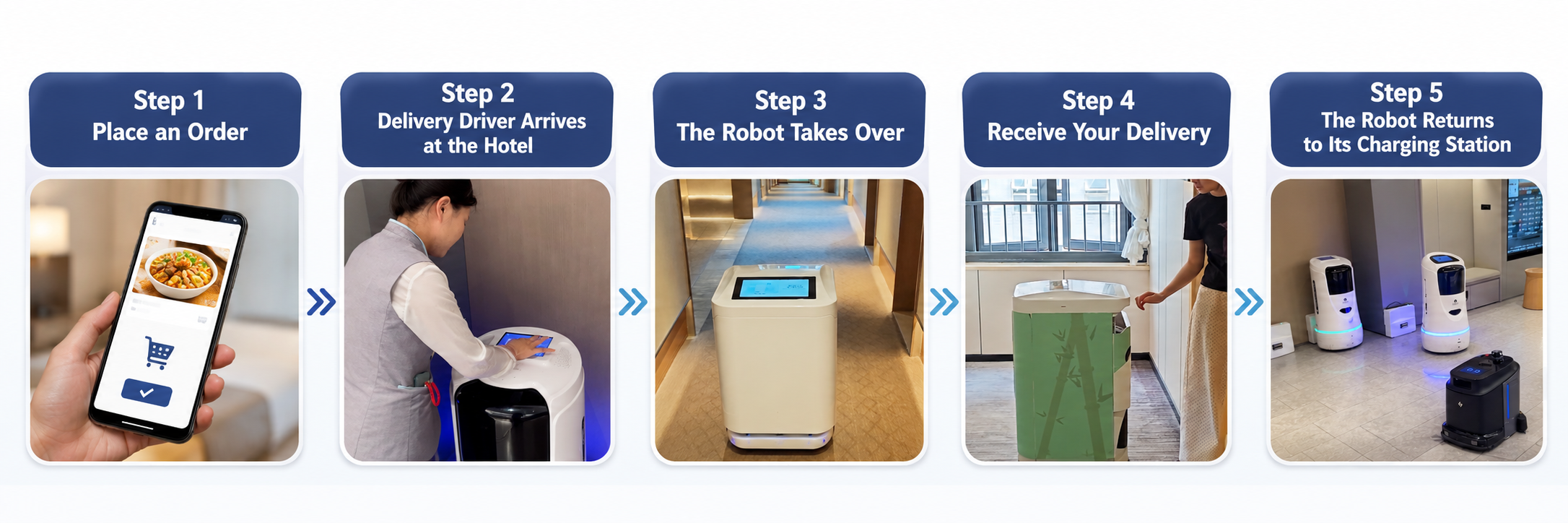
Step 1: You place an order.
You order food through a regular delivery app, just as you would anywhere else.
Step 2: The delivery driver arrives at the hotel.
Instead of taking the food directly to your room, the driver hands it over to the robot in the hotel lobby and enters your room number into its system.
Step 3: The robot takes over.
The robot navigates through the hotel corridors, calls the elevator, travels to your floor, and makes its way to your room.
Step 4: You receive your delivery.
When the robot arrives, it notifies you by ringing your room phone or triggering a notification. You receive a pickup code, open your door, and enter the code on the robot’s screen.
A compartment opens, allowing you to collect your food.
Step 5: The robot returns to its charging station.
Once the delivery is complete, the robot closes its compartment and heads back to its base, ready for the next delivery.
The entire process requires very little human intervention inside the hotel.
No need for delivery staff to navigate the corridors, take elevators, or find individual rooms.
It’s an efficient workflow, especially when hotels receive a large number of deliveries every day.
4. The Real Reason Hotel Delivery Robots Work So Well in China
This was probably the most interesting thing I discovered.
The success of hotel delivery robots in China isn’t necessarily about having better robots or more advanced technology.
It’s largely about economics.
Food delivery in China is extremely affordable. For customers, ordering food often adds only a small delivery fee to the total cost.
As a result, people order food frequently, and delivery services have become part of everyday life.
Now think about what this means for hotels.
When guests constantly order food, hotels have to deal with a continuous flow of delivery drivers arriving at the lobby. Someone needs to receive the orders, manage the handover, and ensure the food reaches the correct room.
This creates a repetitive operational task.
And repetitive tasks are exactly where service robots can make a difference.
A hotel delivery robot can handle multiple deliveries without requiring a staff member to accompany it on every trip. It can also operate during nighttime hours, when staffing may be more limited.
In other countries, however, food delivery can be significantly more expensive, and tipping is often expected. The overall volume and economics of hotel food deliveries may therefore be quite different.
If guests order less frequently, the hotel simply doesn’t have enough delivery demand to justify investing in a fleet of robots.
In other words, the business case for hotel delivery robots depends not only on the robot’s capabilities but also on the market conditions around it.
Sometimes, the biggest factor behind a robot’s success isn’t the technology itself. It’s the problem that the technology is solving, and whether solving that problem makes financial sense.

5. What Comes Next for Hotel Service Robots?
The question I keep coming back to isn’t just whether hotel delivery robots will continue to grow.
It’s what happens when we move beyond robots designed to perform only one specific task.
Today, a hotel delivery robot is built for a relatively straightforward job: transporting items from one location to another.
But imagine a different scenario.
What if a hotel could use humanoid robots to perform multiple tasks throughout the day?
They could deliver packages during the night, assist with cleaning during the day, or help with other repetitive hotel operations.
Instead of investing in several specialized robots, hotels might eventually be able to deploy more versatile robotic systems capable of handling different tasks.
Of course, this vision still faces significant technical and commercial challenges. Humanoid robots need to become reliable, safe, and economically viable before they can take on these responsibilities at scale.
But the hotel delivery robot story offers an interesting lesson for the future of service robotics.
A robot doesn’t become commercially successful simply because it looks impressive or demonstrates advanced capabilities.
It needs to solve a real problem, fit into existing workflows, and make economic sense for the business using it.
And perhaps that’s the most important question we should be asking about the next generation of service robots.
Not just what can they do, but where can they actually create value?
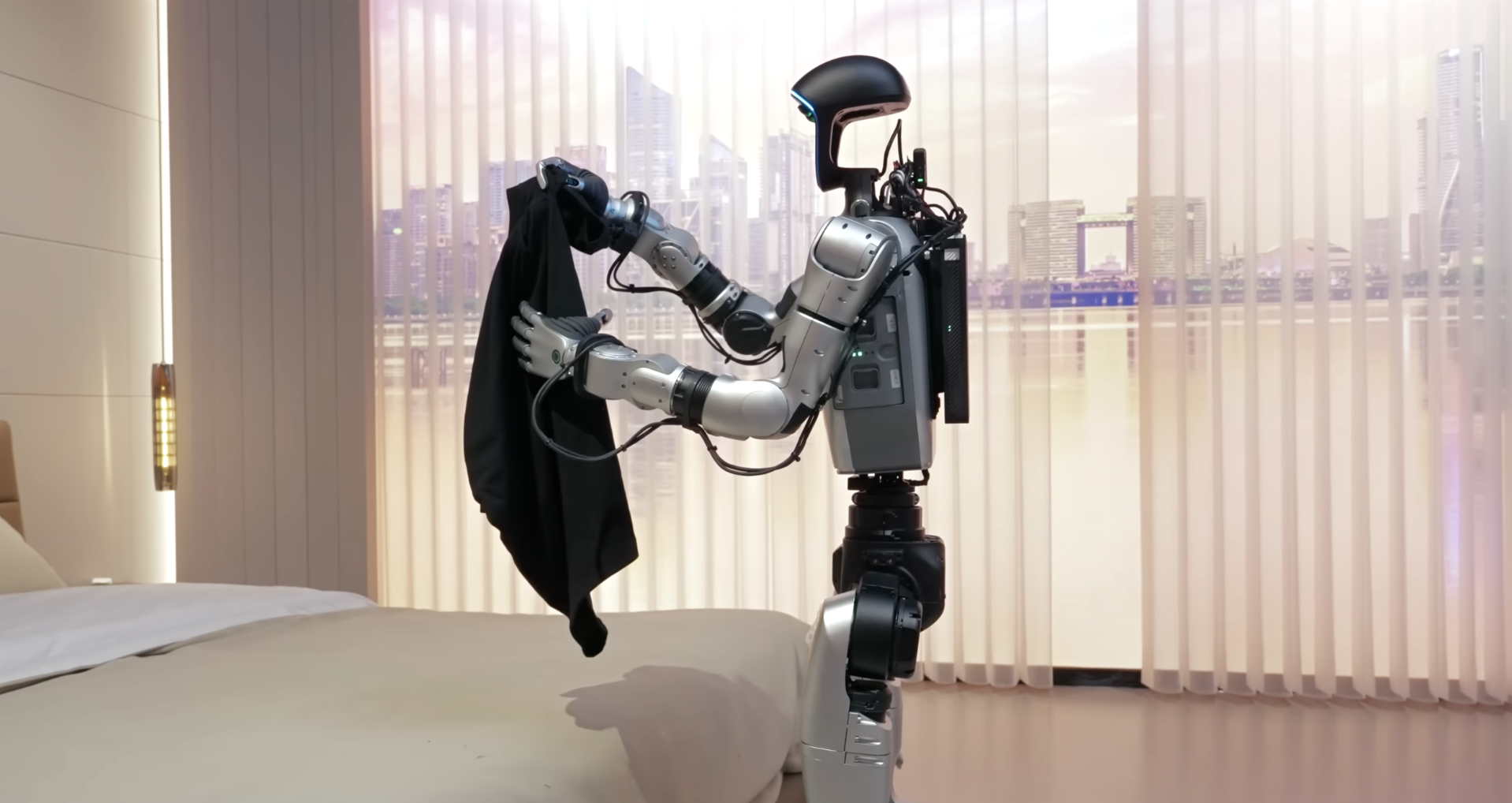
Photo credit: Unitree Robotics
Have you ever encountered a hotel delivery robot? If you’ve stayed in a hotel in China, you might have already experienced one. I’d be curious to hear what you think about their future.
If you want to step into robotics, one of the most promising industries, the Robotics Developer Masterclass is the perfect place to start.
Go from zero to building practical robotics skills used in the industry through hands-on projects. No engineering degree required — just the passion to become a robotics developer.
More Info: roboticsdeveloper.ai

0 Comments