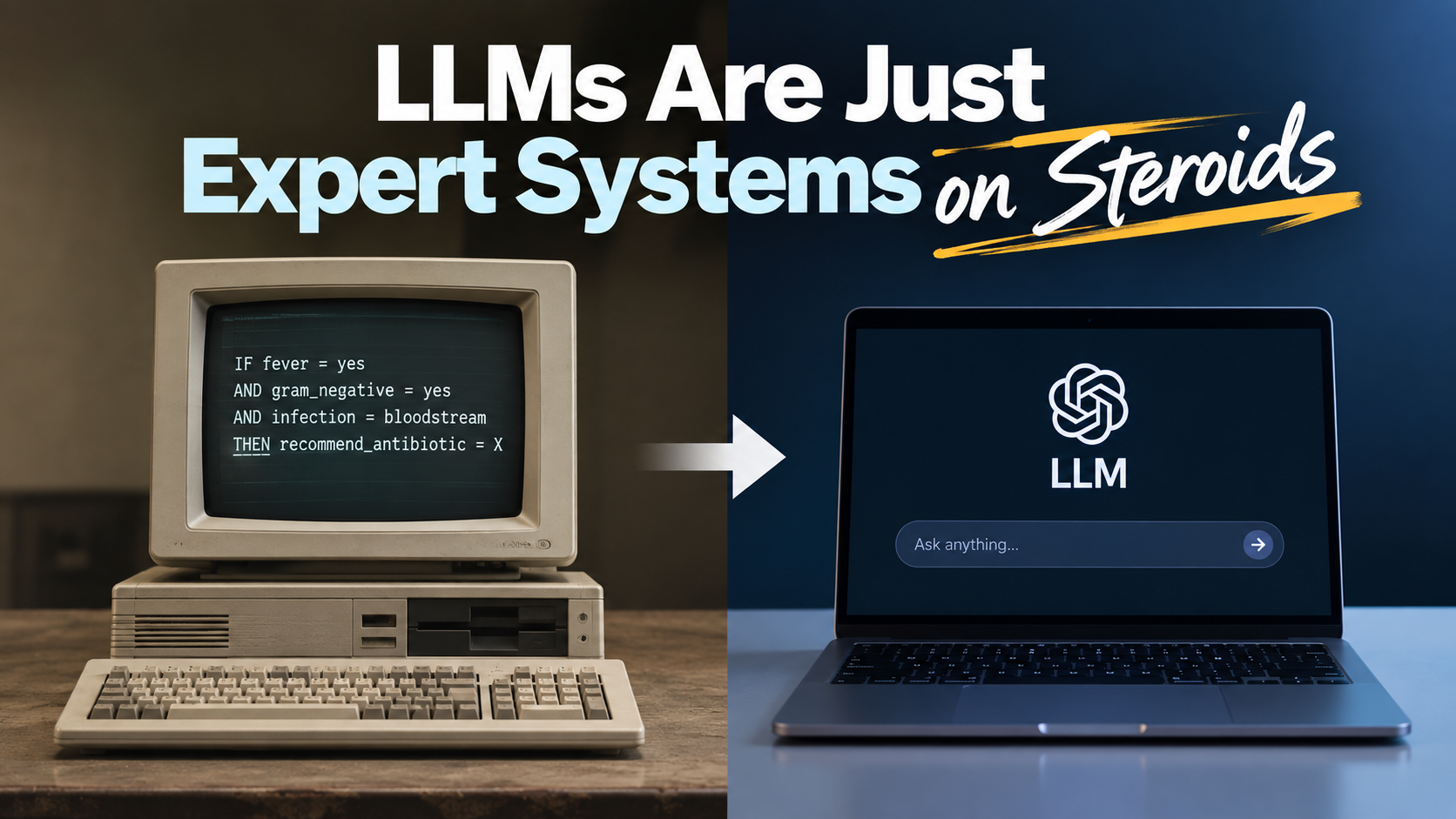

LLMs Are Just Expert Systems on Steroids
In the 1980s, companies spent billions of dollars on software that promised to capture and reproduce human expertise. Businesses invested heavily in expert systems, governments funded AI initiatives, and specialized hardware was built around the idea that machines could reason like human experts.
Then, within a few years, much of that industry collapsed.
It became known as the AI Winter. And if you look at what is happening with large language models today, the comparison is surprisingly interesting.
The technology is completely different. But underneath the buzzwords, there is a similar idea: take human knowledge, encode it into a machine, and build a system that can use that knowledge to answer questions and make decisions.
So what exactly were expert systems, and what do they have to do with LLMs?
What Were Expert Systems?
The idea behind an expert system was relatively simple. Instead of trying to build a machine that could think about everything, researchers focused on something narrower: capture the knowledge of one specific human expert and turn it into software.
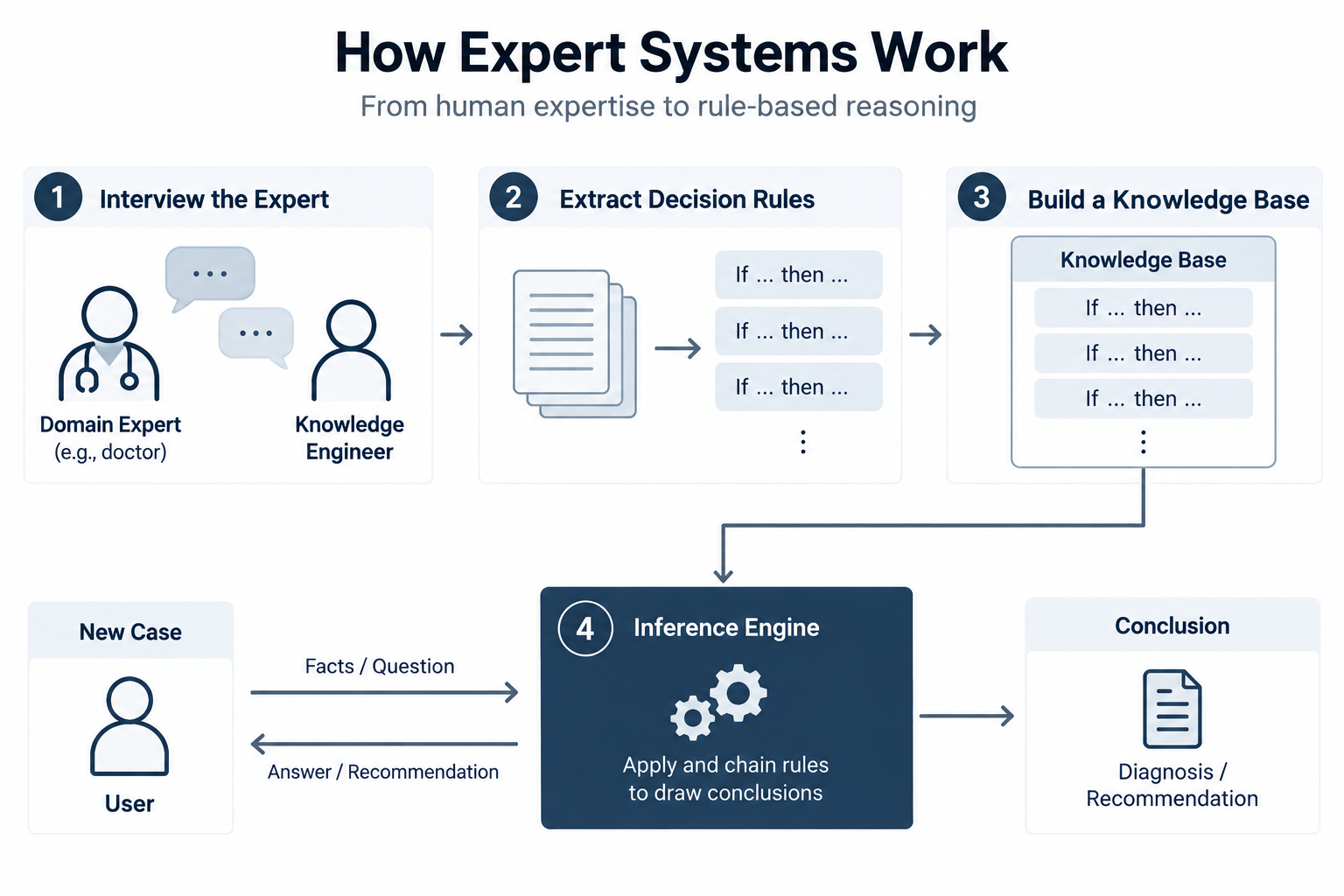
Imagine a doctor who specializes in blood infections. A knowledge engineer would interview that doctor over weeks or months, trying to understand how they make decisions.
The doctor might explain something like: if a patient has a fever, the bacteria is gram-negative, and the infection is in the bloodstream, then certain antibiotics should be considered.
The knowledge engineer would turn this kind of reasoning into explicit if-then rules. Thousands of these rules could be written down and stored in a knowledge base.
An inference engine would then connect those rules together and use them to answer new questions.
The basic architecture was:
Knowledge Base + Inference Engine = Expert System
There was no neural network learning from data and no statistical model discovering patterns on its own. The system was essentially a very large, carefully constructed rulebook built from human expertise.
And for a while, it looked like magic.
The Success Stories That Sold the Dream
Several early systems demonstrated that expert systems could do surprisingly sophisticated work.
DENDRAL, developed at Stanford, could analyze chemical data and help determine molecular structures — a task that traditionally required an expert organic chemist.
Then came MYCIN, a system designed to diagnose blood infections and recommend antibiotics. In controlled tests, it performed as well as, and sometimes better than, junior doctors. MYCIN was never actually deployed in hospitals, largely because of the legal and ethical questions surrounding machine-assisted medical diagnosis.
Then there was PROSPECTOR, developed at SRI International to capture the reasoning of expert geologists.
PROSPECTOR could take observations about rock formations, mineral samples, and geological structures and reason through whether a site was worth investigating. In 1980, it analyzed a site at Mount Tolman in Washington State and identified a molybdenum deposit that human geologists had missed. The deposit was later estimated to be worth around $100 million.
That was the kind of result that made the promise of expert systems hard to ignore: a machine using hand-written rules had produced a real-world result with significant economic value.
The industry took off. Companies started selling expert-system software, specialized Lisp machines were developed to run it, business schools taught the technology, and governments funded AI initiatives at a massive scale.
For a while, it seemed like machines that could reproduce human expertise were finally becoming a reality.

DENDRAL was developed in 1965 by Edward Feigenbaum, also referred to as the “father of expert systems”, and by Joshua Lederberg at Stanford University in California.
Why Did Expert Systems Fall Apart?
The problem was not that expert systems were useless. The problem was that building and maintaining them at scale was extremely difficult.
The first challenge was knowledge acquisition. Every rule had to come from somewhere, and that usually meant extracting it from a human expert. Interviewing experts for weeks or months just to build one system was slow and expensive.
The second problem was brittleness. Expert systems could be extremely good within the situations their rules covered, but they struggled when they encountered something outside those rules. A system might perform impressively on the cases it was designed for and fail badly when the situation changed.
Then came maintenance. Thousands of rules were connected to one another, so changing one rule could have unexpected effects somewhere else. As systems grew, keeping everything consistent became increasingly difficult and expensive.
Finally, the industry made a major bet on specialized hardware. Many expert systems ran on expensive Lisp machines. As general-purpose computers became powerful enough to perform similar tasks at much lower cost, much of the hardware industry built around expert systems disappeared.
By the early 1990s, funding had largely dried up. Expert systems did not disappear completely — some continued to be used for practical, narrow applications — but the larger vision of expert systems as the foundation for thinking machines had largely collapsed.
Then, decades later, something familiar appeared.
Enter the LLM
Strip away the modern terminology, and a large language model can be viewed as doing something conceptually similar: compressing human knowledge into a form that a machine can use to answer questions.
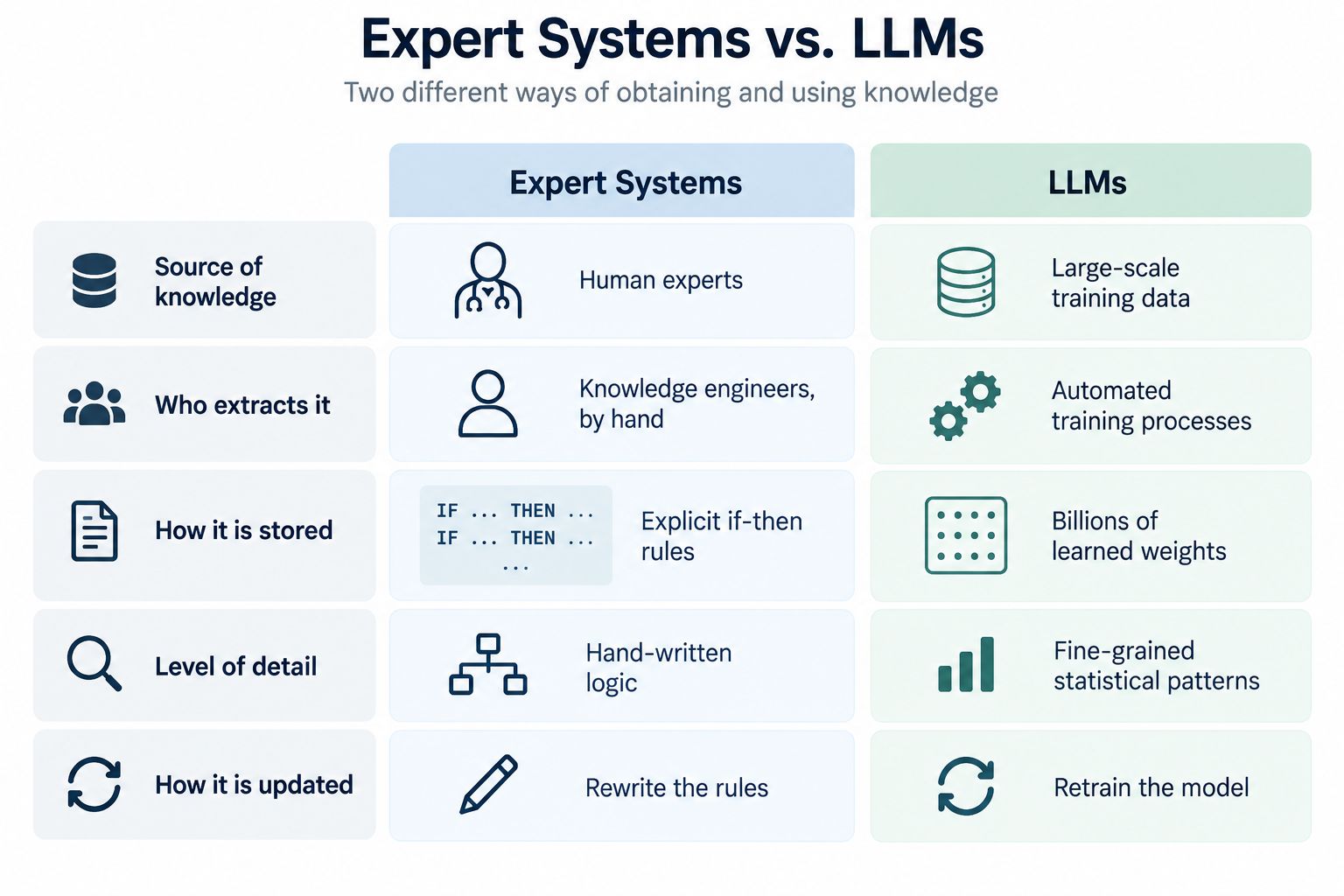
The difference is how that knowledge gets collected and represented.
Think back to the doctor example.
An expert system might have a knowledge engineer ask a doctor: What do you do when you see these five symptoms together? The doctor’s answer becomes a rule.
An LLM approaches the problem at a completely different scale. Instead of interviewing one doctor, its training data can contain medical textbooks, articles, online discussions, and countless other examples of human-written knowledge. Instead of a person explicitly writing “if X, then Y,” the model learns statistical patterns from the data.
That is the “on steroids” part.
It is not the same technology as an expert system. An LLM does not contain a giant collection of human-written if-then rules. But the broader idea — taking human knowledge and encoding it into a machine that can be queried — has a meaningful conceptual connection.
And there is another important similarity.
Neither system is a human mind.
An expert system can chain together rules without knowing what a “blood infection” actually is. An LLM generates text by predicting likely sequences based on patterns learned during training. Both can produce remarkably useful results without thinking about the world in the same way a person does.
Will LLMs Crash Like Expert Systems Did?
This is where the comparison becomes more complicated.
It would be too simple to assume that LLMs will simply repeat the history of expert systems.
Expert systems mainly created value inside specific organizations and industries. PROSPECTOR could help a mining company find a valuable mineral deposit, but ordinary people had little reason to interact with it.
LLMs are different because language is a universal interface. You don’t need to be a chemist, geologist, or engineer to get value from a system that can write, summarize, explain, or generate code.
That gives LLMs a much broader reach than expert systems ever had.
But the historical comparison is still useful.
The lesson from expert systems is not that AI systems are destined to fail. It is that we should distinguish between a system that produces valuable results and a system that actually thinks or understands like a human.
LLMs are extraordinarily powerful and useful. But their usefulness does not automatically mean they are minds.
From AI That Knows to AI That Acts
The story of expert systems and LLMs is ultimately a story about how we turn human knowledge into something machines can use.
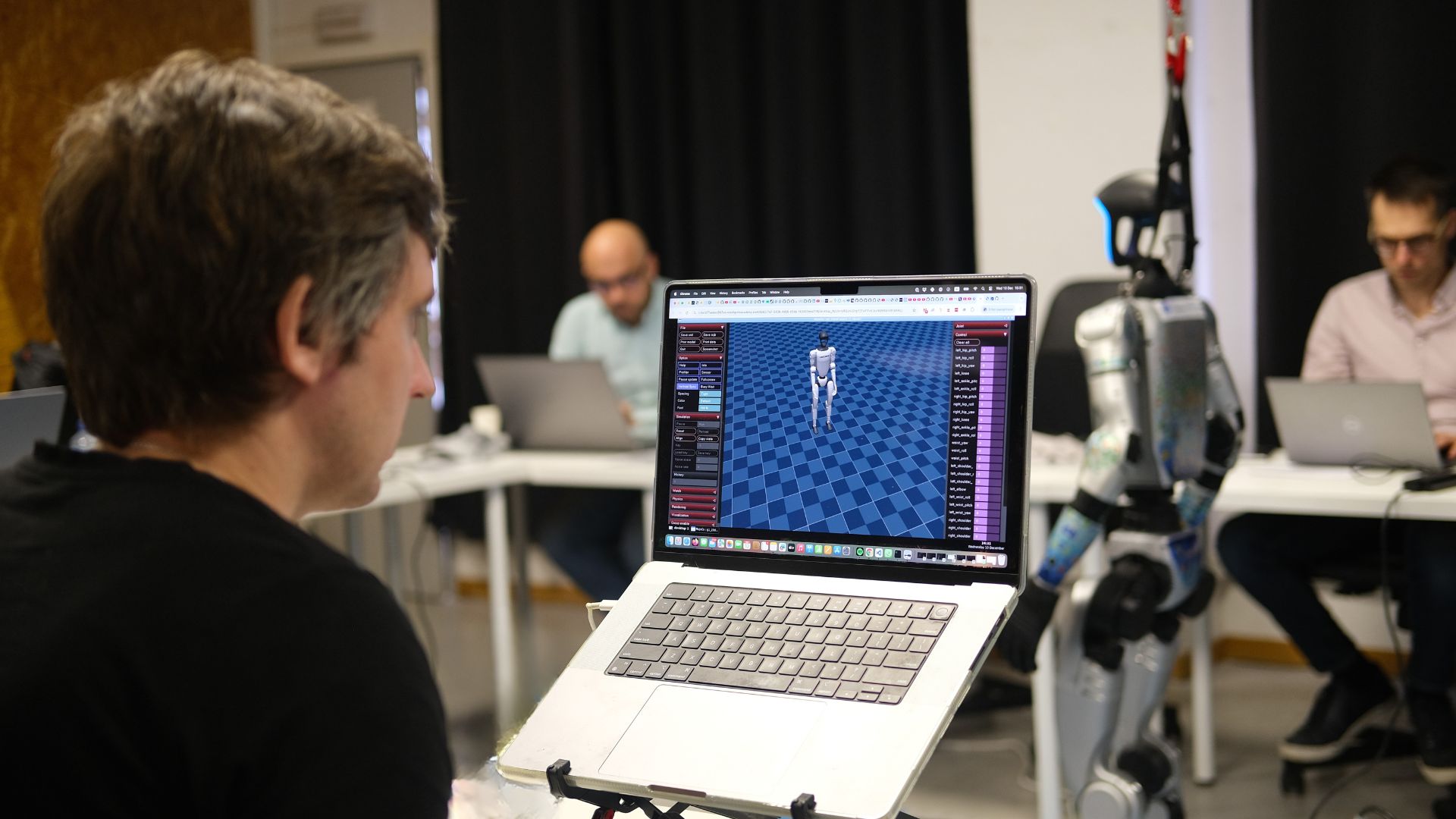
But AI doesn’t stop at language. The same advances in perception, learning, reasoning, and foundation models are now being applied to robotics, enabling machines to learn from data, understand their surroundings, and perform physical tasks.
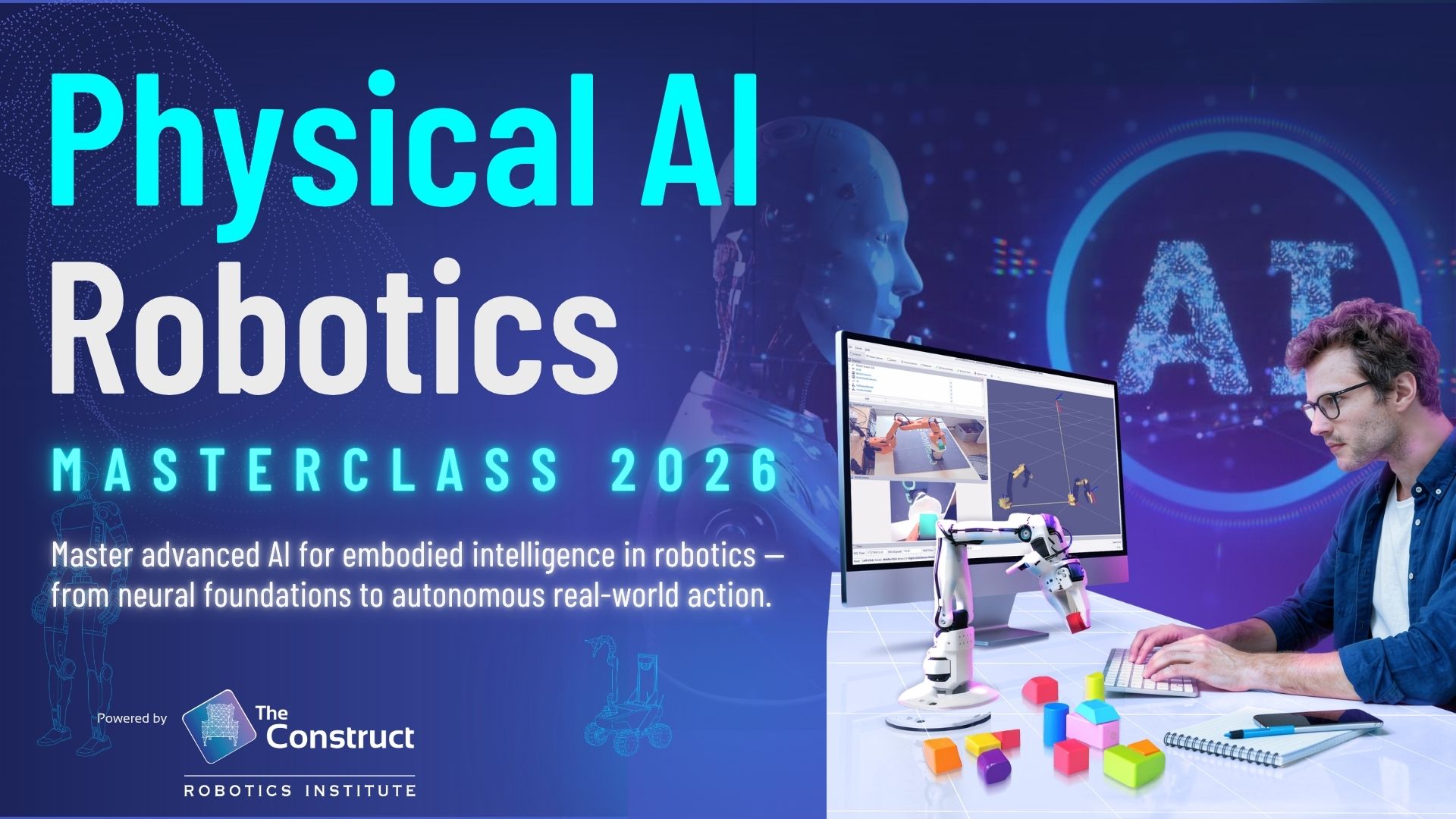
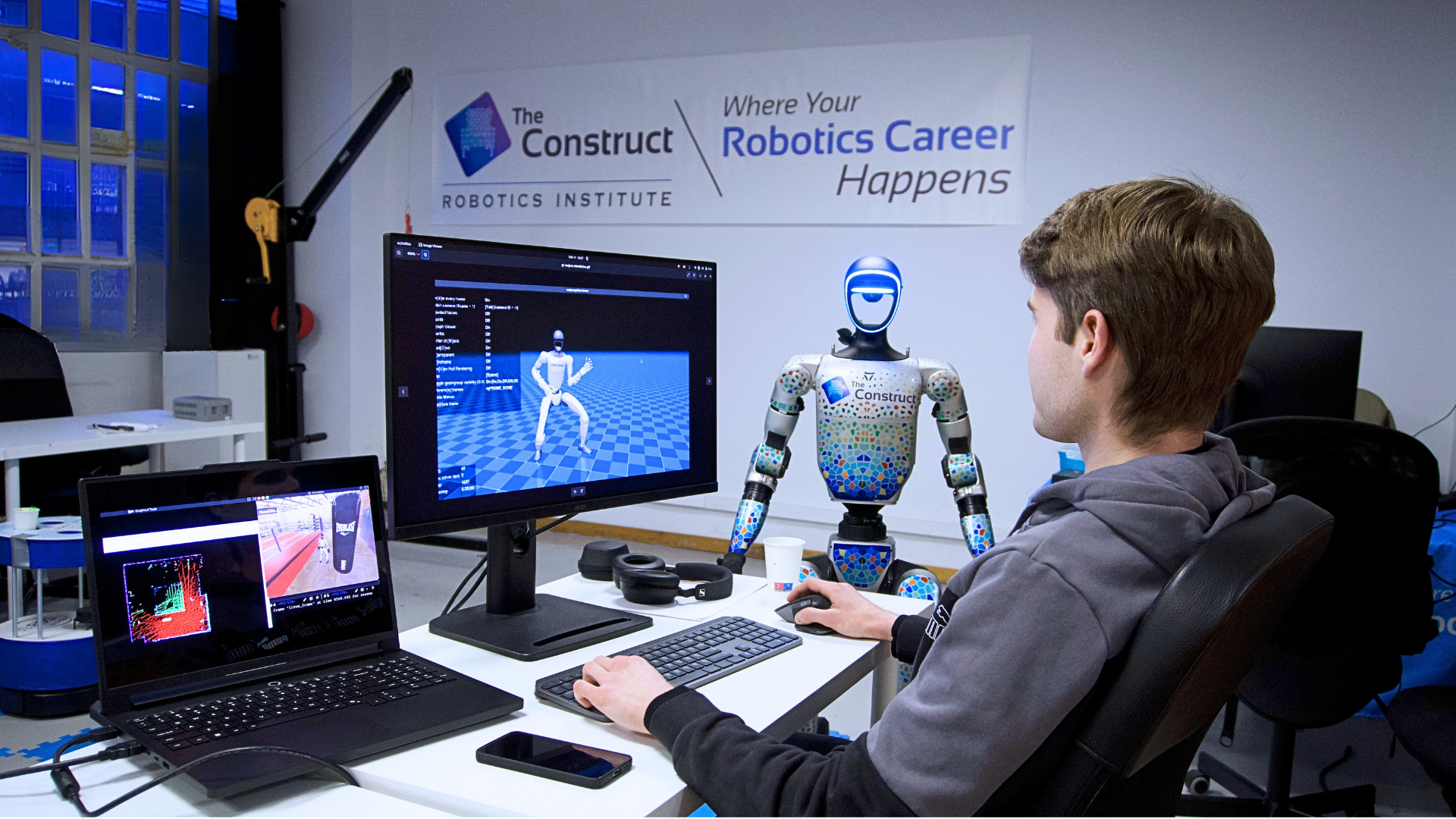
This is Physical AI — bringing AI into embodied systems that allow robots to perceive, learn, and perform advanced tasks in the real world. And that is exactly what the new Physical AI Robotics Masterclass from The Construct Robotics Institute is designed to teach: from AI foundations to becoming a full-stack AI robotics engineer, designing, training, and deploying robots with embodied intelligence.
This Masterclass is delivered 100% online, combining structured online courses, hands-on practice, and independent real robotics projects to help you build the knowledge, skills, and practical experience needed for a career in AI robotics.
More Info & Registration: theconstruct.ai/physical-ai-for-robotics-masterclass/
0 Comments