
The best way to learn robotics is by building a real robot yourself. You don’t just learn the theory—you see how different components work together in a real system.
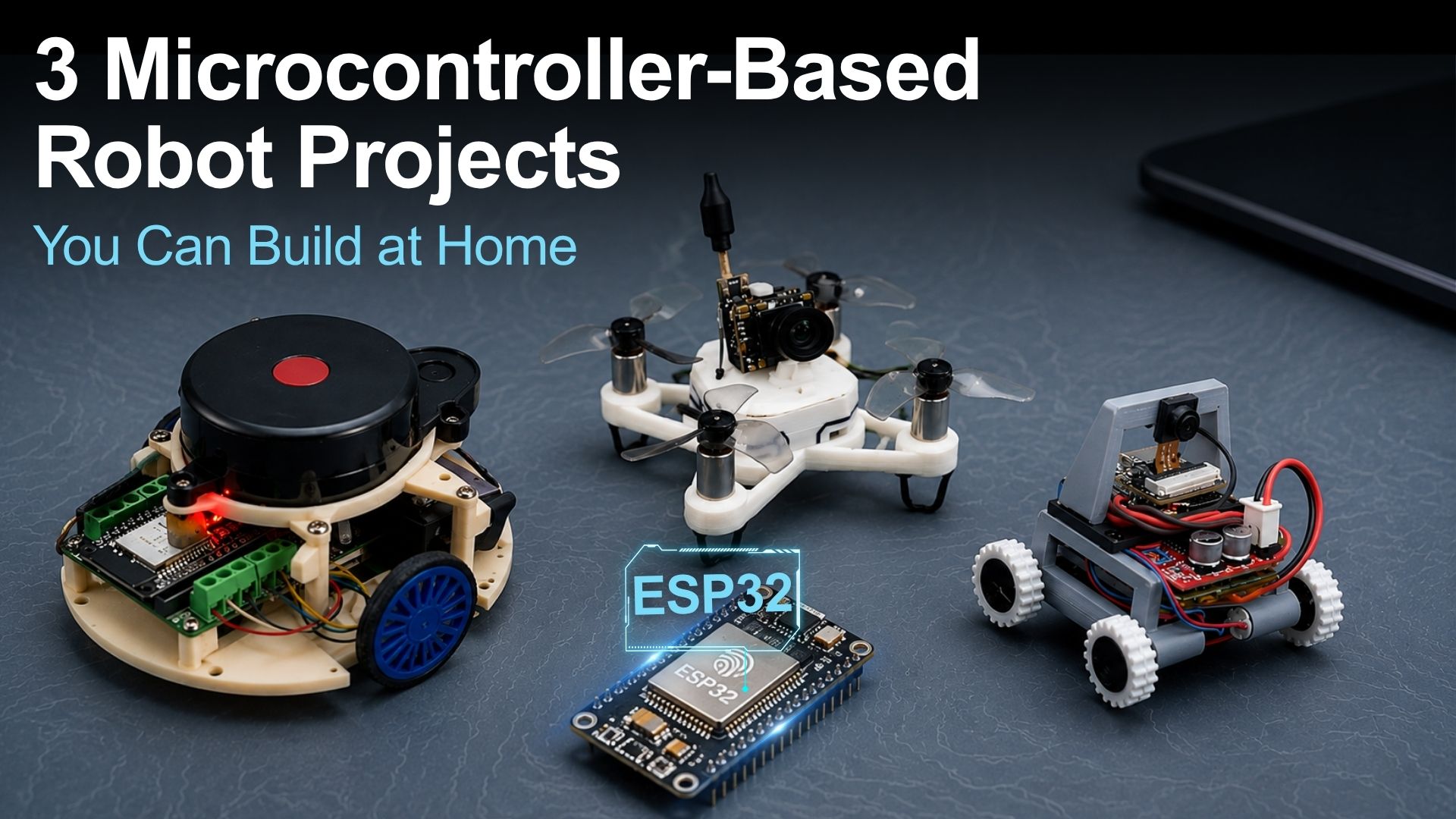
If you’re looking for a hands-on robotics project you can build at home, We’d like to show you three very different robots. One is an autonomous mobile robot, another one flies, and the third is so compact that it can be used as a mini spy robot.
Although they serve different purposes, they all have one thing in common: they’re all built around the ESP32 microcontroller. That means they’re affordable, powerful, and capable of running micro-ROS, making them excellent platforms for learning modern robotics.
Let’s take a closer look at each one.
Why microcontroller + ROS 2 matters
Before we jump into the projects, there is one important idea to understand.
A robot is usually split into two parts:
- The microcontroller is the muscle
It reads sensors and controls motors in real time. - ROS 2 is the brain
It handles mapping, planning, decision-making, and other computationally intensive tasks.
When you connect the two using micro-ROS, you get the best of both worlds. The robot stays responsive while a computer running ROS 2 performs the heavy computation.
This is exactly how many real-world robotics systems are built, and understanding this architecture is one of the most valuable skills you can develop as a robotics engineer.
Project 1: Two-Wheel Autonomous Robot
If you’re just getting started with robotics, this is probably the best project to begin with.
Credit: Maker`s Pet (YouTube)
This robot uses a classic two-wheel differential drive design with a LiDAR mounted on top. An ESP32-based controller handles the motors, while a desktop computer running ROS 2 takes care of mapping and autonomous navigation.
Using micro-ROS, the robot streams sensor data to the computer, allowing you to:
- Build maps of your environment
- Run autonomous navigation
- Detect and avoid obstacles
- Experiment with SLAM and ROS 2 Navigation
Besides being a fun robot to build, this project teaches one of the most important concepts in robotics: distributing computation between an embedded controller and an external computer.
If you want to work in robotics professionally, this is an architecture you’ll encounter again and again.
Project 2: Mini Quadcopter
Looking for a bigger challenge?
Then build a mini quadcopter.
Credit: Max Imagination (YouTube)
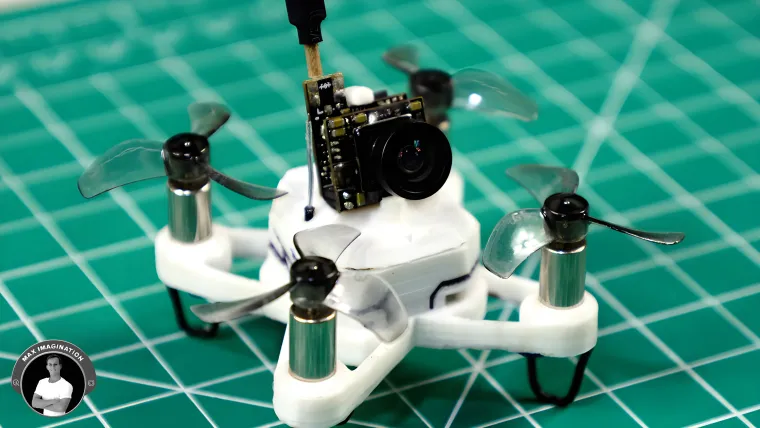
This is the hardest project on the list, but it’s also the coolest because it actually flies.
Everything fits into a tiny frame:
- An ESP32-based flight controller
- Compact motors
- A lightweight battery
- A small quadcopter frame
You can control the drone in two different ways:
- Through the ESP-Drone mobile app
- Using a radio controller via ESP-NOW for longer range and better precision
This project doesn’t currently use micro-ROS, which actually makes it a great opportunity to extend it yourself. Adding micro-ROS support would be an excellent exercise if you’re looking to deepen your understanding of distributed robotics systems.
If you want a project that will really challenge your skills, this is the one to build.
Project 3: Tiny Four-Wheel Camera Robot
The third project is much smaller, but no less interesting.
Think of it as a miniature version of the first robot. Instead of a LiDAR, it uses a small camera connected directly to an ESP32 board.
Credit: The Wrench (YouTube)
Because of its tiny size, it almost feels like building your own mini spy robot.
Using the companion mobile app, you can:
- Drive the robot remotely
- View live video from the onboard camera
Like the quadcopter, this project doesn’t use micro-ROS out of the box. Replacing its control system with a micro-ROS implementation would make an excellent learning exercise and help you practice integrating embedded hardware with the ROS 2 ecosystem.
What You’ll Learn
Although these three robots look completely different, they’re all built around the same core ideas.
By building them, you’ll gain hands-on experience with:
- Motor control
- Sensor integration
- Wireless communication
- Embedded programming
- Computer vision
- Autonomous navigation
- ROS 2 and micro-ROS communication
- System integration
These aren’t just hobby skills—they’re the same foundations used in professional robotics systems.
Which Project Should You Build?
Not sure where to start?
Here’s a simple guide:
- Interested in autonomous robots? Start with the two-wheel robot.
- Want the biggest challenge? Build the mini quadcopter.
- Interested in cameras and embedded systems? Try the tiny four-wheel robot.
Whichever project you choose, you’ll build practical robotics skills while creating something genuinely fun.
Final Thoughts
These three projects may look very different, but they’re all built on the same foundation: an ESP32 microcontroller and the core principles behind modern robotics.
Whether you’re building a mobile robot, a drone, or a tiny camera rover, you’ll gain hands-on experience with the technologies that power real robotic systems.
So pick the project that excites you most and start building.
These projects are a great starting point, but professional robotics goes far beyond assembling hardware. You’ll also need to understand ROS 2, robot software architecture, perception, navigation, and system integration.
That’s exactly what The Construct’s Robotics Developer Masterclass is designed to teach. Starting from zero, you’ll build the practical robotics skills used in industry through hands-on projects—no engineering degree required, just the passion to become a robotics developer.
More Info & Enroll at: roboticsdeveloper.ai
0 Comments